Everyone Has Taste Now, Apparently
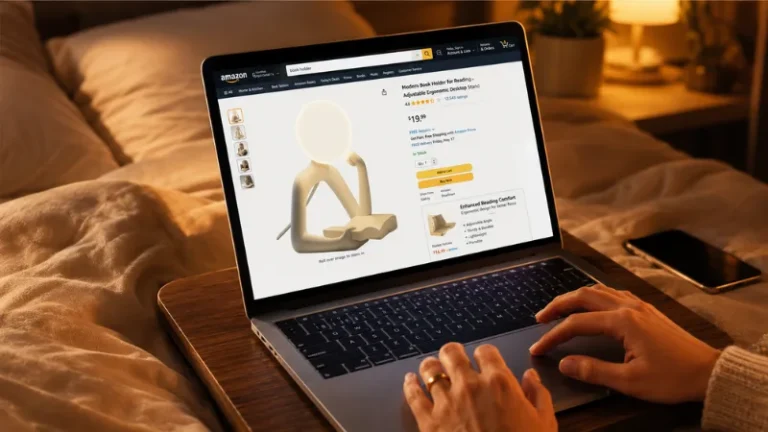
At 12:47 on a random day(night), I found myself comparing two lamps. They were, to the untrained eye, the same lamp. Both were small. Both were vaguely Italian-looking. Both gave off the emotional energy of a dentist’s waiting room that had recently discovered jazz. One cost a reasonable amount of money. The other cost enough that I briefly wondered whether it came with a minor European title. I sent screenshots to a friend. “The second one has more taste,” she replied. Not “it looks better.” Not “the shape is nicer.” Not even “buy that one.” It had more taste, as though taste were a rare mineral embedded in the ceramic, detectable only by people who own at least one chair nobody is allowed to sit on. I stared at the lamps for another twenty minutes, which is how I lost custody of my time. The next morning, the word was everywhere. A founder was talking about taste in product design. A writer was explaining why taste would survive artificial intelligence. A creative director was posting about “training taste.” Someone on a podcast said execution was becoming cheap and taste was becoming valuable. I opened another app and was informed that a beige kitchen had “timeless taste,” despite looking like a place where even the salt had signed an NDA. Apparently we have entered the Age of Taste. This is surprising because, until recently, taste was mostly something your aunt accused you of lacking when you wore sneakers to a wedding. Now it is a career strategy, a technological moat, a personality, a leadership principle, a content category, and possibly the last defense of the human soul. Naturally, I became obsessed with why everyone else was obsessed. The Word That Ate the Internet The current taste fever did not appear from nowhere, although it did arrive with the usual confidence of a person entering a conversation halfway through and immediately correcting everyone. In early 2026, tech people began arguing publicly that when artificial intelligence makes production easy, the scarce skill will be deciding what deserves to exist. Paul Graham revived an argument he had made years earlier about taste among makers; OpenAI president Greg Brockman called taste a new core skill; and the discussion ricocheted through the usual online corridors where a thought begins as a reasonable observation and ends twelve hours later as a personal brand. Kyle Chayka, writing in The New Yorker, noticed that “taste” had become a Silicon Valley cliché on the scale that “disruption” once was. Companies and founders were using it to describe everything from product judgment to recommendation tools, design software, and the ability to pick profitable ideas before everyone else. He called part of this phenomenon “taste-washing”: wrapping automation in the language of human sensitivity so the machine feels less like a machine and more like a thoughtful person who buys olive oil in an opaque bottle. This explains the suddenness. AI did not invent our interest in taste. It created a panic around it. For years, the internet rewarded output. Post more. Ship faster. Publish daily. Make a video, then make the same video vertically, then crop it into a square, then turn the square into a newsletter, then stand in a field and explain the newsletter into a tiny microphone. Generative AI looked at this exhausting arrangement and said: I can produce infinity before lunch. The moment supply becomes infinite, selection becomes theatrical. The person who can say “not that, this” begins to look powerful. Taste is what we call that pointing finger when we want it to sound profound. We Have Been Here Before, in Worse Hats The funny thing about taste is that it always pretends to be private while behaving like a group project. I like this painting. I hate that sofa. This album changed my life. Those shoes are a crime. We describe these reactions as if they emerged from a sealed chamber inside the self, untouched by class, money, geography, friends, advertising, childhood, envy, convenience, and the fact that an attractive person once wore something similar near us. History is less romantic. In 1899, Thorstein Veblen wrote about conspicuous consumption: people buying and displaying things partly because those things communicate status. He was especially interested in objects whose uselessness or expense was the point. A difficult-to-maintain possession tells the world that you can afford difficulty. This remains the governing philosophy of white sofas, tiny handbags, and any sink that requires special instructions. Decades later, Pierre Bourdieu’s Distinction argued that taste helps organize social class. Preferences are not merely preferences; they become signals of education, upbringing, access, and belonging. Knowing which wine, book, neighborhood, composer, restaurant, or deliberately ugly jacket to approve of can function like a password. Cultural capital is wealth that has learned to speak softly. This does not mean nobody genuinely loves difficult jazz. Some people do. I admire them and fear their car journeys. It means taste has always done two jobs at once. It gives us pleasure, and it places us socially. The internet simply put the placement system on a dashboard. You no longer need to invite someone into your home to reveal your preferences. Your bookshelf is photographed. Your meals are archived. Your music arrives in an annual graphic report. Your clothes appear in tagged posts. Your saved folders contain enough evidence to reconstruct you after a minor disappearance. Taste used to leak out accidentally. Now it has a content calendar. The Factory Can Make Anything Except a Decision There is a basic economic reason taste suddenly feels important: production is getting cheaper while attention remains stubbornly mortal. A model can generate twenty logo directions while I am still deciding whether “direction” means anything. It can create a hundred images, draft ten headlines, suggest fifty names, redesign the landing page, and produce a presentation in which every slide appears to have been raised by the same highly competent aquarium. This is genuinely useful. It is also a problem. When you
Everyone Has Taste Now, Apparently Read More »