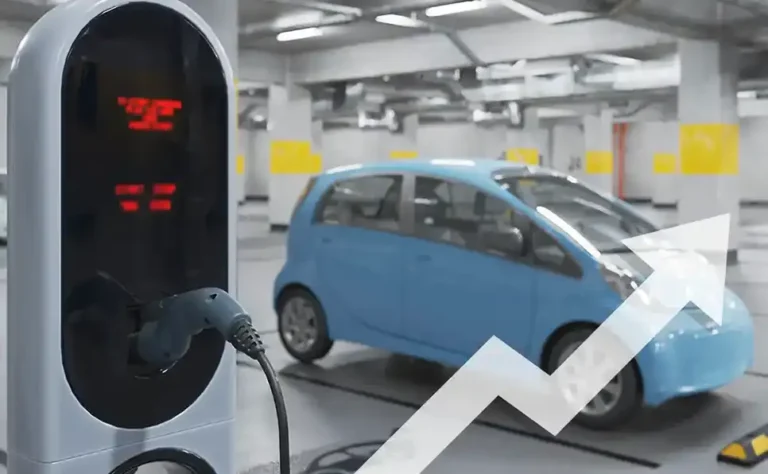
The Potential of Electric Vehicle Growth: What to Expect
Introduction In recent years, the streets of our cities have witnessed a silent revolution that is slowly but surely changing the way we move around. It’s the rise of electric vehicles (EVs), and it’s no longer a novelty but a trend that’s set to continue for many years to come. The numbers speak for themselves: the global market for EVs is growing at an astonishing rate, with a compounded annualized growth rate (CAGR) of 21.7 per cent. By 2030, the number of EVs on our roads is expected to skyrocket from 8.1 million units to an impressive 39.21 million units. The automotive industry is undergoing a seismic shift, as the roar of internal combustion engines is slowly being replaced by the hum of electric motors. As technology improves and battery costs decrease, more and more consumers are considering making the switch to EVs. But why is this happening? What’s driving this exponential growth? What does this mean for the future of transportation, and how will it impact the energy industry? The answer lies in the many benefits that EVs bring to the table. One thing is for sure: it’s going to be electrifying. For one, they are environmentally friendly, emitting significantly less pollution than their gas-guzzling counterparts. This is a welcome relief for our planet, as we strive to combat the effects of climate change and air pollution. With cleaner air, quieter streets, and greater efficiency, EVs are set to transform the way we move around our cities and beyond. The road ahead may not be without its bumps, but the destination is a brighter, greener future for us all. But EVs aren’t just better for the environment – they’re also more efficient and cost-effective. With lower fuel costs and fewer maintenance needs, EVs are proving to be a smart investment for individuals and businesses alike. And as battery technology continues to improve, the range and reliability of EVs are only getting better. So, whether you’re a city dweller looking to reduce your carbon footprint or a business owner seeking cost-effective transportation solutions, EVs offer a compelling proposition. With their sleek designs, quiet engines, and powerful performance, it’s no wonder that EVs are the talk of the town. Picture this: sleek, silent electric vehicles gliding along the roads, seas, and skies, leaving a trail of cleaner air in their wake. This is the future that we’re hurtling towards, with electric vehicle sales in the US skyrocketing by over 40 percent a year since 2016. By 2035, the largest automotive market will be fully electric, ushering in a green revolution that promises both a brighter future and significant economic opportunities. But with this growth comes a new set of challenges. As the number of EVs on the road increases, so too does the demand for electricity to power them. This poses a significant challenge for energy producers and distributors, who must ensure that they can meet this demand while keeping the lights on for everyone else. The good news is that the energy industry is already preparing for this shift, with new infrastructure and technologies being developed to support the growth of EVs. From smart charging stations to renewable energy sources, the potential of EV (Electric vehicles) growth is being harnessed to drive innovation and sustainability. The Current State of Electric Vehicle Growth The wheels of progress keep turning, and the automotive industry is no exception. With each passing year, more and more drivers are making the switch to electric vehicles, and the numbers speak for themselves. Despite the challenges posed by the COVID-19 pandemic, electric car sales have been on the rise. In 2020, the number of electric cars on the road worldwide reached an impressive 10 million, representing a 43% increase from the previous year. China, Europe, and the United States are leading the charge, but other countries such as Canada, India, and South Korea are also investing in the necessary infrastructure and incentives to support the growth of EVs. The road ahead may not be without its bumps, but the destination is a greener, more sustainable future for us all. In 2021, electric car sales hit a new record high, despite ongoing supply chain bottlenecks and the ongoing Covid-19 pandemic. Sales nearly doubled compared to the previous year, with 6.6 million EVs sold, accounting for nearly 9% of all car sales. This surge brought the total number of electric cars on the road to an impressive 16.5 million. The sales share of electric cars increased by 4 percentage points in 2021, signaling that the future is electric. But this is just the beginning. According to the Net Zero Emissions by 2050 Scenario, the number of electric cars on the road is set to skyrocket to over 300 million by 2030, with EVs accounting for a whopping 60% of new car sales. Achieving this ambitious goal requires an increase in their sales share by less than 6% percentage points per year, which is well within reach. So, get ready to plug in and hit the road toward a brighter future. With electric cars leading the way, we’re on track to create a cleaner, more sustainable planet for generations to come. Factors Driving Electric Vehicle Growth The winds of change are blowing, and they’re carrying with them a new era of transportation. The factors driving the growth of electric vehicles are like a perfect storm, combining to create a powerful force that is reshaping the automotive industry. First and foremost, there are environmental concerns that are driving more and more consumers to seek out sustainable options. With the world reeling from the effects of climate change, the need to reduce our carbon footprint has never been more urgent. Electric vehicles are a solution that’s both practical and effective, emitting fewer greenhouse gases than their gas-guzzling counterparts. But it’s not just the environment that’s driving the growth of EVs; governments worldwide are also playing a crucial role. By offering incentives such as tax credits, rebates, and grants, policymakers are encouraging
The Potential of Electric Vehicle Growth: What to Expect Read More »