
RethinkTrends

Alok Chakraborty

Oscar 2023 Winners to Watch

Oscar 2023 Winners to Watch

Hosted by Jimmy Kimmels for the 3rd time, 12th March’23 saw the 95th Academy Awards being presented. Held at the Dolby Theatre, Los Angeles, California, this Oscar was the first of many with many first-timers either making it to the nominations and for some, eventually winning it. A total of 23 categories of awards were handed to the winners. Here’s a full list of winners from Oscar 2023: 1.Best Picture Winner: Everything Everywhere All At Once Nominations: All Quiet on the Western Front, Avatar: The Way of Water, The Banshees of Inisherin, Elvis, The Fablemans, Tar, Top Gun: Maverick, Triangle of Sadness, Women Talking. 2.Best Actor Winner: Brandon Fraser, “The Whale” Nominations: Colin Farrell (The Banshees of Inisherin), Austin Butler (Elvis), Bill Nighy (Living), Paul Mescal (Aftersun) 3.Best Actress Winner: Michelle Yeoh, “Everything Everywhere All At Once” Nominations: Ana de Armas (Blonde), Cate Blanchett (Tar), Andrea Riseborough (To Leslie), Michelle Williams (The Fablemans) 4.Best Director Winner: Daniel Kwan & Daniel Schienert, “Everything Everywhere All At Once” Nominations: Martin McDonagh (The Banshees of Inisherin), Steven Spielberg (The Fablemans), Todd Field (Tar), Ruben Ostlund (Triangle of Sadness) 5.Best Original Screenplay Winner: Everything Everywhere All At Once Nominations: The Banshees of Inisherin, The Fablemans, Tar, Triangle of Sadness 6. Best Supporting Actor Winner: Ke Huy Quan (Everything Everywhere All at Once) Nominations: Brian Tyree Henry (Causeway), Judd Hirsch (The Fablemans), Brendan Gleeson (Banshees of Inisherin), Barry Keoghan (Banshees of Inisherin) 7. Best Supporting Actress Winner: Jamie Lee Curtis (Everything Everywhere All at Once) Nominations: Angela Bassett (Black Panther: Wakanda Forever), Hong Chau (The Whale), Kerry Condon (The Banshees of Inisherin), Stephanie Hsu (Everything Everywhere All at Once) 8. Best International Film Winner: All Quiet on the Western Front (Germany) Nominations: Argentina, 1985 (Argentina), Close (Belgium), EO (Poland), The Quiet Girl (Ireland) 9. Best Animated Feature Winner: Guillermo del Toro’s Pinocchio Nominations: Marcel the Shell with Shoes On, Puss In Boots: The Last Wish, The Sea Beast, Turning Red 10. Best Adapted Screenplay Winner: Women Talking Nominations: All Quiet on the Western Front, Glass Onion: A Knives Out Mystery, Living, Top Gun: Maverick 11. Best Visual Effects Winner: Avatar: The Way of Water Nominations: Top Gun: Maverick, The Batman, Black Panther: Wakanda Forever, All Quiet on the Western Front 12. Best Original Score Winner: Volker Bertelmann (All Quiet on the Western Front) Nominations: Justin Hurwitz (Babylon), Carter Burwell (The Banshees of Inisherin), Son Lux (Everything Everywhere All at Once), John Williams (The Fablemans) 13. Best Original Song Winner: Naatu Naatu (RRR) Nominations: Applause (Tell It Like a Woman), Hold My Hand (Top Gun: Maverick), Lift Me Up (Black Panther: Wakanda Forever), This is a Life (Everything Everywhere All at Once) 14. Best Documentary Feature Winner: Navalny Nominations: All That Breaches, All the Beauty and the Bloodshed, Fire of Love, A House Made of Splinters 15. Best Documentary Short Subject Winner: The Elephant Whisperers Nominations: Haulout, How Do You Measure a Year, The Martha Mitchell Effect, Stranger at the Gate 16. Best Cinematography Winner: James Friend (All Quiet on the Western Front) Nominations: Darius Khondj (Bardo, False Chronicle of a Handful of Truth), Mandy Walker (Elvis), Roger Deakins (Empire of Light), Florian Hoffmeister (Tar) 17. Best Costume Design Winner: Black Panther: Wakanda Forever Nominations: Babylon, Elvis, Everything Everywhere All at Once, Mrs. Harris Goes to Paris 18. Best Animated Short Winner: The Boy, the Mole, the Fox and the Horse Nominations: The Flying Sailor, Ice Merchants, My Year of Dicks, An Ostrich Told me the World is Fake and I Think I Believe It 19. Best Live Action Short Winner: An Irish Goodbye Nominations: Ivalu, Le Pupille, Night Ride, The Red Suitcase 20. Best Film Editing Winner: Everything Everywhere All at Once Nominations: The Banshee Of Inisherin, Elvis, Tar, Top Gun:” Maverick 21. Best Sound Winner: Top Gun: Maverick Nominations: All Quiet on the Western Front, Avatar: The Way of Water, The Batman, Elvis 22. Best Production Design Winner: All Quiet on the Western Front Nominations: Avatar: The Way of Water, Babylon, Elvis, The Fablemans 23. Makeup & Hairstyling Winner: The Whale Nominations: All Quiet on the Western Front, The Batman, Black Panther: Wakanda Forever, Elvis

Oscar 2023 Winners to Watch Read More »

Does knowing Golf Ball Types improve your game?

Does knowing Golf Ball Types improve your game?

Golf Ball Types Does knowing Golf Ball Types improve your game? Short answer, No. Why? Because if you are a beginner, you must know many other things about Golf to swing those clubs. But if you are a pro (low handicap and scratch golfers), knowing different ball types and features like high compression core, multi-layer construction, hardness, required driver spin, or amount of wedge spin you need to add will add much more to your game. If you are competing at the world championship level, where the difference between the players is next to nothing, knowing the Golf Ball Types can be the differential to winning a triple crown or even career grand slams. Experts and veterans who have spent years studying and playing this sport prioritize Golf Ball types to enhance their performances. While advanced players can get more distance out of any golf ball and control their shots better, intermediate players need to know about golf ball types to make that leap. Details like dimple patterns on the ball, cover, and core of the golf ball all become relevant once you understand the basics. While some golf ball types favor professionals, some are custom-made for beginners. So, how do you find the difference, find the right one for you, and make a difference in your style of play! Read this blog to find out. Types of Golf Balls: Broadly speaking, golf balls are widely categorized into four types: Tour Performance:Tour performance types of golf balls are the most expensive and are ideal for low handicap and scratch golfers who have a faster swing speed. Tour performance of golf balls is optimal for long distances and spin. They are made of 3-5 layers. Tour Value: These types of golf balls are almost similar to Tour Performance Golf Balls, but Tour Value Golf Balls have a low compression rating, less spin, and are reasonable. They are made of 3 layers. Straight Distance: These golf balls are built with a large core thin outer layer and do not perform an excellent short game with wedge spin. They are made of 2-3 layers. These are designed for long distances, fly straighter, and are cheaper than Tour Value golf balls. Soft Distance: Made of 2-3 layers, they are designed for golfers with slower swing speeds. These are specially designed for amateur golfers who will get more distance with less side-to-side spin with these balls. Factors making critical differences to the types of Golf Balls: Here are the factors you should be paying attention to while deciding on the kind of golf ball for practicing: Dimples:  A low-handicap would opt for 500 dimples, whereas a newbie would prefer 300. And trust me, this has got nothing to do with the design. The dimples serve a particular and vital purpose: providing spin and distance. Someone who doesn’t know how to spin or control the spin would opt for fewer dimples. Whereas the professionals would opt for the highest amount of dimples. Cover:  Typically, golf balls are made of either of two materials: Urethane & Surlyn. Urethane delivers the highest spin on wedge shots. Hence, it is used in tours. Surlyn covers are more rigid and more durable compared to Urethane. The rugged exterior allows the Surlyn to travel the distance. Still, Urethane, because of its soft surface, gives more control to the shot and is prone to easier marking. Compression:  Compression is a crucial factor for golf ball types. Compression is the ability of the golf ball to handle the high-speed impact. It also determines flexibility, allowing the ball to recoil without breaking apart when hit. For starters, low compression allows more distance but comprises the control. Low-handicaps prefer high-compression golf balls because they offer more control over the ball. Layers:  As the sport underwent a series of upgrades over the years, so did the golf balls. From horsehide and feathers, the golf ball has come a long way. From cover to the core, golf balls incorporate several layers to keep up with technological advances. Each golf ball of various layers adds something unique to every golfer’s ability. These subtle variances help golfers get the most out of their playing style. The basic are piece golf balls perfect for beginners and for the driving range. The layers keep on increasing progressively. The 5-layered golf balls are apt for low handicaps and offer tour-level performance. Hardness:  The harder the ball, the further it will travel. The softer the ball, the easier to add more spin. Although the more rigid balls offer more control in terms of hitting them straight, the softer balls are preferred by the pros. Color:  While color may seem vague and doesn’t affect the game’s technicalities or style, people with vision issues are advised to choose balls that are visible over a long range. Conclusion: Mastering golf requires aligning many factors like picking the right club, your swing motion, understanding wind and terrain details, etc. Golf ball types are not the first thing you want to focus on while learning. As you gradually progress as a golfer, you must handle different golf ball types. Knowing golf ball types can add those finishing touches to your overall development as a golfer.

Does knowing Golf Ball Types improve your game? Read More »

Top 10 Ranked NFL players of all time

Top 10 Ranked NFL players of all time

Introduction:   Compiling the Top 10 list of professional football league players is not a child’s play. It is one of the most debated and challenging things to do. From over 100 legends of the sport, narrowing it down to 10 is a task. And while preparing this list, I had to keep my biases aside, recognize the greats, and submit to the obvious facts. Some defining parameters considered are Hall of Fame inductions, career stats, awards & reputations, impact on the game, and game-changing historical moments. Feel free to agree, disagree, argue, debate, or simply browse the list. Read to find out if your favorites made the list. Whom did we miss?   Here are the Top 10 ranked greatest NFL players of all time:  10. Johnny Unitas Position: Quarterback  Years Active: 1956 to 1973  Teams Played: Pittsburg Steelers (1955), Baltimore Colts (1956-1972), San Diego Chargers (1973) Notable Achievements: Most Valuable Player (1959, 1964, 1967), 3 Championship Titles with Colts (1958, 1959, 1968), 1 Super Bowl (V), Most consecutive games for touchdown pass. AKA: Golden Arm  Hailed as one of the greatest quarterbacks of all time, Johnny Unitas is the undisputed champion of passing and touchdowns. Unitas is credited with popularizing the sport back in the late 50s. He started his career with Pittsburgh Steelers but rose to fame when he joined Baltimore Colts under the guidance of legendary coach Weeb Ewbank. He won his first championship with the Colts by defeating New York Giants in a nail-biting finish. Colts won it 23-17 in sudden death, and many dubbed it “the greatest game ever played”. This match also saw the first overtime game in the history of the NFL. 9.Deion Sanders Position: Cornerback  Years Active: 1989 – 2006 Teams Played: Atlanta Falcons (1989-1993), San Francisco 49ers (1994), Dallas Cowboys (1995-1999), Washington Redskins (2000), Baltimore Ravens (2004-2005)  Notable Achievements: 2 Super Bowl Champion (XXIX, XXX), NFL Defensive Player of the Year (1994), Jimmy Thorpe award  AKA: Neon Deion, Prime Time  The only athlete ever to feature in both Super Bowl & World Series, Deion Sanders was a supreme athlete in his prime. Known for his exploits in Baseball & Football league, Sanders is arguably the best cornerback this game has ever seen. He played 14 seasons with various teams and won 2 Super Bowls. He has also been inducted into the Pro Football Hall of Fame and made into the All-Pro First Teams 6 times. Now, he is the head coach of the Colorado Buffaloes and continues to impact the game from the sidelines.   8. Reggie White Position: Defensive end Years Active: 1985-2000 Teams Played: Philadelphia Eagles (1985-1992), Green Bay Packers (1993-1998), Carolina Panthers (2000) Notable Achievements: Super Bowl Champion (XXXI), 2x NFL Defensive Player of the Year AKA: The Minister of Defense Spent 15 seasons as one of the most highly regarded defensive end players in the National Football League, Reggie White reigned supreme. Two times NFL Defensive Player of the year, a Super Bowl Champion, and 13-time Pro-Bowl Selection, he holds the second position for all-time NFL career sack leaders with 198. ESPN SportsNation voted him one of the Eagles’ most outstanding players. Inducted to the Hall of Fame posthumously, Reggie White left a long-lasting impression on the sport.  7.Peyton Manning Position: Quarterback  Years Active: 1998 – 2015  Teams Played: Indianapolis Colts (1998-2011), Denver Broncos (2012-2015)  Notable Achievements: 2 Super Bowl Championship (XLI with Colts, 50 with Broncos), 5 times Most Valuable Player, Most Career Passing Yards (71,940) and touchdown passes (539)  AKA: The Sheriff  A second-generation NFL quarterback, Peyton Manning is the prodigal son of Archie Manning. Manning has a passing rating of 96.5 and helped transform the struggling Indianapolis Colts into a force to be reckoned with, leading them to 11 playoff appearances. Manning also holds the record for the most passing touchdowns in a single season with a tally of 55. One of the defining moments in Peyton Manning’s career was the match played between the Indianapolis Colts and the Chicago Bears, where he completed 25 of 38 passes for 247 yards and one touchdown, leading the Colts to a 29-17 victory, earning the MVP award. 6. Walter Payton  Position: Running Back  Years Active: 1975 – 1987  Teams Played: Chicago Bears  Notable Achievements: Super Bowl Championships (XX), NFL Most Valuable Player, (1977), Offensive Player of the Year (1977)  AKA: Sweetness  One team man, Walter Payton, spent his 13 years playing with Chicago Bears. He set the record for most career rushing yards, was a 9-time Pro-Bowl selection, and was pivotal in helping Chicago Bears to a Super Bowl victory. His philanthropic ventures off the field equally matched his charismatic personality on the field. He founded Walter Payton Foundation to support underprivileged children. His game against Minnesota Vikings is dubbed the “Walter Payton Game,” where he rushed for 275 yards on 40 carries, breaking the NFL record for most rushing yards in a single game, helping the Chicago Bears win the game 10-7. Payton passed away after a rare liver disease at 45, but his legacy still lives on.  5. Joe Montana Position: Quarterback  Years Active: 1979 – 1994  Teams Played: San Francisco 49ers (1979-1992), Kansas City Chiefs (1993-1994)  Notable Achievements: 4x Super Bowl Championships (XVI, XIX, XXIII, XXIV), 3x Super Bowl MVP (XVI, XIX, XXIV), 2x NFL MVP (1989, 1990)  AKA: Joe Cool, the Comeback Kid  Joe Montana has one of the most illustrious careers in the NFL and is regarded as one of the greatest quarterbacks ever. He was the NFL Offensive player of the year (1989), won the NFL Comeback Player of the Year (1986), and made 3 times into the First team All-Pro in 87, 89, and 90 seasons. Montana was also named “Sportsman of the Year” in 1990 by Sports Illustrated. While Joe Montana has endless career highlight reels, his match against Dallas stands out. Dubbed “The Catch,” Montana made the game-winning touchdown pass to Dwight Clark. Not to forget, a Super Bowl-winning 92-yard drive against the Cincinnati Bengals in XXIII is

Top 10 Ranked NFL players of all time Read More »

10 Reasons Why Rhythmic Gymnastics is the Most Exciting Sport

Introduction: Rhythmic Gymnastics is a sport that combines athleticism, grace, and creativity. It’s a form of gymnastics performed with apparatus such as a ball, hoop, ribbon, clubs, and rope. It requires athletes to perform a series of choreographed movements set to music. This sport is one of the most exciting in the world, as it requires athletes to combine their physical and mental skills to achieve a harmonious performance. Rhythmic Gymnastics is a highly technical sport that requires strength, flexibility, balance, and coordination. Athletes must demonstrate their abilities to perform a variety of skills while maintaining control of their apparatus. This sport is challenging and exciting and provides numerous benefits for athletes of all ages. Benefits of Rhythmic Gymnastics: Rhythmic Gymnastics is an excellent sport for individuals who want to improve their physical, mental, and social well-being. Here are some of the benefits of participating in Rhythmic Gymnastics: Improved flexibility: Rhythmic Gymnastics requires athletes to perform various stretches and movements that help improve flexibility and prevent injuries. Enhanced coordination: The sport involves the use of apparatus and requires athletes to perform choreographed movements, which helps improve coordination and motor skills. Increased strength: Rhythmic Gymnastics requires athletes to perform routines that involve physical strength, which helps improve overall muscular endurance and strength. Improved balance: The sport requires athletes to maintain balance and control while performing complex movements, which helps improve overall balance and body awareness. Boosts mental focus: Rhythmic Gymnastics requires athletes to concentrate and focus on their routines, which helps improve mental focus and discipline. Builds teamwork: The sport provides opportunities for athletes to work together in a team, which helps build teamwork and collaboration skills. Builds confidence: Rhythmic Gymnastics helps build confidence by allowing athletes to showcase their skills and abilities in front of others. Enhances creativity: The sport allows athletes to express creativity through choreography, music, and costumes. Provides social benefits: Rhythmic Gymnastics provides opportunities for athletes to make friends and socialize with others who share their interests. Provides a sense of accomplishment: The sport provides opportunities for athletes to set and achieve goals, which can give a sense of accomplishment and fulfillment. How to do Rhythmic Gymnastics: Rhythmic Gymnastics requires a lot of practice, discipline, and hard work to master. Here are some steps to follow if you want to get started with Rhythmic Gymnastics: Find a gym: Look for a gym that offers Rhythmic Gymnastics classes or programs. You can search online or ask for recommendations from friends or family members. Get the right equipment: You’ll need to purchase the appropriate equipment for Rhythmic Gymnastics, such as a ball, hoop, ribbon, clubs, and rope. You can buy these items from a gymnastics store or online. Attend classes regularly: Learn the techniques and skills required for Rhythmic Gymnastics. Practice under the guidance of a coach who can help you perfect your style and provide feedback. Practice regularly: Practice regularly to improve your skills and build your stamina. A consistent approach will help you achieve your goals and improve your performance. Participate in competitions: Compete in local, regional, and national competitions to showcase your skills and gain experience. 10 Reasons Why Rhythmic Gymnastics is the Most Exciting Sport: Combination of athleticism and artistry: Rhythmic Gymnastics combines athleticism with artistry in a way that is unique among sports. Athletes must be strong, flexible, and coordinated to perform the technical elements of the sport while also showcasing their creative expression through their movements. The use of apparatus: It adds an extra layer of excitement and complexity to Rhythmic Gymnastics. Athletes must maintain control of their devices while performing complex movements, making for a visually stunning and challenging performance. Beautiful costumes: The costumes worn by Rhythmic Gymnastics athletes are often intricate and beautifully designed, adding to the overall aesthetic of the performance. These costumes are carefully chosen to complement the athlete’s routine and enhance the visual impact of their movements. Music: Rhythmic Gymnastics routines are performed to music, which adds an emotional element to the performance. Athletes often choose music that evokes a particular mood or feeling and use it to guide the pace and rhythm of their routine. Expressive choreography: Rhythmic Gymnastics routines are choreographed to showcase the athlete’s strengths and abilities. It allows athletes to express themselves through movements, making each routine unique and captivating. International competitions: Rhythmic Gymnastics is a global sport, with athletes from all over the world competing against one another. These competitions are often highly anticipated events, with audiences tuning in from around the globe to watch the world’s best athletes compete. A diverse range of skills: Rhythmic Gymnastics requires athletes to demonstrate a diverse range of skills, including flexibility, balance, strength, coordination, and agility. These skills are often displayed in complex and challenging movements, making for a dynamic and exciting performance. Unpredictable outcomes: Rhythmic Gymnastics routines are judged based on a variety of factors, including technique, difficulty, and artistic expression. It means that the result of a competition is often unpredictable, adding to the excitement of the sport. Spectacular throws and catches: Rhythmic Gymnastics routines often involve spectacular throws and catches, where athletes must toss and catch their apparatus with precision and grace. These elements add an extra layer of risk and excitement to the performance. Athletes push the boundaries: Rhythmic Gymnastics is a sport where athletes constantly push the boundaries of what is possible. They continuously develop new and innovative routines, experiment with new techniques and movements, and find new ways to showcase their creativity and athleticism. It makes for a sport that is constantly evolving and always exciting. Most historic performance ever: Many historic Rhythmic Gymnastics performances have been staged throughout the sport’s history, making it difficult to choose just one. However, one of the most iconic performances in Rhythmic Gymnastics history is the gold medal-winning routine performed by Alina Kabaeva at the 2004 Athens Olympics. Alina Kabaeva, a Russian athlete, had been dominating the sport for years, and many considered her the greatest Rhythmic Gymnast of all time. At the

10 Reasons Why Rhythmic Gymnastics is the Most Exciting Sport Read More »

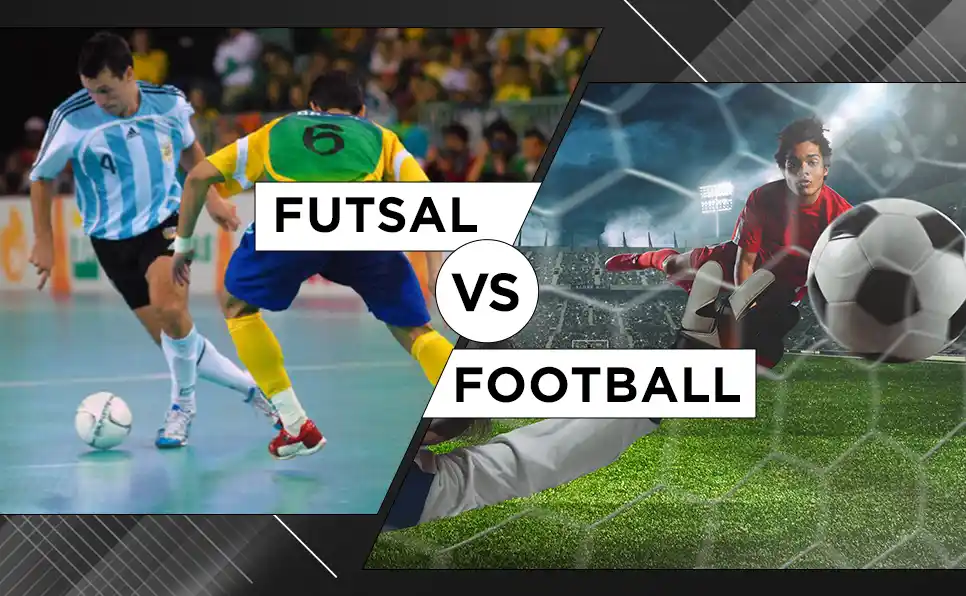
Exploring the benefits of Futsal over Football

Introduction: Sports are getting faster and shorter day by day. If you thought sports were fast-paced yesterday, it is even quicker today. Every sport is going through a phase of evolution where variety of formats are getting shorter, quicker, and more fast-paced. Take, for example, cricket. From five days of classic test matches now, we have adrenaline-pumping T20 matches. A format that the fans have widely accepted. Because the audience’s attention span is decreasing at an alarming rate, shorter and fast-paced sports are becoming popular. Futsal is a prime example. It is a variation of football played on a smaller field with fewer players than traditional football. Futsal is more technical, requires more skills, and tends to be a high-energy game. It is a compressed form of football, played in a 5-a-side format. Futsal, unlike football, is played in an indoor stadium over a hard court. Futsal calls for more creativity. You are likelier to see nutmeg, rabona, elastico, and Cruyff turn more often in a futsal. Futsal players focus on deft touches, control, improvisation, and technique instead of possession play. Because it is played on a smaller court, Futsal tends to be more intense, and freestylers shine more than conventional football players. Futsal has roped in over 13 million viewers and continues to grow in popularity. However, if you are a true lover of the sport, you will agree it is not a question of Futsal vs. football but rather Futsal & Football. Origin: Futsal is of European & South American origin with Portuguese, Spanish, Uruguayan & Brazilian influences. The World Futsal Association registered the name Futsal in 1985 that was accepted by FIFA as well. But the credit goes to Juan Carlos Ceriani, a teacher based out of Uruguay to popularize the sport in 1930. Back in those days, Futsal was played in basketball court. The idea was to recreate football for both indoor and outdoor venues. Ceriani developed a set of rules that included a smaller pitch, a smaller ball, and a limit on the number of players on each team. The game was first played in 1930 on a basketball court in Montevideo, and it quickly gained popularity in the region. Futsal soon spread to other South American countries, including Brazil, where it became very popular. In fact, Brazil is now one of the world’s leading futsal nations, having won multiple FIFA Futsal World Cup championships. Today, futsal is played all over the world and has become an important development tool for young football players, helping them to develop the skills and techniques needed to succeed on the outdoor pitch. Rules: Futsal is a variant of football played on a smaller indoor pitch. The rules of futsal are very similar to the rules of football, with a few differences to account for the smaller pitch and indoor setting. Here are some of the key rules of futsal: Number of players: Each team has five players on the pitch, including one goalkeeper. Substitutions: Substitutions are allowed at any time, and there is no limit on the number of substitutions a team can make. Duration of the game: The game is played in two halves of 20 minutes each, with a 10-minute halftime break. Ball: The ball used in futsal is smaller and heavier than a regular football/soccer ball, with a circumference of 62-64 cm and a weight of 400-440 grams. Kick-ins: When the ball goes out of bounds, it is restarted with a kick-in rather than a throw-in. The player taking the kick-in must have at least one foot on the sideline. Goal clearances: When the ball goes out of bounds over the end line, the goalkeeper takes a goal clearance rather than a goal kick. The goalkeeper can throw or kick the ball back into play from their own goal area. Timekeeping: The clock is stopped when there is a break in play, such as a foul or a substitution. This means that the game time can vary from the 40 minutes of play. Fouls: Foul limit is 5 fouls per team per half, after which the opposing team is awarded a penalty kick. Players are not allowed to slide tackle or tackle from behind. Free kicks and penalty kicks: Free kicks are awarded for fouls, and penalty kicks are awarded for more serious fouls or handballs in the penalty area. These are some of the key rules of futsal, but there may be additional rules or variations depending on the league or competition being played. Futsal Vs Football: Futsal and football (soccer) are both ball games that share many similarities. Still, there are also some crucial differences between the two sports. Here are some of the key differences between futsal and football: Playing surface: Futsal is played on a smaller indoor pitch, while football is typically played on a more extensive outdoor pitch. Number of players: Futsal is played with five players on each team, while football is typically played with 11 players. Ball size and weight: The ball used in futsal is smaller and heavier than the ball used in football, which is larger and lighter. Duration of the game: A futsal match is typically played in two halves of 20 minutes, while a football match is generally played in two halves of 45 minutes. Scoring: Futsal goals are typically smaller than football goals, with a size of 3 meters by 2 meters. Additionally, in futsal, players cannot score directly from kick-ins or goal clearances. Rules: The rules of futsal differ slightly from the rules of football. For example, in futsal, players are not allowed to slide tackle or tackle from behind, and the goalkeeper is only allowed to hold the ball for a maximum of four seconds. Style of play: Futsal tends to be a faster-paced and more technical game than football due to the smaller pitch and limited space. Players have less time and space to make decisions, so they must be more creative and skillful on the ball. These are

Exploring the benefits of Futsal over Football Read More »

The Power of a Debt-Free Life Why it matters

The Power of a Debt Free Life: Why It Matters

Are you losing sleep at night, thinking, how will you repay your equated monthly installment? Are you taking a loan to repay another loan and then falling into the cycle of taking another loan? If you are splurging all your earnings by paying multiple loans? For a healthy state of mind and being, you need to be stress-free. And financial stress is the worst. Not only it gets difficult to manage your monthly expenses, but the pressure from the collection team and loan sharks is also often very challenging to deal with. The constant pressure to pay what you owe others can drive you to depression, lack of sleep, deteriorating mental health, and risk of losing social and financial credibility. Debts often increase debts over time. And you end up paying EMI for your entire life. It keeps on compounding until you crumble under pressure. The consequences can be loss of property and even life. Many succumb to these and end up taking drastic measures. Therefore, if you want to live a life full of peace and financial stability, leading a debt-free life becomes vital. Why does a debt-free life matter? Well, you will be happier and feel much lighter from within. Without those burdens of repayments weighing heavy on your shoulder, you will not be answerable to most of them. You know that feeling of dependency when you owe someone something! It is a horrible feeling to live with. Especially when you know you won’t be able to repay soon or, in some cases, never. Debt-free life means a self-sufficient life. You don’t owe anyone financially anything. You are a person who has repaid every favor done to you. Unlike Lannisters, who always pay their debts because of their immeasurable wealth, you and me, and most of us commoners, do not have the bounty! Neither will we win a lottery soon or stumble upon El Dorado. When you borrow a loan from a bank or a third-party lending partner, you pay more than you borrowed. And then you fall into the loan cycle, piling up bad debts. Furthermore, people often fail to pay back their debts and engage in illegal activities like gambling or stealing. In the promise to recover the losses, they look for easy money, which often turns out to be scams and frauds, causing further financial crunch. Because there are all sorts of emergencies lurking in the shadows, better monthly budgeting might help you get started on solving them. Debt-free life allows you to prioritize taking loans (if at all) for better opportunities: like investment in a business, medical emergency, education, or home loan. But, even so, one should avoid taking loans of any sort. By leading a debt-free life, you manage to salvage your social life while securing your financial future. It means securing your future and creating a safety net on which to fall back when things go south. You don’t live in fear of losing your car or home. You get a sense of freedom in spending where it is required, where it is needed. By leading a debt-free life, you can compound your savings, giving you the option for early retirement. And because every loan you opt for needs a guarantor, you do not pass your baggage to someone else in the event of failed repayment. The total global debt as of 2022 is $226 trillion. There are 8 billion people on the planet. That is an average debt of $28,250 per person. It is more than the average income generation for the entire continent of Africa, East Asia, and the Pacific, which amounts to $8,800. The increasing trend of debts also saw a parallel rise in depression and severe mental issues. But why are we falling prey to debt traps, and how do we avoid them? Advertising and marketing have given consumerism a whole new meaning. “We are buying stuff we don’t need with the money we don’t have.” The shopping mall culture replaced our evening walk in the park. Advertisers are finding it easier to raise the insecurities of consumers. Social pressures are changing the meaning of lifestyle. Today, it’s not about how well you lived your life in principle but what you can show for it! Unlike the economic depressions and crises humankind experienced in the past, since the age of mass production and consumerism, we have more production than demand for the first time. There is no shortage of goods and commodities today. Consumers are spoiled for choices. Take, for example, breakfast cereals. Americans have over 4,000 different choices of cereal for breakfast alone. Apple Cinnamon, Berry Burst, Maple Cheerios, Banana Crème Frosted Flakes, Frooty Loops, Quaker, and whatnot. Each is advertised to slow-brainwash consumers into a false sense of acceptance. Did it ever happen where you thought this was the best thing you have ever wanted at the time of buying, but months later, that thing is lying somewhere in the corner of the room? And then you will have people complaining my needs aren’t met! Well, drop some of your needs. Buy only what you need. Also, maintaining multiple credit cards should be strictly avoided. Pay your credit card bills in one go. And try not to depend on these. Like any other credit; you end up paying more than the retailer’s price. Cash should be the preferred method of payment. Go for secondhand cars and stop splurging on fancy products. Alternatively, you can avail yourself of public transport, which is cost-effective. If you want to live a debt-free life, look for cost-effective options. Make a monthly budget and stick to it. Keep looking for freelance jobs if your work permits. Add to your source of income. Cover all your bases. Invest wisely. Above all, choose quality in ideals and not materials. Each hack will only work for some. Every individual needs to assess these on their terms. Based on their income, monthly expenses, emergencies, and goals for life. But what remains constant is the

The Power of a Debt Free Life: Why It Matters Read More »

Evolution of 5G Network Technology

5G, or fifth generation, wireless technology is the latest and greatest in mobile network technology. It promises to revolutionize the way we communicate, work, and live. With its lightning-fast speeds, ultra-low latency, and increased capacity, 5G has the potential to change the way we interact with technology and the world around us. What is a 5G Network Technology? 5G is the fifth generation of mobile networks, following 4G, 3G, and 2G. It is a new type of wireless technology that promises to offer faster speeds, lower latency, and increased capacity compared to previous generations of mobile networks. 5G networks are designed to support a wide range of new use cases, including virtual reality, augmented reality, the Internet of Things (IoT), and other emerging technologies. This will enable new business models and create opportunities for innovation in various sectors. 5G networks are designed to be more energy efficient than 4G networks, which will make them more sustainable in the long run and reduce the environmental impact of mobile networks. Networks are also designed to support a higher level of reliability than 4G networks, which will make them suitable for mission-critical applications such as self-driving cars, remote surgery, and industrial automation. 5G networks work by using a combination of different types of spectrum, including high-frequency millimeter wave spectrum and lower-frequency sub-6GHz spectrum, which allows for better coverage and penetration in buildings and other hard-to-reach areas. Overall, 5G technology is a new generation of mobile networks that promises to revolutionize the way we communicate and interact with technology, providing faster, more reliable, and more efficient wireless connections for a wide range of devices and applications. Features, Benefits, and Advantages of 5G Network Technology: One of the key features of 5G is its impressive speed. While 4G networks typically max out at around 100Mbps, 5G networks can reach speeds of up to 10Gbps. This means that 5G networks can download an entire HD movie in just a few seconds, compared to several minutes on a 4G network. This increased speed will have a huge impact on how we use our mobile devices, allowing us to stream high-definition videos, play online games, and download large files with ease. Another major advantage of 5G is its ultra-low latency. Latency is the time it takes for a device to send a signal to the network and receive a response. On 4G networks, latency is typically around 50 milliseconds, but 5G networks can have latency as low as 1 millisecond. This ultra-low latency will enable new use cases such as remote surgery, autonomous vehicles, and industrial automation. In addition to speed and latency, 5G networks also offer increased capacity. This means that more devices can connect to the network at the same time without any loss of speed or performance. This is especially important as the number of connected devices continues to grow. According to a study by Ericsson, there will be around 29 billion connected devices by 2024. With 5G, we will have the capacity to oversee this influx of devices without any issues. Some additional Benefits: Improved coverage: 5G networks use a combination of high- and low-frequency spectra, which allows for better coverage and penetration in buildings and other hard-to-reach areas. This means that 5G networks will be able to reach more people in more places than 4G networks. More efficient use of spectrum: 5G networks use a technique called “massive MIMO” (multiple input, multiple outputs) which allows for more efficient use of spectrum. This means that more data can be transmitted in the same amount of spectrum, which will increase capacity and reduce congestion on the network. Support for new use cases: 5G networks are designed to support a wide range of new use cases such as virtual reality, augmented reality, and the Internet of Things (IoT). This will enable new business models and create opportunities for innovation in various sectors. Improved reliability: 5G networks are designed to have a higher level of reliability than 4G networks, which will make them suitable for mission-critical applications such as self-driving cars, remote surgery, and industrial automation. Increased energy efficiency: 5G networks are designed to be more energy efficient than 4G networks. This will make them more sustainable eventually and reduce the environmental impact of mobile networks. Advanced Network slicing: 5G networks will allow for advanced network slicing, which enables network providers to create multiple virtual networks that can be tailored to specific use cases. This will allow for more efficient use of network resources and enable new business models. How did 5G Network Technology evolve? The evolution of 5G network technology can be traced back to the early days of mobile communication. The first generation (1G) of mobile networks was introduced in the 1980s and primarily focused on voice communication. The second generation (2G) of mobile networks, introduced in the 1990s, introduced the concept of digital communication and data services such as text messaging. The third generation (3G) of mobile networks, introduced in the 2000s, brought significant improvements in data speeds and the ability to access the internet on mobile devices. The fourth generation (4G) of mobile networks, introduced in the 2010s, brought even faster data speeds and the ability to support more devices and applications. The development of the 5G network technology began in the early 2010s, with the goal of addressing the limitations of existing 4G networks and meeting the growing demand for mobile data. 5G networks are designed to provide faster download and upload speeds, lower latency, and increased capacity for connected devices. This is achieved through the use of higher frequency spectrum bands, advanced modulation techniques, and the deployment of small cells and other types of infrastructure. The 5G standardization process has been ongoing for several years, and the first commercial 5G networks were launched in 2019. Since then, the deployment of 5G networks has been gaining momentum globally, and it is expected that 5G will become the dominant mobile network technology in the coming years. The evolution of 5G network technology

Evolution of 5G Network Technology Read More »

What is Football Pool and how does it work

What is Football Pool and how does it work?

Introduction Football pool, also known as “pick ’em pool” or “survivor pool,” is a type of betting or gambling game in which participants pick the winning team of a series of professional or college football games. The goal of the game is to correctly pick the winning team in each game and earn points based on the accuracy of your picks. The participant with the most points at the end of the season is declared the winner. Origin of Football Pool The origins of football pool can be traced back to the early 20th century in the United Kingdom. The game is believed to have first been played in Liverpool, England in the 1920s, where it was known as “Littlewood’s Pools.” The game was created by John Moores, a business man from Liverpool, who was inspired by the football pools that were popular in the United Kingdom at the time. Pools at that time were a betting game in which players would buy a “coupon” that listed a number of football matches, and players would predict the outcome of those matches. If their predictions were correct, they would win a share of a prize pool that was funded by the sale of the coupons. In 1923, Moores decided to create a new version of the football pools that would be more accessible to the general public. He set up Littlewood’s Pools, which offered a simpler format that only required players to predict the outcome of a smaller number of football matches each week. The game was a huge success and soon spread throughout the United Kingdom and beyond. Football pool continued to grow in popularity throughout the 20th century, and it is estimated that by the 1960s, there were more than 28 million players in the United Kingdom. The game also spread to other countries, particularly in Europe and South America, where it is known as “quiniela” or “lottery football.” Nowadays, there are many different variations of football pool available, from the traditional “straight pool” to the more complex “confidence pool” and even online pools. But the origin of football pool can be traced back to the early 20th century in the United Kingdom, where it was created by John Moores, who set up Littlewood’s Pools in 1923 as a new and simpler version of the football pools that were popular at the time. Variations of Football Pool There are several different variations of football pool, but the most common form is the “straight pool,” in which participants simply pick the winning team of each game. Another popular variation is the “confidence pool,” in which participants rank their picks in order of confidence. In this format, a participant will earn more points for picking a winning team that they have ranked higher in their confidence list. One important aspect of football pool is the concept of a “spread.” A spread is a point differential used to even out the playing field between two teams. For example, if the New England Patriots are playing the Cleveland Browns and the Patriots are considered the stronger team, the spread may be set at 10 points. This means that in order for a participant in a football pool to correctly pick the Patriots, they must win by more than 10 points. If a participant picks the Browns, they will win the pick if the Browns either win the game or lose by less than 10 points. Another variation of football pool is the “suicide pool.” In a suicide pool, participants pick one team to win each week, but can only use each team once throughout the season. If a participant’s team loses, they are eliminated from the pool. The last person remaining in the pool is the winner. In addition to traditional football pools, there are also various online platforms and apps that allow users to participate in football pools. These platforms often have additional features such as live scoring, customizable pool rules, and the ability to join pools with friends or participate in public pools. Another important thing to consider is to keep track of the record of the team over the time, injuries of the key players, the weather conditions and even the head coach of the team can have an impact on the game. By using this kind of information, you can have a better idea of the outcome of the game. There are also pools that do not have entry fees, these are called “free pools” and these pools are used mostly by friend and family as a fun way to enjoy the games together. It’s also important to remember that when participating in any form of gambling, it’s important to set a budget for yourself and stick to it. Gambling should always be done in a responsible manner and never chase losses. Football pool is a popular and exciting way to enjoy the football season. With various variations such as straight pool, confidence pool, suicide pool, and free pools, there is something for everyone. By understanding the rules and regulations of the pool, tracking the record and conditions of the teams, setting a budget, and also participating on responsible way, you can have a fun and enjoyable experience while also having the chance to win some money. How does Football Pool work? In a traditional football pool, participants typically pay an entry fee to enter the game. The collected entry fees are then used as the prize for the winner or winners of the pool. In addition to the entry fee, some pools may also charge an administrative fee to cover the cost of running the pool. Once the pool is set up, participants will usually receive a list of games that are scheduled for the upcoming football season. They can then make their picks for each game, either by hand or through an online platform. It is important to note that most football pools do not allow participants to change their picks once the games have begun.

What is Football Pool and how does it work? Read More »

What do gaming glasses do

What do gaming glasses do?

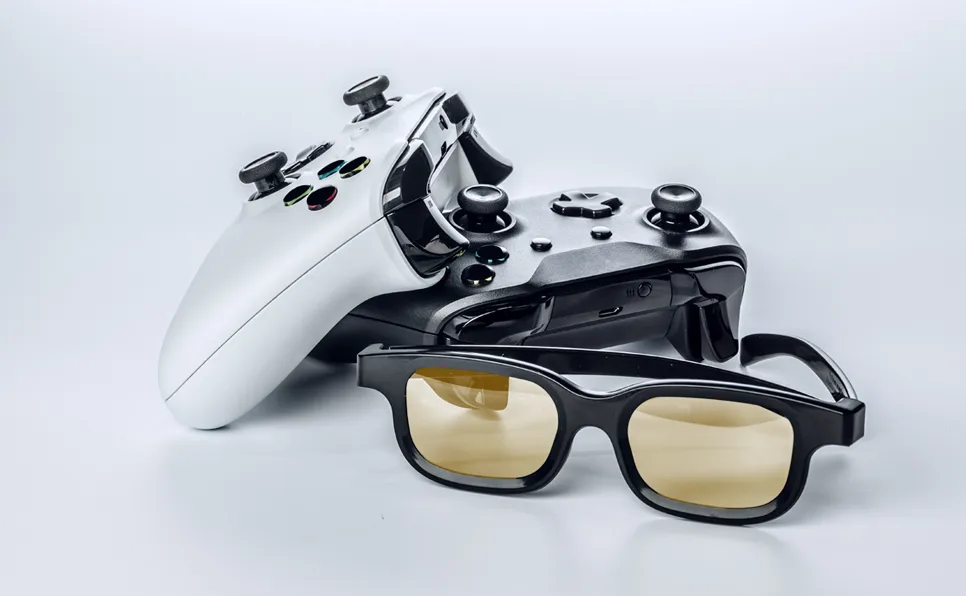
Whether you are a pro gamer, streamer, casual gamer, or just a fashion buff, gaming glasses are the new accessories that are gaining popularity among other gaming gadgets. Gaming glasses are a tool every gamer craves for. Be it hours of hours on Minecraft or strategies over strategies for Valorant, the only thing that can sustain your gaming habits are these gaming glasses! But do they really work? And does it improve your gaming efficiency? Let’s find out. What are gaming glasses? You must have seen a pair of yellow glasses every streamer fashioning beneath their headsets. And yes, it is quite cool and looks fab. Not to forget paid collaborations and sponsorships for the streamers to promote them. But is it all about style? Apparently not! These yellow-tinged lenses with anti-reflective (AR) coating have their usability. These gaming glasses are targeted at gamers and are often paired with headsets. These gaming glasses are designed to prolong gaming hours and sustain your gaming career by reducing the strain on your eyes. But what causes the strain? How do gaming glasses work? All electronic devices including monitors, TVs, and phones emit ultraviolet light. This wavelength often causes strain and disrupts sleep cycles. Gaming glasses filter the UV light. And while there is no direct evidence to support that gaming glasses help protect your eye, but anecdotal research like wearing blue light-blocking glasses for a few hours before sleep can reduce melatonin suppression induced by light to improve the sleep cycle. Because the blue light from artificial light sources has a bad rep, marketers often target this aspect to claim by blocking blue light you can improve your eyesight and overall gaming performance in the long run. While there may be some science behind improving eyesight, there is absolutely no science behind gaming glasses improving gaming efficiency. Do Gaming Glasses work to help reduce strain on your eye? Given the exposure to screentime, the youths are putting themselves, after hours of a raid in World of Warcraft, your eyes probably start to water, you seem to lose focus, and even may itch or pain. Coupled with the usage of mobile, tv, and other electronic gadgets, we are bombarded with UV emissions from every device all the time. And albeit low, these glasses do provide a certain amount of magnification in view and reduction in blue light which is beneficial for the eyes. There are some prescription standard blue light-blocking glasses as well. It will be difficult to quantify to what degree these glasses protect the eye, but it certainly does to an extent. Benefits of Gaming Glasses Three main functionalities of gaming glasses are: Anti-Reflective properties: Apart from enhancing color contrast and focus, the AR coating in the gaming glasses reduces the glares from the monitors which can reduce the strain caused in your eye. Magnification: A mild magnification in the glasses will reduce squinting. Protection from Blue Light: Yellow or amber-tinted gaming glasses can help reduce eye fatigue and improve sleep cycles. How to choose the right gaming glasses? Lens tint: The darker the tints, the lesser the exposure, and the better the protection. Darker tints block a higher percentage of blue light. Black tints compromise the brightness and hence the visibility. Material: The gaming glasses are designed to be compatible with your headset and hence are needed to be lightweight and flexible, resistant to damage. Materials like nylon and acetate are often considered prime. Size of the Frame: Comfort is key hence always pick the glasses as per your fit. Coating: The gaming glasses should reduce glare from the screen and should be resistant to scratches. Hence, they should be coated with compatible films. Portability: Minimal and easy-to-carry gaming glasses are the most desirable ones. The Final Verdict: Should you as a gamer go for Gaming Glasses? As a pro gamer or a streamer, you will be spending hours and hours in front of the screen. That too for a considerable amount of time in your life. Even if you are a casual gamer, the extent of UV emissions we are subjected to is unprecedented. In these scenarios, we should use every measure possible to reduce the strain on our eyes and improve sleep cycles. And even if you are not gaming or not even an avid gamer, you can use these glasses throughout the day as they are versatile, funky, and adds a swagger. So, no harm in using them. However, these gaming glasses will not help you achieve a higher score in the game you are invested in.

What do gaming glasses do? Read More »

What is voice phishing and how does it work

What is voice phishing and how does it work?

Voice phishing, also known as vishing, is a type of fraud that involves the use of phone calls or voice messages to trick victims into revealing sensitive information, such as passwords or credit card details. This form of cybercrime involves using the telephone to trick individuals into giving out sensitive information such as bank account numbers and passwords. Vishing scams are often carried out by attackers who use automated voice recordings or live operators to impersonate legitimate organizations, such as banks or government agencies, in order to gain the trust of their victims. Voice phishing is also a type of social engineering attack that aims to steal sensitive information from individuals through the use of phone calls. This technique is often used by scammers to obtain personal information such as credit card numbers, bank account information, and login credentials. How does Voice Phishing work? The process of voice phishing typically begins with the attacker calling the victim and pretending to be a legitimate representative of a company or organization. The attacker may claim that the victim’s account has been compromised or that there is a problem with their account that needs to be resolved. The attacker will then try to convince the victim to provide sensitive information, such as their password or credit card details, by using various tactics such as creating a sense of urgency or making the victim believe that they are in danger if they do not provide the information. Once the victim has provided the sensitive information, the attacker can use it to gain access to the victim’s accounts or steal their money. Voice phishing can be difficult to detect because the attackers often use sophisticated technology to mask their phone numbers and make it appear as if they are calling from a legitimate organization. However, there are some signs that can help victims identify voice phishing attempts, such as being contacted out of the blue by someone claiming to be from a company or organization, being asked to provide sensitive information over the phone, or being pressured to make a decision quickly. Other Voice Phishing Techniques One common vishing scam involves an attacker calling a victim and claiming to be a representative of their bank. The attacker will then ask the victim to provide their account information and password in order to “verify their identity” or “prevent fraudulent activity.” In reality, the attacker is using this information to access the victim’s bank account and steal their money. Another type of vishing scam involves attackers pretending to be from the Internal Revenue Service (IRS). The attacker will tell the victim that they owe back taxes and must make a payment immediately or face legal consequences. The victim is then instructed to provide their bank account information or credit card number in order to make the payment. Vishing attacks can be difficult to detect, as the attackers often use advanced technology to make their voices sound legitimate and to hide their true identities. In addition, many vishing scams use caller ID spoofing, which allows the attacker to display a fake phone number on the victim’s caller ID. This can make it appear as though the call is coming from a trusted organization, further increasing the likelihood that the victim will fall for the scam. They use techniques like ID spoofing to mask their caller IDs and hence it becomes difficult for users to gauge the credibility. From a promise of reward to converting loyalty points into hard cash, and from loan repayments to social security threats, vishing comes in all forms. The more you know about it, the better! How to identify Vishing Scams? The process of voice phishing typically begins with the attacker placing a phone call to a potential victim. The caller may claim to be a representative from a legitimate organization, such as a bank or a government agency, and may use a variety of tactics to convince the victim to disclose sensitive information. One common tactic used by attackers is to create a sense of urgency. The caller may claim that there is a problem with the victim’s account and that immediate action is needed to prevent it from being compromised. This can be especially effective if the caller uses technical language and provides a phone number for the victim to call back, further increasing the sense of legitimacy. Another tactic used by attackers is to use social engineering techniques to build trust with the victim. This can include asking personal questions and using the information provided to create a more personalized and convincing pitch. For example, the caller may mention the victim’s name, address, or other personal details in an attempt to gain their trust. Once the attacker has established a sense of trust and urgency, they will typically try to obtain sensitive information from the victim. This can include asking for credit card numbers, bank account information, or login credentials for various accounts. In some cases, the attacker may even try to convince the victim to transfer money directly to a bank account under their control. How to protect yourself from Voice Phishing scams? To protect yourself from vishing attacks, it is important to be cautious when providing sensitive information over the phone. If you receive a call from someone claiming to be from your bank or the IRS, do not provide any personal information. Instead, hang up and call the organization back using the phone number listed on their official website. This will ensure that you are speaking with a legitimate representative. It is also a good idea to use security software, such as a firewall or antivirus program, to protect your computer and personal information from being accessed by attackers. And be sure to regularly update your software and operating system to stay ahead of the latest threats. It is important for individuals to be aware of voice phishing and to be cautious when receiving phone calls from unknown numbers. If you receive a call from someone claiming

What is voice phishing and how does it work? Read More »