RethinkTrends

Guest Author

How Does the FIFA World Cup 2026 Round of 32 Work

How Does the FIFA World Cup 2026 Round of 32 Work? Format, Rules & Qualification

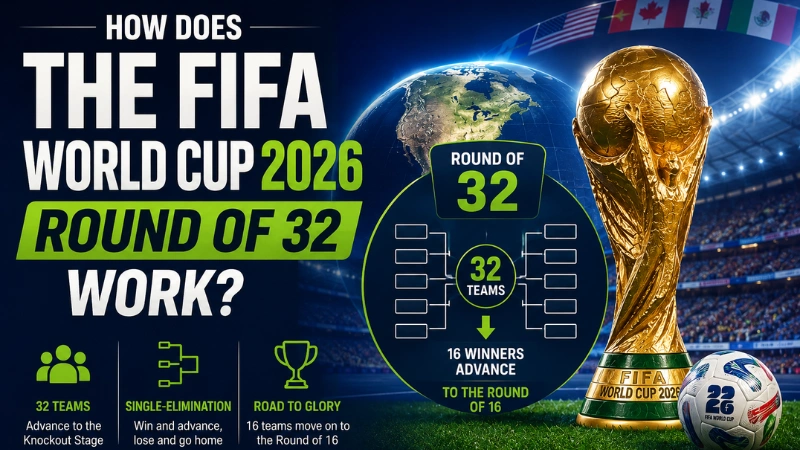
The FIFA World Cup 2026 Round of 32 is the first knockout stage of the tournament. A total of 32 teams qualify after the group stage: the top two teams from each of the 12 groups and the eight best third-placed teams. From this round onward, every match is single elimination. Quick Answer: FIFA World Cup 2026 Round of 32 The 2026 World Cup has 48 teams divided into 12 groups of four. The top two teams from each group qualify automatically for the Round of 32. The eight best third-placed teams also qualify. The Round of 32 has 16 knockout matches. Winners move to the Round of 16; losing teams are eliminated. What Is the Round of 32 in FIFA World Cup 2026? The Round of 32 is the first knockout round of the FIFA World Cup 2026. It begins after all group-stage matches are completed. Unlike the group stage, where teams can still recover after a loss, the Round of 32 is a direct elimination stage. That means one simple rule applies: win and continue, lose and go home. This round is especially important in 2026 because it is the first time the men’s FIFA World Cup uses a 48-team format with a 32-team knockout stage. Earlier editions, such as the 2022 World Cup, moved from the group stage directly to the Round of 16. In 2026, the expanded tournament adds one extra knockout round. Why Does the FIFA World Cup 2026 Have a Round of 32? The FIFA World Cup 2026 has a Round of 32 because the tournament has expanded from 32 teams to 48 teams. To manage the larger number of teams, FIFA has divided the tournament into 12 groups of four teams each. After the group stage, 32 teams qualify for the knockout rounds. This creates a longer knockout pathway: Round of 32 → Round of 16 → Quarter-finals → Semi-finals → Third-place match → Final The new format gives more teams a chance to participate in the World Cup while also keeping the knockout stage competitive and exciting. How Do Teams Qualify for the FIFA World Cup 2026 Round of 32? Teams qualify for the Round of 32 through two routes: automatic qualification from the group standings and qualification as one of the best third-placed teams. Qualification Route Number of Teams How They Qualify Group winners 12 Finish 1st in their group Group runners-up 12 Finish 2nd in their group Best third-placed teams 8 Ranked among the top eight third-place teams Total teams in Round of 32 32 Enter the knockout stage Each of the 12 groups has four teams. After every team plays three group matches, the group table decides who advances. The first-place and second-place teams from each group automatically qualify. This gives 24 teams. Then FIFA compares the 12 third-placed teams and selects the best eight among them. These eight teams complete the Round of 32 lineup. How Are the Best Third-Placed Teams Selected? This is one of the most important parts of the new FIFA World Cup 2026 format. Because there are 12 groups, there will be 12 teams that finish third in their group. However, only eight of them qualify for the Round of 32. The remaining four third-placed teams are eliminated. FIFA ranks the third-placed teams using these criteria: Ranking Order Criteria 1 Greatest number of points in all group matches 2 Better goal difference 3 Greater number of goals scored 4 Higher team conduct score 5 FIFA/Coca-Cola Men’s World Ranking, if still tied In simple words, a third-placed team with more points has the best chance of qualifying. If teams have the same points, goal difference becomes important. If they are still tied, goals scored and disciplinary record can decide qualification. Example: How a Third-Placed Team Can Qualify Imagine four teams finish third in different groups with these records: Team Points Goal Difference Goals Scored Result Team A 4 +1 5 Strong chance to qualify Team B 4 0 4 Still in good position Team C 3 +2 6 Depends on other groups Team D 2 -1 2 Likely eliminated In this example, Team A and Team B would probably rank higher than Team D because they have more points. Team C has a strong goal difference, but points are checked first, so a team with four points usually has an advantage over a team with three points. This is why every group-stage goal matters in the 2026 World Cup. Even a draw or a late goal can decide whether a third-placed team reaches the Round of 32. How Does the Round of 32 Bracket Work? The Round of 32 bracket is not random. FIFA uses a fixed knockout bracket system based on group positions. The bracket includes: Group winners Group runners-up Eight best third-placed teams A group winner may face a third-placed team, while runners-up can be paired against other runners-up depending on the bracket position. FIFA also uses pre-set combinations to decide where the qualified third-placed teams fit into the bracket. One important rule is that teams from the same group cannot meet again in the Round of 32. This prevents an immediate rematch between teams that already played each other in the group stage. Because only eight of the 12 third-placed teams qualify, FIFA’s regulations include many possible combinations for how those third-placed teams can be placed into the Round of 32 bracket. Round of 32 Format at a Glance Feature FIFA World Cup 2026 Round of 32 Stage type Knockout round Number of teams 32 Number of matches 16 Qualification Top two from each group + eight best third-placed teams Match result Winner advances, loser eliminated Draw possible? No Extra time Yes, if level after normal time Penalties Yes, if still level after extra time Next stage Round of 16 What Happens If a Round of 32 Match Ends in a Draw? A Round of 32 match cannot finish as a draw because it is a knockout match. If the score

How Does the FIFA World Cup 2026 Round of 32 Work? Format, Rules & Qualification Read More »

Healthy Late-Night Snacks That Won’t Ruin Sleep

Healthy Late-Night Snacks That Satisfy Cravings Without Ruining Sleep

Healthy late-night snacks can be part of a balanced routine when you are genuinely hungry, not just bored. The best options are small, easy to digest, and built around protein, fiber, or sleep-supportive nutrients. Think Greek yogurt, banana with nut butter, makhana, oats, eggs, hummus, or cottage cheese instead of sugary, fried, or spicy foods. Late-night cravings usually show up when the day finally slows down. You finish dinner, watch one episode, scroll for a while, and suddenly your brain wants something sweet, salty, or crunchy. The problem is not always eating at night. The problem is eating the wrong thing, in the wrong portion, for the wrong reason. Cleveland Clinic notes that boredom-based snacking is different from real hunger, and late-night snacks loaded with refined carbs can be easy to overeat. This guide is not about strict food rules. It is about choosing healthy late-night snacks that feel satisfying without leaving you too full, too thirsty, too wired, or uncomfortable when you lie down. Is late-night snacking actually unhealthy? Late-night snacking is not automatically unhealthy. It depends on whether you are truly hungry, what you eat, how much you eat, and how close it is to bedtime. A small, balanced snack can help if hunger is keeping you awake. But eating out of boredom, stress, habit, or screen-time cravings can add extra calories without making you feel satisfied. That is why the first question should be simple: Am I hungry, or do I just want something to do? If your stomach is growling or dinner was too light, a small snack makes sense. If you are reaching for chips only because a show is on, try water, herbal tea, brushing your teeth, or stepping away from the screen first. The goal is not to “never eat after dinner.” The goal is to eat lightly and intentionally. What makes a good late-night snack? A good late-night snack should be light, filling, and calm on your stomach. The best choices usually include protein, fiber, healthy fats, or nutrients linked with sleep support. Sleep Foundation explains that foods containing nutrients such as melatonin, tryptophan, magnesium, and potassium may support sleep, while spicy, fatty, sugary, acidic, and caffeinated foods can work against it. A smart snack before bed should usually be: Small in portion Low in added sugar Not too oily or spicy Easy to digest Balanced with protein or fiber Satisfying enough to stop cravings For example, a bowl of Greek yogurt with berries is better than a large bowl of ice cream because it gives protein, freshness, and sweetness without the same sugar load. A small bowl of makhana is better than fried chips because it gives crunch without heaviness. Best healthy late-night snacks by craving type Instead of making this a long list of 25 random ideas, it is better to choose snacks based on the craving you actually have. For sweet cravings If you want something sweet at night, choose naturally sweet foods with protein, fiber, or fat. This slows the snack down and makes it more satisfying. Good options include: Greek yogurt with berries Banana with almond or peanut butter Apple slices with peanut butter Kiwi Warm oats with milk Cottage cheese with fruit A banana with peanut butter works well because it gives sweetness, creaminess, and fullness. Greek yogurt with berries feels like dessert but is more balanced than cookies or cake. Kiwi is also a light option when you want something fresh and simple. For salty cravings Salty cravings often lead to chips, instant noodles, fried snacks, or packaged namkeen. The better move is to choose something savory but not greasy. Good options include: Roasted makhana Hummus with cucumber or carrot sticks Whole-grain crackers with cheese Cottage cheese with cucumber Roasted chickpeas Boiled egg with a pinch of salt and pepper Makhana is especially useful for people who want a light Indian late-night snack. Roast it dry or with a tiny amount of ghee, then add mild seasoning. Avoid making it too spicy before bed. For crunchy cravings Crunch is one of the biggest reasons people snack at night. You may not want a full meal; you just want texture. Good options include: Air-popped popcorn Roasted chickpeas Roasted makhana Cucumber sticks with hummus Pumpkin seeds Apple slices Popcorn can be a good late-night snack when it is air-popped and not covered in butter, cheese powder, or excess salt. Roasted chickpeas are more filling because they add protein and fiber. For protein cravings If dinner was light or you worked out in the evening, a protein-rich snack may feel better than a carb-heavy one. Good options include: Boiled egg Greek yogurt Cottage cheese Edamame Small protein smoothie Cheese with whole-grain crackers Keep the portion modest. A bedtime snack should not feel like a second dinner. Healthy Indian late-night snack ideas Indian late-night snacking can easily become heavy because many common options are fried, spicy, or high in refined carbs. But there are plenty of lighter choices that still feel familiar. Try these: Roasted makhana:Light, crunchy, and easy to season. Use mild spices instead of heavy masala at night. Curd with fruit:Simple, cooling, and satisfying. Add banana, berries, or a few chopped nuts. Warm milk with oats:Good when you want something soft, warm, and filling. Moong dal chilla pieces:If you have leftovers, a small portion can work better than fried snacks. Cucumber with hung curd dip:Fresh, crunchy, and protein-friendly. Boiled egg chaat:Use mild seasoning, onion, and coriander. Skip too much chili before bed. Small bowl of poha or upma:This works only if the portion is small and not oily. Keep it light. The key is to avoid turning a snack into a full meal. A small bowl is enough. Snacks to avoid before bed Some foods are more likely to disturb sleep, digestion, or comfort at night. You do not have to ban them forever, but they are not ideal close to bedtime. Avoid or limit: Caffeine:Coffee, strong tea, energy drinks, and some chocolate can make it

Healthy Late-Night Snacks That Satisfy Cravings Without Ruining Sleep Read More »

Streetwear Aesthetic Men Describe: Meaning & Outfits

Streetwear Aesthetic Men Describe: Meaning & Outfits

Streetwear aesthetic men describe means explaining a men’s fashion style built around relaxed fits, sneakers, hoodies, graphic tees, cargos, denim, utility details, and cultural attitude. The look comes from skate, hip-hop, sportswear, vintage, and sneaker culture. It is casual, but when done well, it looks intentional rather than lazy. Introduction Streetwear aesthetic men describe is a weird search phrase, but the question behind it is simple: how do you actually explain the men’s streetwear look? Most guys can recognize streetwear when they see it. Baggy jeans, a boxy tee, clean sneakers, maybe a cap or crossbody bag. But describing it is harder because streetwear is not one outfit. It can be minimal, vintage, skate-inspired, techy, luxury, or loud. That matters because men’s fashion is becoming more intentional. Grand View Research valued the global men’s wear market at $590.24 billion in 2023 and projected it to reach $923.85 billion by 2030, driven partly by rising fashion awareness among Millennial and Gen Z men (Grand View Research, 2024). What does the men’s streetwear aesthetic mean? The men’s streetwear aesthetic is casual clothing with cultural attitude. It combines comfort, identity, and subculture through pieces like sneakers, hoodies, graphic tees, loose denim, cargos, workwear jackets, caps, and layered outerwear. Streetwear started outside traditional fashion spaces. It grew through skateboarding, hip-hop, basketball, surf culture, sneaker collecting, punk, Japanese street fashion, and youth communities. That is why it feels different from basic casualwear. A plain hoodie and jeans can be casual. A boxy hoodie, washed denim, statement sneakers, and the right cap can become streetwear. Vogue Business has described modern streetwear as less dependent on old-school hype and more connected to authenticity, community, and new-generation brands (Vogue Business, 2024). A simple way to describe it is this: men’s streetwear is relaxed, expressive clothing shaped by music, sneakers, sport, and the street. Words that describe the men’s streetwear aesthetic If someone asks you to describe a streetwear outfit, do not just say “urban” or “baggy.” Those words are too broad. Better streetwear language focuses on shape, influence, and mood. Style word What it means Relaxed Comfortable, easy, not formal or stiff Boxy Wider T-shirts, hoodies, or jackets with a squared shape Oversized Larger fit, but still styled with intention Sneaker-led The shoes set the tone of the outfit Graphic-heavy Prints, artwork, logos, or text add personality Utility-inspired Cargos, pockets, vests, workwear, and functional details Vintage Washed denim, retro sportswear, thrifted jackets, faded graphics Technical Nylon, shell jackets, trail shoes, black cargos, outdoor details Minimal Cleaner colors, subtle branding, strong silhouettes Hype-driven Limited drops, recognizable brands, bold logos So instead of saying, “He wears streetwear,” you could say:“His style is relaxed skate streetwear with baggy denim, graphic tees, and retro sneakers.” That sounds much more specific and human. Where the men’s streetwear look comes from Streetwear is not just a trend from Instagram. It has roots in real communities. Skate culture gave streetwear its loose pants, graphic tees, hoodies, beanies, and beat-up sneakers. Hip-hop added tracksuits, statement jewelry, caps, oversized silhouettes, and sneaker obsession. Basketball culture made sneakers a status symbol. Japanese street fashion helped turn streetwear into something more experimental, layered, and collectible. Then luxury fashion stepped in. Brands like Supreme, Off-White, Louis Vuitton, and BAPE helped push streetwear from subculture into the mainstream. But the newest version of streetwear is less about wearing the loudest logo. It is more about mixing references: a thrifted jacket, wide-leg pants, trail sneakers, and a clean tee can say more than a head-to-toe designer outfit. That shift matters because fashion shoppers are more value-conscious now. The BoF–McKinsey State of Fashion 2025 report said fashion growth was expected to stay in the low single digits, while consumers became more price sensitive and brands had to work harder on value and positioning (BoF–McKinsey, 2025). Key pieces that define men’s streetwear A good streetwear wardrobe does not need 100 items. It needs strong basics with the right shape. Boxy T-shirts are usually the foundation. They look better than thin, tight tees because they create structure around the shoulders and chest. Hoodies and sweatshirts bring comfort, but the fit matters. A slightly oversized hoodie looks better when the pants and shoes balance it. Relaxed denim is one of the easiest ways to make a streetwear outfit feel current. Straight, loose, or baggy jeans usually work better than skinny jeans. Cargo pants add a utility edge. Olive, black, grey, brown, and washed beige are the easiest colors to style. Sneakers often decide the outfit’s mood. Retro runners, Jordans, Dunks, New Balance, Sambas, skate shoes, and trail sneakers all create different versions of streetwear. Outerwear makes the outfit feel complete. Bomber jackets, varsity jackets, coach jackets, denim jackets, leather jackets, puffers, and shell jackets all work. Accessories add personality. Caps, beanies, chains, rings, sling bags, sunglasses, and watches can finish the look without making it feel overdone. Vintage and resale pieces are also becoming more important. ThredUp’s 2026 report projected the global secondhand apparel market to reach $393 billion by 2030, growing twice as fast as the overall apparel market (ThredUp, 2026). Types of streetwear aesthetics for men Minimal streetwear is clean and controlled. Think neutral colors, boxy tees, straight pants, subtle sneakers, and almost no loud branding. Skate streetwear is looser and more casual. It uses baggy jeans, graphic tees, hoodies, beanies, flannels, work pants, and skate shoes. Techwear streetwear looks sharper and more futuristic. It leans on black, grey, nylon, cargos, waterproof jackets, trail sneakers, and utility bags. Vintage streetwear feels worn-in and personal. It uses thrifted sports jackets, faded tees, old denim, retro sneakers, and pieces that look like they have history. Luxury streetwear mixes casual shapes with expensive materials or designer details. It is not always loud; sometimes the fit and fabric do the talking. Gorpcore streetwear borrows from hiking and outdoor gear. Fleece jackets, shell layers, trail shoes, cargos, and functional bags are common. How to build a streetwear outfit without looking forced Start with one statement piece.Pick one item

Streetwear Aesthetic Men Describe: Meaning & Outfits Read More »

Vegan Indian Food: 7 Smart Ways to Eat Well

Vegan Indian Food: 7 Smart Ways to Eat Well

Vegan Indian food is Indian cuisine made without meat, dairy, eggs, ghee, or honey. It matters because many Indian staples—dal, chana, rajma, rice, roti, vegetables, chutneys, and spices—are naturally plant-based, affordable, and nutrient-dense when planned with enough protein, fiber, iron, B12, and healthy fats. Introduction In India, 81% of adults limit meat in some way, and 39% identify as vegetarian, according to Pew Research Center (2021). Vegan Indian food appeals to people who want familiar flavors, plant-based meals, and practical nutrition without expensive specialty products. The market opportunity is also growing. India’s vegan food market is projected to reach about $1.12 billion in 2026, according to Grand View Research. Forecasts show continued growth through 2033. This guide explains what counts as vegan in Indian cuisine, why it matters, how to build a balanced plate, and common mistakes to avoid. What is vegan Indian food? Vegan Indian food is Indian cooking that uses only plant-based ingredients: grains, pulses, legumes, vegetables, fruits, nuts, seeds, herbs, spices, and plant oils. It excludes dairy-based ingredients such as ghee, paneer, cream, yogurt, butter, and milk. Many traditional dishes are already close to vegan: chana masala, sambar, rasam, aloo gobi, baingan bharta, lemon rice, poha, idli, dosa, rajma, and many chutneys. The key is checking hidden dairy, especially in restaurant gravies, naan, sweets, and “tadka” made with ghee. Nutritionally, Indian plant-based meals work best when pulses, beans, soy, nuts, seeds, vegetables, and whole grains are combined across the day. ICMR-NIN’s 2024 dietary guidance recommends variety across food groups and emphasizes vegetables, whole grains, pulses, nuts, and seeds as core parts of a healthy Indian plate. Why vegan Indian food matters in 2026 Vegan Indian food matters in 2026 because it sits at the intersection of health, affordability, culture, and sustainability. Unlike many Western vegan healthy diets that depend on packaged substitutes, Indian cooking uses lentils, chickpeas, kidney beans, millets, rice, seasonal vegetables, coconut, peanuts, sesame, and spices as everyday staples. That distinction matters. Oxford researchers reported in Nature Food that vegan diets had about 30% of the environmental impact of high-meat diets across greenhouse gas emissions, land use, water use, water pollution, and biodiversity loss (Scarborough et al., 2023). At the same time, the Food Foundation (2024) found that beans and grains were among the healthiest, lowest-cost, and most environmentally beneficial plant-protein choices compared with meat and many processed substitutes. For Indian home cooks, that makes dal-chawal, khichdi, rajma-rice, and chana-roti strategically better than relying only on mock meats. How to build a balanced plant-based Indian plate — step by step Choose one protein-rich base.Use dal, chana, rajma, tofu, soy chunks, sprouts, or besan. Pulses and beans help make the meal more filling and support protein intake. Add a whole grain or millet.Pick brown rice, roti, jowar, bajra, ragi, quinoa, or hand-pounded rice. ICMR-NIN recommends making at least half of cereals and grains whole or minimally polished. Fill half the plate with vegetables.Use sabzi, salad, greens, gourds, cauliflower, okra, brinjal, carrots, or beans. ICMR-NIN’s vegetarian “My Plate” model includes 400 g vegetables and 100 g fruit per 2,000 kcal pattern. Use healthy fats deliberately.Cook with measured oil, then add nuts, seeds, coconut, peanuts, or sesame chutney for flavor and satiety. Check the dairy swaps.Replace ghee with oil, paneer with tofu, cream with cashew paste, and yogurt with unsweetened peanut, coconut, or soy curd. Common mistakes to avoid The biggest mistakes are usually hidden dairy, low protein, and over-reliance on refined carbs. Assuming every vegetarian dish is vegan: Paneer, ghee, curd, malai, butter, and milk often appear in “veg” dishes. Eating only rice and potatoes: Add dal, beans, tofu, sprouts, soy, nuts, or seeds to improve balance. Ignoring B12: A fully plant-based diet usually needs fortified foods or a supplement; ask a qualified clinician. Overusing oil-heavy restaurant foods: Vegan does not automatically mean light; fried snacks and creamy gravies can still be calorie-dense. Expert tips for vegan Indian cooking Use the ICMR-NIN “My Plate for the Day” framework as a planning tool: build meals around vegetables, cereals or millets, pulses, nuts, seeds, and measured fats instead of treating curry as the whole meal. Batch-cook three components weekly: one dal or bean curry, one dry sabzi, and one chutney. This makes quick meals easier. Use umami builders—tomato paste, roasted cumin, kasuri methi, tamarind, mushrooms, hing, and browned onions—to replace the richness usually supplied by ghee or cream. For restaurant ordering, ask: “Is this made with ghee, butter, cream, curd, paneer, or milk?” That one question prevents most accidental dairy. Conclusion Vegan Indian food is not a restrictive trend; it is a practical way to use Indian staples for flavorful, affordable, plant-based eating. The strongest approach is simple: combine pulses or beans with whole grains, vegetables, measured fats, and smart dairy swaps. Start today by choosing one familiar dish—chana masala, rajma, sambar, or dal—and making it fully plant-based. Then build a weekly meal plan around three proteins, three vegetables, and two grains or millets.

Vegan Indian Food: 7 Smart Ways to Eat Well Read More »

AI in Sports

AI in Sports: How Teams Use Data, Wearables and Analytics to Win

AI in sports uses artificial intelligence, machine learning, computer vision, wearables, and analytics to improve athlete performance, injury prevention, coaching, scouting, officiating, and fan engagement. It matters because modern teams no longer compete only on talent; they also compete on how quickly they can turn real-time data into smarter decisions. Introduction Sports teams are no longer asking whether data matters; they are asking how fast they can use it. AI in sports is now helping coaches monitor training loads, analysts break down opponents, scouts find talent, and broadcasters create personalized fan experiences. A 2026 SportsPro and Sportradar report found that 82% of sports organizations are already using AI, while 98% plan to increase its use within the next 12 months (SportsPro and Sportradar, 2026). This guide explains what the technology means, why it matters in 2026, how teams use it step by step, and which mistakes organizations should avoid before investing in sports AI tools. What is AI in sports? AI in sports is the use of artificial intelligence systems to analyze athlete data, match footage, biometric signals, and fan behavior so teams can make better decisions. It combines technologies such as machine learning, computer vision, predictive analytics, natural language processing, and wearable sensors. In practice, AI can help a football club analyze off-ball movement, a cricket team monitor bowler workload, or a basketball team study shot selection. It can also support sports media by generating highlights and helping fans find relevant content faster. The market reflects this rapid adoption. Grand View Research estimated the global AI sports market at USD 10.61 billion in 2025 and projected it to reach USD 49.92 billion by 2033, growing at a 21.6% CAGR from 2026 to 2033 (Grand View Research, 2026). Why AI in sports matters in 2026 AI in sports matters in 2026 because the margin between winning and losing is often tiny. A better recovery plan, faster tactical adjustment, or more accurate scouting report can change a season. Sports analytics has moved from a back-office advantage to a core competitive tool. Grand View Research valued the global sports analytics market at USD 5.68 billion in 2025 and projected it to reach USD 23.15 billion by 2033 (Grand View Research, 2026). The contrast is simple: traditional coaching relies mainly on observation and experience, while AI-assisted coaching adds real-time evidence. The best teams do not replace human expertise with algorithms. They use AI to help coaches, medical teams, analysts, and scouts see patterns that would be difficult to detect manually. How to use AI in sports — step by step Define the performance problem.Choose one measurable goal, such as reducing injuries, improving substitutions, or increasing fan retention. Clear goals prevent expensive tools from becoming unused dashboards. Collect clean, relevant data.Use wearables, match footage, GPS trackers, medical records, scouting reports, or fan engagement data. The model is only as useful as the data behind it. Choose the right AI method.Use computer vision for video tracking, predictive analytics for injury risk, and natural language processing for scouting notes or media content. Keep experts in the loop.AI should support coaches, doctors, analysts, and referees, not override them. Human review keeps recommendations practical and accountable. Measure and refine outcomes.Track results such as fewer soft-tissue injuries, faster scouting shortlists, better tactical decisions, or higher content engagement. A real example is FIFA’s semi-automated offside technology, which uses 12 tracking cameras and up to 29 data points per player, 50 times per second, to support offside decisions (FIFA, 2023). Common mistakes to avoid Starting with technology instead of a problem.A team should not buy an AI platform before knowing which decision it wants to improve. Ignoring data quality.Poor tracking data, inconsistent labels, or missing medical context can produce misleading conclusions. Treating AI as a replacement for experts.Coaches, doctors, and analysts still understand pressure, motivation, fatigue, and tactical context better than software alone. Overlooking athlete privacy.Wearables and biometric tools collect sensitive information, so consent, security, and data governance must be clear. Expert tips for AI in sports Use the CRISP-DM framework, a structured data-mining methodology, before building any AI project. It moves teams through business understanding, data understanding, preparation, modeling, evaluation, and deployment. Start with low-risk use cases. Automated video tagging, scouting filters, training-load alerts, and fan-content personalization are usually easier to test than medical or officiating decisions. Use wearables carefully. GPS trackers, heart-rate monitors, inertial sensors, and sleep tools can reveal useful workload patterns, but they should be interpreted with coaching and medical context. Finally, build trust with users. If athletes and coaches do not understand the recommendation, they will not act on it. Conclusion AI in sports is changing how teams train, scout, recover, compete, broadcast, and connect with fans. The real advantage does not come from collecting more data. It comes from turning the right data into decisions people trust. Start today by choosing one measurable sports problem, identifying the data you already have, and testing one small AI use case. Improve it with feedback before expanding it across the team or organization.

AI in Sports: How Teams Use Data, Wearables and Analytics to Win Read More »

What Is the Main Purpose of Developing a Business Pitch

What Is the Main Purpose of Developing a Business Pitch?

The main purpose of developing a business pitch is to clearly explain a business idea and persuade a specific audience to take action. That action may be investing money, becoming a partner, approving a project, buying a product, or supporting the business in another way. A strong business pitch helps people quickly understand what the business does, what problem it solves, who it serves, and why it has value. Key Takeaways A business pitch is a short, persuasive presentation of a business idea. Its main purpose is to communicate value and motivate action. Business pitches are often used to attract investors, customers, partners, or stakeholders. A good pitch explains the problem, solution, market, business model, and opportunity. The best pitches are clear, focused, realistic, and audience-friendly. What Is a Business Pitch? A business pitch is a short presentation or explanation used to introduce a business idea, product, service, or company. It can be delivered verbally, through slides, in writing, or as a quick elevator pitch. Entrepreneurs, startup founders, students, sales teams, and business owners use pitches to communicate their ideas in a simple and convincing way. A pitch does not need to explain every small detail of the business. Instead, it should highlight the most important information that helps the audience understand the opportunity. For example, if a founder is speaking to an investor, the pitch should focus on the market opportunity, business model, growth potential, and return on investment. If the pitch is for customers, it should focus more on the problem, solution, benefits, and pricing. What Is the Main Purpose of Developing a Business Pitch? The main purpose of developing a business pitch is to persuade the audience that a business idea is valuable, practical, and worth supporting. A business pitch gives structure to your idea. Instead of explaining your business randomly, it helps you present your message in a clear order. This makes it easier for investors, customers, or decision-makers to understand why your idea matters. A business pitch usually answers these important questions: What problem does the business solve? Who has this problem? What solution does the business offer? Why is this solution better or different? How will the business make money? What action should the audience take next? When these questions are answered clearly, the pitch becomes more powerful and persuasive. Why Is a Business Pitch Important? A business pitch is important because people often make decisions quickly. Investors, clients, and stakeholders may not have time to read a long business plan. A pitch helps them understand the core idea in a short amount of time. A strong business pitch can help you: Attract investors or funding Win new customers Build strategic partnerships Explain your business idea clearly Gain support from stakeholders Test whether your idea sounds practical Create confidence in your business vision Developing a pitch also helps the business owner. When you create a pitch, you are forced to think carefully about your market, value proposition, competition, and goals. This makes your business idea stronger. Main Elements of an Effective Business Pitch A successful business pitch usually includes several key elements. 1. The Problem Start by explaining the problem your audience can understand. A strong pitch begins with a real issue, need, or pain point. For example:“Many small business owners struggle to manage customer relationships because they use spreadsheets instead of a proper CRM system.” 2. The Solution After explaining the problem, introduce your product, service, or business idea as the solution. Keep this part simple and specific. Explain what your business does and how it solves the problem better than existing options. 3. The Target Market Your pitch should explain who your customers are. Investors and partners want to know whether there is a real market for your idea. Mention the audience, industry, location, or customer segment your business serves. 4. The Business Model A business pitch should show how the company will make money. This may include product sales, subscriptions, service fees, advertising, commissions, or licensing. A clear business model helps your audience see that the idea is not just interesting but also financially practical. 5. The Competitive Advantage Explain what makes your business different. This could be pricing, technology, customer experience, speed, quality, convenience, or a unique approach. Your audience should understand why people would choose your solution over competitors. 6. The Call to Action Every pitch should end with a clear next step. This may be asking for investment, scheduling a meeting, requesting approval, inviting a trial, or encouraging a purchase. Without a call to action, even a good pitch can feel incomplete. Types of Business Pitches There are different types of business pitches depending on the situation. An elevator pitch is a short pitch that usually lasts less than one minute. It is useful for networking events or quick introductions. An investor pitch is designed to attract funding. It usually includes market size, financial projections, traction, and growth strategy. A sales pitch focuses on convincing customers to buy a product or service. A partnership pitch is used to build relationships with other companies, organizations, or professionals. A project pitch is often used inside a company to get approval for a new idea, campaign, or initiative. Example of a Simple Business Pitch Here is a basic example: “Our company helps small restaurants reduce food waste by using simple inventory tracking software. Many restaurant owners lose money because they over-order ingredients or fail to track expiration dates. Our platform shows real-time stock levels, predicts usage, and sends alerts before items expire. We charge a monthly subscription fee and target independent restaurants in urban areas. We are looking for partners who can help us expand into new cities.” This pitch works because it explains the problem, solution, audience, business model, and next step clearly. Common Mistakes to Avoid When Creating a Business Pitch Many business pitches fail because they are too confusing or too broad. Avoid these common mistakes: Using too much jargon Making unrealistic claims Ignoring the target audience

What Is the Main Purpose of Developing a Business Pitch? Read More »

How to Start a Dropshipping Business

How to Start a Dropshipping Business in 2026: The Complete Guide

Dropshipping is a zero-inventory retail model where you sell products online and a third-party supplier ships directly to your customers. To start a dropshipping business, you choose a niche, find reliable suppliers, build an online store, and drive traffic through paid or organic marketing. Startup costs are low — often under $500 — and the global market is worth over $365 billion. Introduction If you’ve been wondering how to start a dropshipping business, the numbers confirm the timing is right: the global dropshipping market reached approximately $365 billion in 2024 and is projected to exceed $1 trillion by 2030 (Grand View Research, 2025). Learning how to start a dropshipping business has never been more accessible — modern platforms like Shopify have stripped out almost every technical barrier, leaving just one real challenge: execution. This guide walks you through every step — from validating a niche to finding suppliers and driving your first sales. Whether you’re starting a side hustle or building a full-time brand, the framework below is built for 2026’s competitive landscape. What Is a Dropshipping Business? Dropshipping is a retail fulfillment model in which a store owner sells products without holding inventory. When a customer places an order, the store owner purchases the item from a third-party supplier, who ships it directly to the customer. The seller never touches the product. This eliminates warehousing costs, reduces upfront capital requirements, and allows a single operator to offer thousands of SKUs. According to SellersCommerce (2025), approximately 23% of all global e-commerce sales are fulfilled via dropshipping — an estimated $1.6 trillion in product value annually. The model is closely tied to platforms like Shopify (an e-commerce SaaS company) and supplier networks such as AliExpress, Spocket, and CJ Dropshipping. Why Starting a Dropshipping Business Matters in 2026 The opportunity window for dropshipping is wide — but it’s maturing. The global market is growing at a CAGR of roughly 22% through 2030 (Grand View Research, 2025), driven by social commerce, mobile shopping, and expanding supplier networks. Crucially, profit margins have improved for disciplined operators. A 2024 survey of 350 manufacturers found that net profit margins on dropshipped goods averaged 12.2%, compared to 10.3% on direct online sales — an 18.3% advantage for the dropshipping model (SellersCommerce, 2024). Top-performing stores reach margins of 25–30% by focusing on branded niches rather than generic, commodity products. The contrast with traditional retail is stark: a brick-and-mortar store requires tens of thousands in inventory and lease costs, while a dropshipping store can launch for under $500. How to Start a Dropshipping Business — Step by Step Step 1: Choose a profitable niche (not just a product). Target a specific audience with recurring needs — pet accessories, home office ergonomics, or sustainable beauty. A focused niche lowers ad costs and builds word-of-mouth. Use Google Trends and tools like Exploding Topics (a trend-research platform) to validate demand before committing. Step 2: Research and vet suppliers. Use platforms such as Spocket (for US/EU suppliers), CJ Dropshipping, or Worldwide Brands (a wholesale directory founded in 1999) to source products. Always order samples before listing — quality control is your responsibility, even though the supplier ships the product. Step 3: Build your store on a proven platform. Shopify remains the dominant choice, powering over 4.6 million live stores globally. Set up a clean, fast-loading store with clear product photography, trust signals (reviews, return policy), and a frictionless checkout. Page speed directly impacts conversion rates. Step 4: Price for profit, not just competitiveness. Apply a minimum 2–3× markup on supplier cost to account for ads, platform fees, and returns. Use a pricing calculator to model net margin before listing any product. Step 5: Drive traffic with a focused acquisition channel. Pick one channel — Meta Ads, TikTok Shop, SEO, or influencer marketing — and master it before diversifying. TikTok Shop is the fastest-growing acquisition channel for dropshippers in 2025–26, particularly for fashion and beauty. Step 6: Analyze, optimize, and scale. Review your cost-per-acquisition (CPA), return rate, and net margin weekly. Kill underperforming products fast and double down on winners. Dropshipping rewards speed of iteration more than any other business model. Common Mistakes to Avoid Choosing products, not audiences. Most beginners pick “cool” products and then hunt for buyers. Reverse the process — identify an underserved audience first, then find what they need. Ignoring supplier shipping times. In a 2025 survey of 3,161 store owners, 64% cited shipping delays as their biggest pain point (SellersCommerce, 2025). Always list realistic delivery windows on product pages; hidden delays are the #1 cause of chargebacks. Skipping the brand layer. Generic white-label stores compete solely on price and lose to Amazon. Even a simple logo, branded packaging insert, and consistent tone of voice meaningfully improve customer retention. Spreading across too many ad channels at launch. Running Meta, TikTok, and Google Ads simultaneously with a small budget produces noise, not data. One channel, mastered, beats three channels barely funded. Expert Tips for How to Start a Dropshipping Business Use the “1,000 True Fans” niche filter. Before launching, ask: does this niche have a passionate community — a subreddit, Facebook group, or YouTube channel — with at least 50,000 followers? Passionate communities convert far better than broad demographics, and they create organic word-of-mouth. Implement a supplier scorecard from day one. Rate every supplier monthly across four dimensions: on-time rate, defect rate, communication speed, and packaging quality. Suppliers that score below 80% should be replaced. This is a core practice recommended by e-commerce operators using the Lean Fulfillment framework. Leverage AutoDS or DSers for automation. These tools (both supplier automation platforms) auto-update pricing when supplier costs change, preventing you from unknowingly selling at a loss — one of the most common margin killers for new dropshippers. Build an email list from the first visitor. A pop-up offering a 10% discount in exchange for an email address gives you a retargeting asset that doesn’t depend on algorithm changes. Email marketing consistently delivers the highest ROI of any digital channel for e-commerce

How to Start a Dropshipping Business in 2026: The Complete Guide Read More »

What Jobs Are Safe From AI? A Realistic Guide to AI-Proof Careers

What Jobs Are Safe From AI? A Realistic Guide to AI-Proof Careers

AI is changing the way people work, and it is normal to ask: what jobs are safe from AI? The honest answer is that no job is 100% safe, but some careers are much harder for AI to replace because they require human judgment, emotional intelligence, physical presence, creativity, trust, or complex decision-making. AI can write, calculate, summarize, design, code, and answer questions. But it still struggles with work that involves real-world movement, human care, ethical responsibility, unpredictable environments, and deep personal relationships. The World Economic Forum says technology and AI will reshape many jobs by 2030, but it also expects new roles and skill needs to grow alongside disruption. The Better Question: What Makes a Job Safe From AI? Instead of asking only which jobs are safe from AI, ask what parts of a job are difficult to automate. The safest careers usually include at least one of these qualities: They require face-to-face human interaction. They involve hands-on physical work. They need empathy, leadership, negotiation, or trust. They happen in unpredictable real-world settings. They require accountability, licensing, or ethical judgment. They combine technical knowledge with human decision-making. This is why many AI proof jobs are not always the highest-tech jobs. In many cases, the safer careers are the ones where people need another human being, not just an answer from a machine. 1. Healthcare Jobs Healthcare is one of the strongest areas for future job security. Nurses, doctors, physical therapists, occupational therapists, dentists, mental health counselors, and medical technicians all work directly with people. AI can help with diagnosis, paperwork, imaging, and patient records, but it cannot fully replace bedside care, emotional support, physical examination, or patient trust. The U.S. Bureau of Labor Statistics projects overall employment growth from 2024 to 2034, with much of the growth driven by healthcare and social assistance. Healthcare careers are among the best jobs safe from AI because they mix science, responsibility, empathy, and real human care. 2. Skilled Trades Electricians, plumbers, HVAC technicians, mechanics, welders, carpenters, and construction workers are difficult to replace with AI because their work happens in different physical environments every day. A plumber may deal with old pipes, tight spaces, water damage, customer concerns, and unexpected repairs in one visit. AI can support scheduling or troubleshooting, but the actual work needs human hands and real-world problem-solving. For people looking for practical careers safe from automation, skilled trades are a strong option. 3. Education and Training Teachers, tutors, special education professionals, coaches, and corporate trainers are not easily replaced because learning is emotional and personal. AI can explain a topic, but a teacher motivates students, understands behavior, adapts to learning styles, handles classroom challenges, and builds confidence. Education jobs may change because of AI tools, but the human role remains important. The best educators will use AI to save time while focusing more on mentoring, feedback, and student support. 4. Mental Health and Social Work Therapists, counselors, social workers, addiction specialists, and family support workers rely heavily on trust and emotional intelligence. AI chatbots may offer basic support, but sensitive human situations require empathy, ethics, privacy, and professional judgment. People in crisis often need a trained human who can listen, understand context, and respond responsibly. That makes mental health and social work some of the most human-centered jobs AI can’t replace easily. 5. Leadership and Management Roles Good managers do more than assign tasks. They resolve conflict, motivate teams, make decisions under pressure, manage relationships, and build culture. AI can provide reports, performance data, and planning support. But leadership depends on trust, communication, accountability, and judgment. Managers who understand AI will become more valuable because they can use technology while still leading people effectively. 6. Creative Strategy Jobs AI can generate text, images, music, and video ideas. But creative strategy still needs human taste, brand understanding, cultural awareness, storytelling, and emotional connection. Creative directors, brand strategists, content leads, campaign planners, filmmakers, and senior marketers can use AI as a tool rather than fear it as a replacement. The safer creative jobs are not only about producing content; they are about deciding what should be created and why. 7. Legal and Compliance Careers Lawyers, judges, mediators, compliance officers, and legal advisors handle interpretation, negotiation, risk, ethics, and accountability. AI can help with research and document review, but legal decisions often depend on context, human consequences, and professional responsibility. These jobs may become more efficient with AI, but the final judgment still requires human expertise. 8. Emergency and Protective Services Firefighters, police officers, paramedics, emergency responders, and disaster response workers operate in unpredictable, high-pressure environments. These roles require physical action, fast judgment, teamwork, courage, and direct public interaction. AI may help with dispatch, mapping, surveillance, or reporting, but emergency response still depends heavily on trained humans. 9. Entrepreneurship and Client-Based Work Small business owners, consultants, coaches, real estate agents, financial advisors, and agency owners can be safer from AI when they build strong relationships and offer personalized service. AI may automate parts of their workflow, but clients still value trust, experience, communication, and personal guidance. How to Future-Proof Your Career The safest approach is not to avoid AI. It is to become the person who knows how to use it. Learn AI tools in your industry, improve communication skills, build emotional intelligence, and develop problem-solving ability. The OECD notes that AI can automate repetitive tasks while also helping workers focus on higher-level and creative work. FAQs What jobs are safe from AI? Jobs in healthcare, skilled trades, education, mental health, emergency services, leadership, law, and client-based work are generally safer because they require human judgment, trust, physical presence, or empathy. Are any jobs completely AI-proof? No job is completely AI-proof. However, some jobs are much harder to automate because they involve complex human interaction, real-world problem-solving, and ethical responsibility. What jobs will AI replace first? Jobs based heavily on repetitive digital tasks, basic data entry, simple content production, routine customer support, and predictable admin work are more exposed to automation.

What Jobs Are Safe From AI? A Realistic Guide to AI-Proof Careers Read More »

Is YouTube Social Media? Complete Explanation

Is YouTube Social Media? Complete Explanation

Many people use YouTube every day to watch videos, learn new skills, follow creators, listen to music, or search for answers. But one common question still comes up: is YouTube social media? Yes, YouTube is social media. It is also a video-sharing platform and a search engine. YouTube allows users to create content, publish videos, build communities, comment, like, share, subscribe, and interact with other users. These features make it a social media platform. However, YouTube is different from platforms like Instagram, Facebook, TikTok, or X because it is mainly built around long-form and short-form video content. It also works strongly as a search engine, where users look for tutorials, reviews, entertainment, and educational content. Why Is YouTube Considered Social Media? YouTube is considered social media because it connects people through content and interaction. On YouTube, users are not just watching videos passively. They can comment, like, share, subscribe, create playlists, join memberships, post community updates, and follow creators. A social media platform usually has three main features: user-generated content, public interaction, and community building. YouTube has all three. Creators upload videos, viewers respond through comments and likes, and communities form around channels, topics, and interests. This is why YouTube fits clearly into the category of social media. YouTube Is More Than Just a Video Sharing Platform Some people think YouTube is only a video sharing platform. That is partly true, but it is not the full picture. A video sharing platform allows users to upload and watch videos. YouTube does that, but it also adds social features. For example, when you subscribe to a channel, you are following a creator. When you leave a comment, you are joining a conversation. When you like or share a video, you are helping content reach more people. When creators reply to comments or post community updates, they are building relationships with their audience. This makes YouTube more interactive than a basic video hosting website. Is YouTube a Social Media App? Yes, YouTube is a social media app because users can create profiles, upload content, follow channels, interact with videos, and communicate with other users. The YouTube mobile app also includes Shorts, subscriptions, notifications, community posts, live chats, and personalized feeds. These features are similar to what users experience on other social media apps. The main difference is that YouTube focuses more on video discovery and search. People often visit YouTube with a specific purpose, such as learning how to fix something, watching a product review, or following a creator. On other social platforms, users may scroll mainly for updates or entertainment. YouTube vs Other Social Media Platforms YouTube is social media, but it works differently from many other platforms. Instagram focuses on photos, Reels, Stories, and visual branding. TikTok focuses on short videos and viral trends. Facebook focuses on friends, groups, pages, and community discussions. LinkedIn focuses on professional networking. YouTube focuses mainly on videos, search, subscriptions, and creator-based communities. This makes it one of the most powerful platforms for long-term content. A post on some platforms may disappear from attention within hours or days. A YouTube video can continue getting views for months or years if it answers a useful question or ranks well in search. That is one reason businesses, educators, influencers, and creators use YouTube for long-term growth. Why People Also Call YouTube a Search Engine YouTube is often called a search engine because people use it to find answers. Users search for things like “how to cook pasta,” “best laptop review,” “how to start a business,” or “home workout for beginners.” This search behavior makes YouTube different from many social platforms. It combines social media and search engine features in one place. For example, a creator can upload a helpful tutorial. Viewers can find it through search, watch it, comment on it, share it, and subscribe for more videos. That single journey includes both search behavior and social interaction. Why YouTube Matters for Creators and Businesses YouTube is important because it helps creators and businesses build trust through video. Video content feels personal because viewers can see your face, hear your voice, and understand your message more clearly. Businesses can use YouTube to publish tutorials, product reviews, customer stories, behind-the-scenes videos, educational content, and brand updates. Creators can use it to build an audience, earn money, promote services, or grow a personal brand. Because YouTube is both searchable and social, it can bring traffic, awareness, leads, and long-term visibility. Is YouTube Good for Social Media Marketing? Yes, YouTube is excellent for social media marketing. It helps brands educate customers, answer common questions, show product benefits, and build a loyal audience. A strong YouTube strategy may include how-to videos, explainer videos, product comparisons, customer testimonials, Shorts, live streams, and educational series. The best part is that YouTube videos can support other platforms too. You can repurpose a long YouTube video into short clips for Instagram Reels, TikTok, LinkedIn, Facebook, or YouTube Shorts. FAQs Is YouTube social media or entertainment? YouTube is both. It is a social media platform because users interact, subscribe, comment, and share content. It is also an entertainment platform because people watch videos for fun. Is YouTube considered social media? Yes, YouTube is considered social media because it allows user-generated content, audience interaction, creator communities, and content sharing. Is YouTube a social media platform or search engine? YouTube is both. It works as a social media platform through comments, likes, shares, and subscriptions. It also works as a search engine because users search for videos and answers. What type of social media is YouTube? YouTube is mainly a video-based social media platform. It focuses on video content, creator channels, subscribers, comments, live chats, and community engagement. Is YouTube better than other social media platforms? It depends on your goal. YouTube is better for long-form videos, tutorials, reviews, evergreen content, and search visibility. Platforms like TikTok and Instagram may be better for fast trends and short-form discovery. Final Thoughts So, is YouTube social media? Yes, YouTube

Is YouTube Social Media? Complete Explanation Read More »

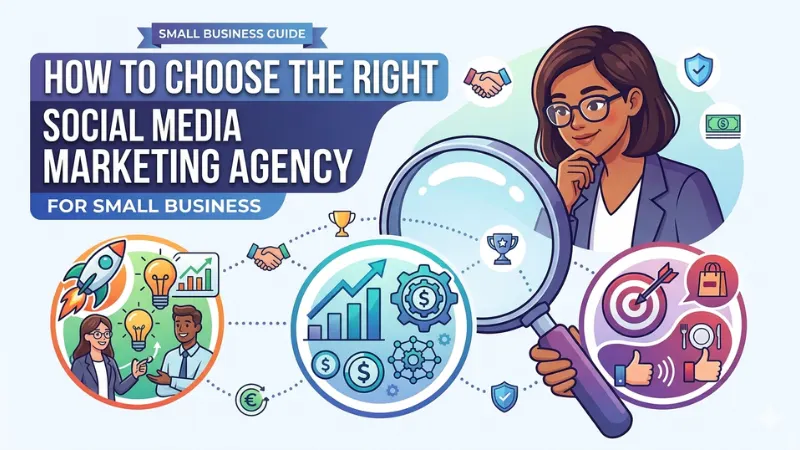
Social Media Marketing Agency for Small Business: How to Choose the Right One

Running a small business is exciting, but marketing it online can feel overwhelming. You need to post consistently, create engaging content, reply to customers, run ads, track results, and stay updated with platform changes. That is why many owners look for a social media marketing agency for small business to handle growth professionally. A social media marketing agency for small business helps create content, manage platforms, run paid ads, improve brand visibility, and generate leads or sales through social media channels like Facebook, Instagram, TikTok, LinkedIn, Pinterest, and YouTube. For small businesses, the right agency is not just a service provider. It becomes a growth partner that understands your goals, budget, audience, and local market. Why Small Businesses Need Social Media Marketing Social media is one of the most powerful ways for small businesses to reach customers. People use social platforms to discover brands, read reviews, compare products, and decide where to spend money. Whether you run a salon, restaurant, ecommerce store, coaching business, local service company, or startup, your audience is likely already active online. The challenge is getting their attention and turning that attention into trust. A good agency helps you do this with strategy, not random posting. Instead of simply uploading graphics, they build a content plan that supports your business goals. What Does a Social Media Marketing Agency Do? A professional social media agency usually offers several services. These may include profile optimization, content creation, copywriting, hashtag research, short-form video planning, ad management, monthly reporting, community management, and competitor analysis. Some social media marketing companies also provide branding, influencer outreach, email marketing, website support, and SEO. This is helpful if you want one team to manage your complete digital presence. The best agencies focus on measurable results. They do not only care about likes and followers. They also track website visits, leads, calls, bookings, sales, engagement rate, and return on ad spend. Benefits of Hiring a Social Media Marketing Agency for Small Business One of the biggest benefits is saving time. As a business owner, your main focus should be serving customers and improving your products or services. Social media can take hours every week, especially when you are trying to do it properly. Another benefit is consistency. Many small businesses post actively for a few weeks and then stop. An agency helps maintain a regular posting schedule, which improves brand recognition and audience trust. You also get access to expert knowledge. Social media platforms change often. What worked last year may not work today. Experienced social media agencies understand trends, platform algorithms, paid ad strategies, and content formats that perform well. Most importantly, an agency can help you create a clear path from content to conversion. That means your social media is not just looking active; it is helping your business grow. Social Media Agency vs Digital Marketing Agency Many business owners ask whether they should hire a social media agency or a digital marketing agency for small businesses. A social media agency focuses mainly on platforms like Instagram, Facebook, LinkedIn, TikTok, Pinterest, and YouTube. A digital marketing agency may offer broader services such as SEO, Google Ads, website design, email marketing, and content marketing. If your main goal is to improve your social presence, a social media agency may be enough. But if you want full online growth, including search traffic and website conversions, a digital marketing agency can be a better choice. For many small businesses, the ideal solution is a team that provides both social media marketing and other small business marketing services. How to Choose the Right Social Marketing Agency Before hiring a social marketing agency, look at their experience with small businesses. Big-brand strategies do not always work for local or budget-conscious businesses. You need an agency that understands limited budgets, local competition, and practical growth. Check their portfolio and case studies. Look for examples in your industry or similar industries. If they have helped restaurants, salons, service providers, coaches, or ecommerce stores, they may understand your challenges better. Ask about their strategy process. A reliable agency should talk about audience research, content pillars, campaign planning, reporting, and business goals. Be careful with agencies that promise instant results or guaranteed viral posts. Also, review their communication style. You should know who manages your account, how often you receive reports, and what results they measure. How Much Does Social Media Marketing Cost for Small Businesses? The cost depends on your goals, number of platforms, content volume, ad budget, and service level. Some agencies offer basic monthly packages for content posting, while others provide complete strategy, video creation, ads, and reporting. Small businesses should avoid choosing only the cheapest option. Low-cost services may save money at first but can lead to poor content, weak strategy, and wasted time. Instead, choose an agency that fits your budget and can explain how their work supports business growth. Signs You Are Ready to Hire an Agency You may be ready to hire a social media agency if you are not posting consistently, your content is not bringing results, you do not understand paid ads, or you are spending too much time managing social media yourself. You may also need help if your competitors look more professional online, your engagement is low, or you want to scale your business but do not have an in-house marketing team. A good agency gives you structure, strategy, and execution. FAQs What is the best social media marketing agency for small business? The best agency is one that understands your industry, budget, audience, and goals. Look for proven experience, clear reporting, strong communication, and realistic strategies. Are social media agencies worth it for small businesses? Yes, they can be worth it if they help you save time, improve brand awareness, generate leads, and increase sales. The key is choosing an agency focused on business results, not just posting content. What services should a small business marketing agency offer? A good agency may offer social media strategy, content creation, ad

Social Media Marketing Agency for Small Business: How to Choose the Right One Read More »