RethinkTrends

Mayank Jain

Bilibili App: What Is It, Features, Download & Is It Safe?

Bilibili App: What Is It, Features, Download Guide, Safety & Availability in India

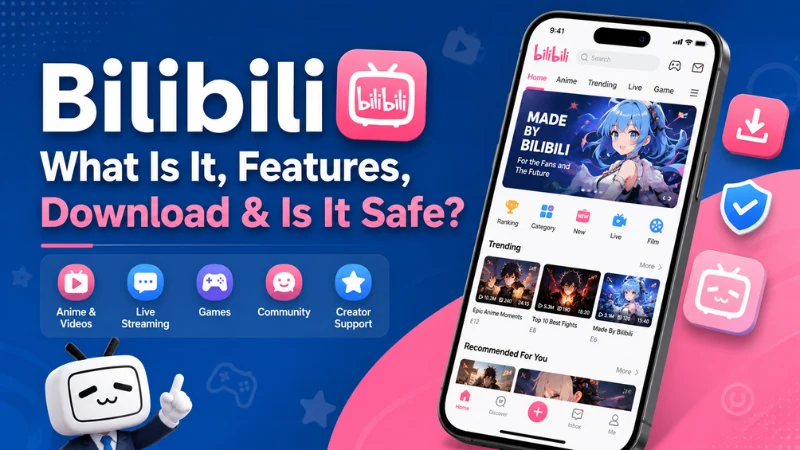
Bilibili App: Everything You Need to Know About the Chinese YouTube Alternative Searching for the Bilibili app and wondering what it actually does? Bilibili is a popular video-sharing and streaming platform that has gained attention among anime fans, gamers, technology enthusiasts, and entertainment lovers. Many users search for Bilibili because they want to know how to download the app, whether it works in India, if it is safe, and how it compares with YouTube. Originally started as a community focused on anime, comics, and gaming (ACG), Bilibili has expanded into a broader entertainment platform featuring creator videos, live streaming, gaming content, technology, lifestyle videos, and more. In this guide, we explain everything about Bilibili, including its features, download process, safety, availability, and differences from YouTube. Quick Answer: What Is Bilibili App? Bilibili is a video-sharing and streaming platform often described as the “YouTube of China.” The platform allows users to watch and upload videos, follow creators, participate in communities, watch live streams, and interact through its unique Danmu (bullet comment) system, where comments appear directly over videos while watching. Bilibili is especially popular among: Anime lovers Gaming communities Technology enthusiasts Content creators Entertainment audiences Why Is Bilibili Trending? The growing interest in Bilibili is mainly because users are looking for alternatives to traditional video platforms. Some major reasons behind its popularity include: 1. Strong Anime and Gaming Community Bilibili originally became popular because of anime, comics, and gaming content. The platform offers: Anime discussions Gaming videos Esports streams Fan communities Creator content Entertainment videos For users interested in niche communities, Bilibili provides a more focused experience compared with general video platforms. 2. Unique Danmu Comment Feature One of Bilibili’s biggest attractions is its Danmu system. Unlike YouTube comments that appear below a video, Danmu comments move across the video screen while users watch. For example: “Amazing scene!”“This episode is ““Best moment!” This creates a shared viewing experience where users feel connected with other viewers. Bilibili App Features 1. Video Streaming Users can watch different categories of content including: Anime Gaming Music Technology Lifestyle Educational videos Entertainment 2. Live Streaming Bilibili supports live content such as: Gaming streams Creator sessions Events Community broadcasts 3. Creator Community Similar to YouTube, creators can upload videos, build audiences, and interact with viewers. The platform supports both professional creators and user-generated content. 4. Personalized Recommendations Bilibili recommends videos based on user interests and viewing activity to improve content discovery. 5. High-Quality Video Experience The app supports high-quality video playback and additional features depending on region and account availability. How to Download Bilibili App? Users should download Bilibili from official sources whenever possible. Download Bilibili on Android Steps: Open Google Play Store Search for “Bilibili” Select the official Bilibili application Install the app Create an account and start watching The official app is available through supported app stores. Download Bilibili on iPhone iPhone users can check the Apple App Store availability depending on their country or region. Is Bilibili Available in India? Many Indian users search: “Bilibili app India” “Bilibili download India” “Is Bilibili available in India?” Bilibili availability depends on regional access, app store listings, and content licensing. Users should always check official app stores instead of downloading unknown APK files from third-party websites. The international availability of Bilibili services can differ by country, and content libraries may change based on location. Is Bilibili Safe to Use? Yes, using the official Bilibili app from trusted sources is generally safer than downloading modified APK versions. To protect your device: Avoid: Unknown APK websites Modified applications Apps requesting unnecessary permissions Always check: Developer name User reviews App permissions Download source Is Bilibili Legal? Yes, Bilibili is a legitimate video-sharing platform. However, like other user-generated content platforms, individual videos may have different copyright restrictions depending on region and licensing agreements. Users should access content through official channels. Bilibili vs YouTube: Which One Is Better? Feature Bilibili YouTube Main Focus Anime, gaming, entertainment communities Global video platform Comments Danmu comments on videos Comments below videos Audience Strong Asian entertainment community Worldwide audience Content Variety Growing categories Extremely broad Creator Ecosystem Growing Largest creator platform Live Streaming Available Advanced ecosystem Bilibili is not a direct replacement for YouTube. Instead, it offers a different community-driven viewing experience. Advantages and Disadvantages of Bilibili Advantages ✅ Unique Danmu commenting system✅ Strong anime and gaming community✅ Large entertainment library✅ Interactive creator ecosystem✅ Different experience from traditional video platforms Disadvantages ❌ Content availability differs by country❌ Some content may not have English subtitles❌ Smaller global audience compared with YouTube❌ Some features may require account registration Why Should You Try Bilibili App? Bilibili is worth exploring if you enjoy: Anime content Gaming videos Online communities Technology content Alternative video platforms Its biggest difference is that it focuses heavily on community interaction rather than only video consumption. Frequently Asked Questions About Bilibili Is Bilibili free? Yes, Bilibili offers free access to many videos. Some content or premium features may vary depending on region. Is Bilibili similar to YouTube? Yes. Both platforms allow users to watch, upload, and interact with videos. However, Bilibili’s Danmu feature makes its viewing experience unique. Can I download Bilibili videos? Some versions of the app support offline viewing features depending on availability and account type. Is Bilibili safe in India? Using the official Bilibili app from trusted sources is safer than installing unknown APK files. Does Bilibili have anime? Yes. Anime has been one of Bilibili’s strongest content categories since its early days. Final Verdict: Should You Use Bilibili App? Bilibili has grown from a niche anime and gaming community into a broader video platform with millions of users. Its biggest strengths are: Unique Danmu interaction Strong creator communities Anime and gaming content Different viewing experience compared with YouTube For users looking for a new entertainment platform beyond traditional video apps, Bilibili is definitely worth exploring.

Bilibili App: What Is It, Features, Download Guide, Safety & Availability in India Read More »
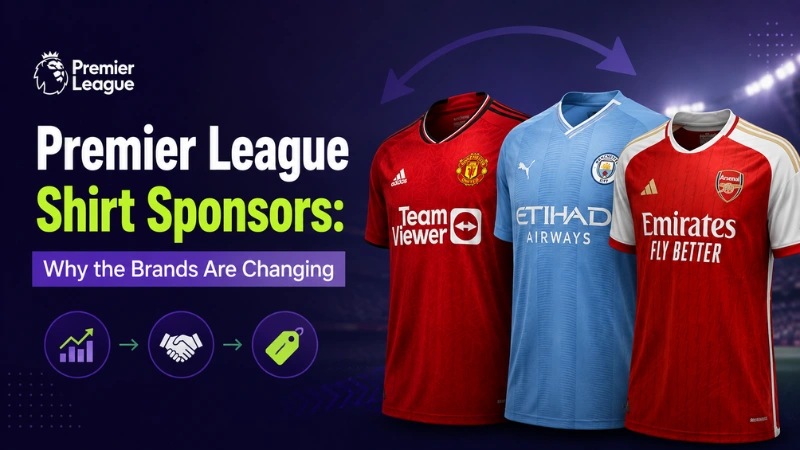
Premier League Shirt Sponsors: Why the Brands Are Changing

Why Are Premier League Shirts Sponsored by Companies You’ve Never Heard Of?

Watch a Premier League match in 2026/27 and one thing looks different: the sponsors. For years, betting companies dominated the front of Premier League shirts. In 2025/26, 11 of the league’s 20 clubs carried a gambling brand in that prime position. From 2026/27, that changed. Premier League clubs had agreed to remove gambling sponsorship from the front of matchday shirts after the 2025/26 season. But gambling brands did not simply disappear. Fintech firms, financial-services businesses, technology companies, AI brands and tourism organisations are moving into football. So why would a company that most fans have never heard of spend millions to put its name on a Premier League shirt? Why Do Unknown Companies Sponsor Premier League Shirts? Premier League shirt sponsorship gives companies global visibility, credibility and repeated exposure. For many fintech, AI and B2B brands, the goal is not necessarily to sell something to the person watching the match. It is to become recognised by customers, investors, business partners and international markets. That makes a Premier League shirt less like a traditional advertisement and more like a global corporate billboard. How Did Premier League Shirt Sponsorship Change? Premier League shirts once carried familiar consumer brands selling products supporters could easily understand. As the Premier League became a global media product, the economics changed. Clubs were no longer selling exposure only to supporters inside England. Their shirts appeared on television, social feeds, news sites, video games and merchandise around the world. The sponsor simply had to value the Premier League’s global reach. In fact, the transformation has been dramatic. BBC research found that in the Premier League’s first season, more than half of shirt sponsors were headquartered in Britain and most sold physical products in the UK. By 2025, only one front-of-shirt sponsor was headquartered in the UK, while none primarily used the sponsorship to sell physical products directly to supporters. Football shirts had become something different. Why Did Betting Brands Become So Common? Online betting companies were particularly well suited to football sponsorship. Football and sports betting have overlapping audiences, while Premier League broadcasts gave gambling brands repeated exposure in numerous international markets. For clubs outside the league’s richest group, betting companies were often willing to pay strongly for the most visible position on the shirt. By 2025/26, gambling brands appeared on the front of 11 of 20 Premier League shirts. In April 2023, Premier League clubs voluntarily agreed to withdraw gambling sponsorship from the front of matchday shirts from the end of the 2025/26 season. That created a new question for clubs: Who would replace them? Is Gambling Sponsorship Completely Banned in the Premier League? No. The agreement removes gambling brands from the front of Premier League matchday shirts. It does not create a total ban on every gambling-related commercial partnership. Gambling companies can still appear in other permitted sponsorship inventory, including certain sleeve, training-kit and other arrangements, subject to applicable rules. So 2026/27 is not the end of gambling advertising in Premier League football. It is the end of gambling brands occupying its most prominent shirt position. Who Is Replacing Betting Sponsors? The replacement market already shows how football sponsorship is changing. Reuters reported that the transition is opening opportunities to fintech, software, finance and other global businesses. Crystal Palace partnered with AI company Temporal, Everton with financial-services company CMC Markets, while Aston Villa’s shirt features Visit Rwanda. Financial Times reporting points to the same shift toward technology and finance companies. Many of these new sponsors are not household consumer names. In some cases, that is exactly why Premier League sponsorship is valuable. Why Would an Unknown Company Sponsor a Premier League Club? Imagine a technology company respected inside its industry but invisible to most consumers. Put that company on a Premier League shirt and its name appears during live matches, highlights, social posts, press photographs, interviews and replica-shirt sales. The brand is repeatedly placed next to famous players and a globally recognised football club. That builds awareness and can also create credibility. People may assume a business capable of becoming a Premier League partner is substantial, ambitious and internationally established. The company is not necessarily buying immediate sales. It is buying familiarity. That is particularly valuable for an AI, fintech or B2B company trying to move from being known within one industry to becoming an internationally recognised brand. Who Are Shirt Sponsors Actually Trying to Reach? Football fans are only part of the audience. A Premier League sponsor may want consumers, but it may also care about investors, corporate customers, potential employees, governments or business partners. That helps explain why B2B technology and financial companies spend money on football. Senior executives, investors and potential clients all encounter the sport. Sponsorship agreements can also include hospitality, networking, digital campaigns and rights to use club branding. The logo is simply the most visible part of a much larger commercial relationship. Why Not Just Buy Digital Ads? Because football sponsorship behaves differently. A digital advertisement might be viewed once and forgotten. A shirt sponsor can receive repeated exposure throughout an entire season. The logo appears when a goal is scored, in the photograph the next morning, in a transfer announcement, on social media and on replica shirts. Football also connects sponsors with victories, rivalries and famous players. There is another unusual advantage: supporters often pay to wear the shirt themselves. Few advertising formats persuade consumers to buy something that keeps displaying the advertiser’s logo for years. That helps explain why the front of a Premier League shirt remains such valuable advertising space even in an era dominated by Google, TikTok, Instagram and digital advertising. Why Are Some Premier League Shirts Sponsorless? Clubs do not always accept the first sponsorship offer available. If a club believes its front-of-shirt rights are worth much more than a company is offering, starting the season with a blank shirt can make commercial sense while negotiations continue. Chelsea and Sunderland were among the clubs reported without permanent front-of-shirt sponsors as the 2026/27 season began.

Why Are Premier League Shirts Sponsored by Companies You’ve Never Heard Of? Read More »

What Is Agentic Commerce? How AI Agents Are Changing Online Shopping

What Is Agentic Commerce? How AI Agents Are Changing Online Shopping

Introduction: The Next Evolution of Online Shopping Has Arrived For more than two decades, online shopping has followed the same basic model: consumers search, compare products, read reviews, add items to carts, and complete purchases themselves. But the next major shift in ecommerce may remove many of these steps. Imagine telling an AI assistant: “Find me a laptop under ₹80,000 with strong battery life, good performance for video editing, and delivery before Friday.” Instead of showing you hundreds of results, the AI agent researches options, compares specifications, checks reviews, evaluates prices, and may even complete the purchase on your behalf. This emerging model is called agentic commerce. Agentic commerce represents a shift from traditional ecommerce platforms where humans actively search and buy products, toward an environment where AI agents can understand customer needs, make decisions, and complete shopping tasks autonomously. As artificial intelligence becomes more capable, online shopping is moving from a search-based experience to an intent-based experience. The question is no longer only: “What product are you looking for?” The future question may become: “What outcome do you want to achieve?” What Is Agentic Commerce? Agentic commerce is a new ecommerce model where AI agents act on behalf of consumers to discover, evaluate, recommend, and purchase products or services. Unlike traditional shopping assistants that simply provide recommendations, AI agents can perform multi-step tasks with limited human involvement. A traditional ecommerce journey looks like this: Customer → Search Engine → Ecommerce Website → Product Selection → Checkout Agentic commerce changes this into: Customer Intent → AI Agent → Research → Comparison → Decision → Purchase The AI agent becomes an intelligent layer between consumers and businesses. Instead of customers spending time navigating websites, AI agents can handle complex shopping activities based on preferences, budgets, and personal requirements. How Do AI Shopping Agents Work? AI shopping agents combine multiple technologies, including: Artificial intelligence Large language models (LLMs) Machine learning Natural language processing Recommendation systems Payment technologies Customer data analysis The process usually involves five major steps. 1. Understanding Customer Intent The first step is understanding what the customer actually wants. A customer may not say: “I need running shoes.” They might say: “I run five kilometres every morning, have knee problems, and need comfortable shoes under ₹10,000.” An AI agent can understand context, preferences, and constraints rather than matching only keywords. 2. Researching Available Options Instead of displaying thousands of search results, AI agents can: Search multiple stores Compare prices Analyze product specifications Check availability Review customer feedback Consider previous preferences This reduces the time customers spend researching products. 3. Making Recommendations AI agents can rank products based on personal relevance. For example, two customers searching for smartphones may receive completely different recommendations. One user may prioritize: Camera quality Social media features Design Another may prioritize: Battery life Gaming performance Price The AI recommendation is personalized rather than generic. 4. Completing Transactions The biggest difference between traditional shopping assistants and agentic commerce is the ability to take action. Future AI agents may be able to: Add products to carts Apply discounts Schedule deliveries Renew subscriptions Purchase frequently used items automatically The customer moves from manually completing every step to approving decisions made by the AI. 5. Learning From Every Interaction AI agents become smarter over time. They can learn: Preferred brands Budget range Shopping habits Product preferences Purchase history This creates a continuously improving shopping experience. Agentic Commerce vs Traditional Ecommerce: What’s the Difference? Traditional Ecommerce Agentic Commerce Customer searches products Customer expresses intent Customer compares options AI agent compares options Customer reads reviews AI summarizes reviews Customer completes checkout AI may complete transactions Same experience for many users Personalized experience Website-focused journey AI-agent-focused journey Traditional ecommerce is built around websites. Agentic commerce is built around intelligent decision-making systems. Why Is Agentic Commerce Becoming Important? Several major technology trends are pushing ecommerce toward AI-driven shopping. 1. Consumers Have Too Many Choices Modern ecommerce has created a discovery problem. Millions of products are available across thousands of platforms. The challenge is no longer finding products. The challenge is finding the right product quickly. AI agents solve this by filtering information and presenting relevant choices. 2. People Want Faster Shopping Experiences Consumers increasingly expect convenience. From one-click payments to same-day delivery, ecommerce has continuously removed friction. Agentic commerce is the next step: Reducing the effort required to make purchasing decisions. 3. AI Models Are Becoming More Capable Earlier AI systems could answer questions. Modern AI agents can: Understand context Use external tools Analyze information Perform multi-step tasks This creates the foundation for autonomous shopping experiences. 4. Businesses Want Better Customer Personalization Brands are competing for attention in crowded markets. AI agents can help companies provide: Personalized recommendations Better customer support Automated purchasing journeys More relevant product discovery Examples of Agentic Commerce in Real Life Agentic commerce is still developing, but several examples show where the industry is heading. AI Shopping Assistants AI-powered shopping assistants can already help users: Find products Compare options Answer product questions Recommend alternatives The future evolution is moving from recommendation toward action. Subscription Management Imagine an AI agent monitoring household products. It notices that: Your coffee supply is running low Your preferred brand is discounted Delivery timing matches your schedule The agent can recommend or automatically reorder based on your permission. Travel and Experience Booking Instead of searching multiple websites, users could tell an AI: “Plan a five-day family trip to Japan under ₹2 lakh.” The AI agent could: Compare flights Find hotels Build an itinerary Suggest activities Business Purchasing Companies may use AI agents for procurement tasks. For example: “Order 100 office chairs under our approved budget.” The AI agent could compare suppliers, negotiate options, and complete purchasing workflows. How Will Agentic Commerce Impact Ecommerce Businesses? Agentic commerce will create major changes for brands, retailers, and marketers. 1. Product Visibility Will Change Today, businesses optimize for: Search rankings Product pages Paid advertisements In the future, brands may need to optimize for AI agents. Products will need: Structured

What Is Agentic Commerce? How AI Agents Are Changing Online Shopping Read More »

15 AI Skills to Learn for Jobs

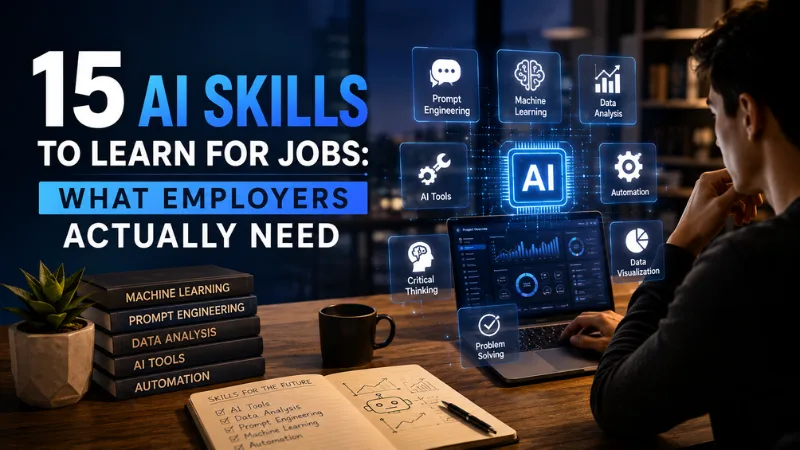
15 AI Skills to Learn for Jobs: What Employers Actually Need

A few years ago, learning AI often meant learning to code or studying machine learning. That is no longer the whole picture. Today, a marketer can use AI to research customers, an analyst can examine data faster, a recruiter can streamline repetitive tasks, and a manager can build AI-assisted workflows without becoming an AI engineer. That is why the best AI skills to learn are not simply technical skills. They include knowing how to communicate with AI, evaluate its answers, work with data, automate repetitive processes and apply AI within your existing profession. The World Economic Forum’s Future of Jobs Report 2025 identifies AI and big data among the fastest-growing skill areas through 2030, alongside cybersecurity and technological literacy. At the same time, human capabilities such as analytical thinking, creativity and adaptability remain important. So the goal should not be to learn every AI tool that appears. The better strategy is to build a combination of AI capability, professional knowledge and human judgment that remains useful even when individual tools change. What Are the Best AI Skills to Learn? If you want the short answer, these are the 15 AI skills worth understanding: AI skill Who should learn it? Coding needed? AI literacy Everyone No Prompt and instruction design Everyone No AI output evaluation Everyone No Critical thinking Everyone No AI-assisted research Knowledge workers No Data literacy Most professionals Usually no Workflow automation Business and operations roles Usually no AI agent orchestration Business and technical roles Sometimes AI business strategy Managers and founders No Responsible AI and privacy Everyone using AI at work No LLM fundamentals Advanced AI users No/basic RAG and knowledge grounding Technical/product roles Usually APIs and Python Developers and automation roles Yes Machine learning fundamentals Technical AI careers Yes Domain expertise + AI Everyone No You do not need to master all 15. What matters is choosing the right combination for the kind of work you want to do. Start With the Skills That Make AI Useful 1. AI Literacy AI literacy means understanding what modern AI can do, where it struggles and how to use it responsibly. You do not need to understand the mathematics behind a large language model. You should, however, understand basic ideas such as generative AI, AI agents, hallucinations, context, training data and privacy. This prevents a common mistake: assuming that an answer must be correct because it sounds confident. A useful AI user knows when to accept an output, when to edit it and when to verify it elsewhere. 2. Prompt and Instruction Design Prompting is often presented as a collection of secret commands. In practice, the more durable skill is giving clear instructions. Compare “Create a marketing plan” with a request that explains the audience, product, budget, objective, limitations and expected format. The second request is better because the problem itself is better defined. Good instruction design usually means giving AI enough context to understand the objective while setting clear constraints around what you expect. 3. AI Output Evaluation Generating AI content takes seconds. Evaluating whether that output deserves to be used can take much more judgment. Microsoft’s 2026 Work Trend Index found that AI users considered quality control of AI output and critical thinking among the human capabilities becoming more important as AI takes on additional work. This skill includes checking facts, identifying weak assumptions, reviewing calculations, verifying sources and asking whether the answer actually solves the original problem. The employee who can produce ten AI-generated reports is useful. The employee who knows which report contains a flawed conclusion may be considerably more valuable. 4. Critical Thinking and Problem Framing AI is very good at answering questions. It cannot guarantee that you asked the right question. Before using AI, consider what outcome you actually need. Ask what information is missing, what assumptions are being made and what evidence might change the answer. Critical thinking becomes more important, not less important, when producing information becomes easier. 5. AI-Assisted Research AI can help you understand unfamiliar subjects, compare ideas, summarize documents and identify questions worth researching. But it should not automatically become your final source. If an AI assistant provides a statistic from a government report, company study or scientific paper, find the original research before publishing the claim. That simple habit separates AI-assisted research from AI-assisted misinformation. Learn How to Use AI Inside Real Work 6. Data Literacy You do not need to become a data scientist to benefit from data skills. Understanding percentages, averages, trends, correlations and basic visualization can make AI far more useful. A marketer might analyze campaign data. A salesperson could review lead patterns. An operations manager might use AI to identify recurring problems across hundreds of customer comments. The value is not simply making a chart. It is understanding what the data does—and does not—support. 7. AI Workflow Automation Using AI in a chatbot can save a few minutes. Building a good workflow can save the same minutes every day. Imagine a business process where a new customer enquiry is categorized automatically, relevant information is collected, a response is drafted and a human receives it for approval. That is more powerful than repeatedly copying information into an AI tool. The key skill is learning which parts of a process should be automated and where a person should remain responsible. 8. AI Agents AI agents take the idea of automation further. Rather than answering one question, an agent may work through multiple steps, retrieve information or interact with tools while pursuing an objective. Microsoft’s 2026 research describes more advanced AI users as people who increasingly redesign workflows and use agents for complex, multi-step work. You do not necessarily need to build an agent from scratch. Understanding objectives, permissions, quality checks and human approval points can already be valuable in business, marketing and operations roles. 9. AI Business Strategy Knowing how AI works is useful. Knowing where it should be used is often more valuable. Before introducing AI into a business process, ask: What problem are

15 AI Skills to Learn for Jobs: What Employers Actually Need Read More »

Why Is Pickleball So Popular?

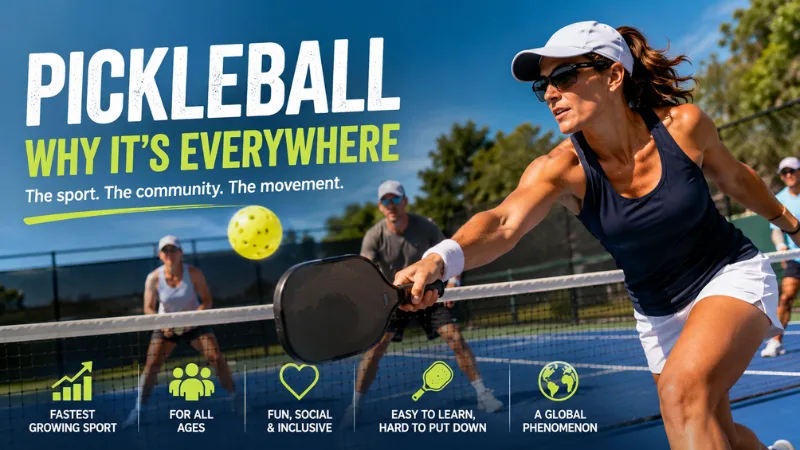
Why Is Pickleball So Popular? Inside the Sport’s Explosive Growth

A few years ago, many people had barely heard of pickleball. Today, courts are appearing in parks, clubs and recreation centers across the United States, while players ranging from teenagers to retirees are picking up paddles. So, why is pickleball so popular? The short answer is that pickleball combines a relatively easy learning curve, social gameplay, a smaller court and accessibility across age groups. But its remarkable growth also shows something bigger: people are looking for sports that are competitive without being intimidating and social without requiring an entire team. How Popular Is Pickleball? Pickleball’s growth is no longer based simply on hype. According to the Sports & Fitness Industry Association (SFIA), 24.3 million Americans played pickleball in 2025, compared with about 4.2 million in 2020. That represents roughly 479% growth over five years, and SFIA says pickleball has been the fastest-growing sport in the United States for five consecutive years. Perhaps more surprising is who is playing. Pickleball was once stereotyped as primarily a sport for retirees, but players aged 13 to 24 now have the highest participation rate of any age group. Women also represented 42.9% of U.S. players in 2025, up from 38.6% in 2020. That makes pickleball popularity much broader than it first appears. Why Is Pickleball Growing So Fast? 1. Pickleball Is Relatively Easy for Beginners One of pickleball’s biggest advantages is that new players can understand the basics quickly. A pickleball court measures just 20 by 44 feet, and the game uses a solid paddle and a perforated plastic ball. Serves are made underhand or with a drop serve, while the seven-foot non-volley zone near the net—better known as the “kitchen”—adds strategy without making the basic concept difficult to understand. Beginners can therefore start having rallies and enjoying games before mastering advanced techniques. That low barrier to entry matters. People are more likely to return to an activity when their first experience feels rewarding rather than frustrating. 2. Pickleball Is Naturally Social Pickleball is commonly played as doubles, putting four people on a relatively compact court. That creates a different atmosphere from many individual sports. Players are close enough to talk between points, rotate partners and turn a workout into a social activity. Research supports that social element. A recent U.S. study of adults over 50 found that current pickleball participation was associated with less perceived loneliness and social isolation, although the researchers noted that more studies are needed to establish cause and effect. In other words, people may come for the exercise but stay for the community. 3. It Works Across Generations Another reason why pickleball is growing is that the same sport can appeal to very different players. A beginner can enjoy a casual game while advanced players can turn the same basic rules into a fast, highly strategic contest. SFIA’s numbers show this transition clearly. Pickleball is no longer growing only because more people try it once. The number of CORE players—people playing eight or more times per year—rose from 1.4 million in 2020 to 7.5 million in 2025. That suggests the sport is building regular participants rather than depending entirely on curiosity. 4. Pickleball Can Feel More Approachable Than Tennis The inevitable comparison is pickleball vs. tennis. A regulation tennis court is 78 feet long and 27 feet wide for singles, while a pickleball court is only 44 feet long and 20 feet wide. The smaller playing area means players generally have less territory to cover. Combined with the paddle, plastic ball and underhand serving style, this can make pickleball feel less intimidating to someone starting a racquet sport for the first time. That doesn’t mean pickleball is simply “easy tennis.” At higher levels, fast exchanges at the kitchen, placement, spin, positioning and shot selection make the game highly competitive. Its advantage is that the floor for entry is low while the ceiling for improvement remains high. 5. More Courts Make the Sport Easier to Join Participation growth is being matched by rapid expansion in places to play. USA Pickleball’s latest annual growth report lists 82,613 known courts across 18,258 locations nationwide, while USA Pickleball membership reached 104,828. More courts create a powerful growth cycle: more people discover the sport, demand for courts increases, new facilities open and even more beginners get an opportunity to play. Is Pickleball Just a Trend? The numbers increasingly suggest otherwise. A temporary craze might attract millions of first-time participants, but pickleball is simultaneously gaining younger players, repeat players, organized facilities and a growing national infrastructure. Its future will inevitably bring challenges, including competition for court space and the need to accommodate rapid participation growth. But a sport that expanded from 4.2 million U.S. participants in 2020 to 24.3 million in 2025 has already moved well beyond being a niche pastime. Pickleball became popular because it solved a simple problem: it made racquet sports easier to start without removing the competition, strategy or social experience that keeps people playing. That combination may be exactly why pickleball’s growth is proving harder to dismiss as just another sports fad. Frequently Asked Questions Why is pickleball so popular? Pickleball is popular because it is relatively easy to learn, social, playable across multiple age groups and requires a smaller court than tennis. Is pickleball the fastest-growing sport in America? According to SFIA, pickleball has been the fastest-growing U.S. sport for five consecutive years, with 24.3 million participants in 2025. Is pickleball only popular with older people? No. Although pickleball remains popular among older adults, Americans aged 13–24 currently have the highest participation rate among age groups measured by SFIA. Is pickleball easier than tennis? Pickleball generally has a smaller court, underhand serving and a shorter distance to cover, which can make it easier for beginners to start. Advanced pickleball, however, still requires significant skill, strategy and coordination.

Why Is Pickleball So Popular? Inside the Sport’s Explosive Growth Read More »

Did Glasgow 2026 Save the Commonwealth Games?

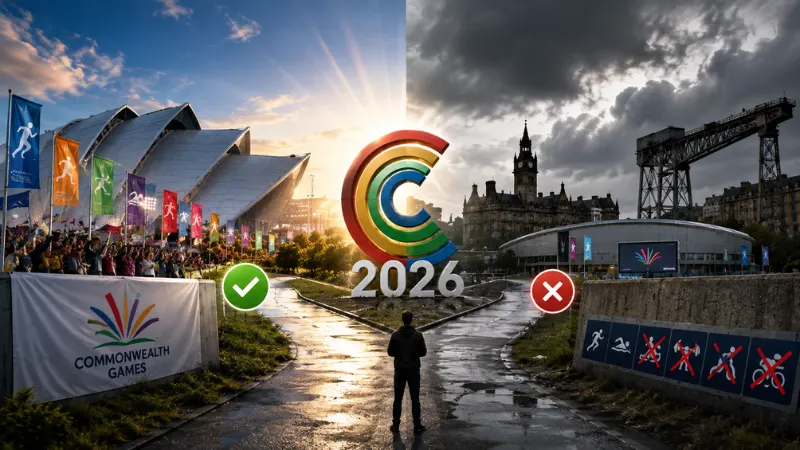
Did Glasgow 2026 Save the Commonwealth Games or Just Make It Smaller?

The Commonwealth Games arrived in Glasgow with an unusual challenge. The city was not trying to deliver the biggest edition in the event’s history. It was trying to prove that the Games still had a future. After Victoria withdrew as the original host, the 2026 edition faced the real possibility of cancellation. Glasgow stepped in with a radically smaller plan: ten sports, existing venues, approximately 3,000 athletes and a budget far below recent editions. The Games have now finished, and the early numbers look encouraging. Glasgow welcomed 434,000 ticketed spectators, delivered the event in around 18 months and kept projected private expenditure to £162.6 million. Organisers also reported more than 630,000 engagements across competition venues, live sites and festival activities. But delivering the Games was only the first test. The more difficult question is whether Glasgow created a sustainable future for the Commonwealth Games—or simply produced a cheaper, smaller event that will struggle to remain globally relevant. Glasgow 2026 proved that the Commonwealth Games can be staged more quickly and at a much lower cost. However, it did not fully settle questions about missing sports, broadcast reach, star participation and the event’s long-term importance. Glasgow 2026 at a glance Measurement Glasgow 2026 Sports 10 Para sports integrated into the programme 6 Medal events 215 Participating nations and territories 74 Athletes Approximately 3,000 Ticketed spectators 434,000 Total reported engagement More than 630,000 Volunteers More than 4,000 Projected privately funded spend £162.6 million Delivery period Around 18 months The official figures suggest that Glasgow successfully delivered a functioning international multi-sport event under difficult circumstances. They do not, by themselves, prove that every aspect of the model can or should be repeated. Why Glasgow 2026 was never a normal Commonwealth Games The Games were originally awarded to Victoria, Australia. Victoria planned a regional event spread across several locations. However, the state withdrew in 2023 after concerns about rising costs and the complexity of the proposed model. That decision left the Commonwealth Games without a host and created a wider crisis for an event that had already struggled to attract cities willing to take on the financial risk. Glasgow was in a better position than most potential replacements. It had hosted the Games in 2014 and already possessed many of the necessary venues, transport connections and organisational relationships. Even so, it had only a fraction of the usual preparation period. Rather than attempting to reproduce Birmingham 2022 or Glasgow 2014, the city designed an event around what it already had. The result was a compact Games held across an eight-mile footprint using existing sports venues and hotel accommodation instead of a traditional newly built athletes’ village. That distinction matters. Glasgow did not prove that any city can stage the Games for £162.6 million. It showed what can be achieved by a city with existing facilities, previous hosting experience and an emergency funding structure. How Glasgow made the Commonwealth Games cheaper The greatest achievement of Glasgow 2026 was not a medal or record. It was cost control. The projected privately funded spend is £162.6 million. Glasgow Life compares that with approximately £543 million for Glasgow 2014 and £680 million for Birmingham 2022. Commonwealth Games Reported expenditure Glasgow 2014 Approximately £543 million Birmingham 2022 Approximately £680 million Glasgow 2026 Projected £162.6 million These figures should be compared carefully. Different editions may categorise security, infrastructure, public services and other costs differently. Even with that limitation, the difference is substantial. Glasgow reduced expenditure through several major decisions. Existing venues replaced new construction The Games used established facilities such as Scotstoun Stadium, Tollcross International Swimming Centre, the Glasgow International Arena, the Sir Chris Hoy Velodrome and the Scottish Event Campus. The city spent £4.7 million on venue upgrades, including improvements at Scotstoun and Tollcross, rather than building a collection of new stadiums. This reduced construction risk, planning delays and the possibility of expensive venues becoming underused after the event. The sports programme was cut to ten Birmingham 2022 staged a much larger programme. Glasgow selected only ten sports, reducing the number of athletes, officials, venues, training facilities and competition sessions required. The decision made the Games cheaper, but it also led to the absence of cricket, hockey, badminton, wrestling, table tennis and squash. That trade-off is examined in our related article: Athletes stayed in existing hotels Instead of creating a conventional athletes’ village, competitors were accommodated across 18 hotels in and around Glasgow. This avoided the construction and conversion costs associated with a temporary or permanent village. It also changed the athlete experience. A central village can create a sense of community between teams, while hotel accommodation is more dispersed. Whether the savings justify that loss will be one of the issues future hosts need to consider. The operating team was smaller Glasgow 2026 was delivered by a core team of around 400 staff, supported by partners and more than 4,000 volunteers. The volunteers contributed more than 156,000 hours during the Games. The smaller workforce was possible partly because the event used fewer venues and a more limited sports programme. Did spectators support the smaller Games? The early attendance figures are positive. Glasgow welcomed 434,000 ticketed spectators. Around 500,000 seats had been made available, meaning roughly 87% of available capacity was used. Organisers also reported that more than 630,000 people engaged with the Games through competition venues, live sites and the Glasgow 2026 Festival. Those numbers should not be combined or confused. The 434,000 figure relates specifically to ticketed venue spectators. The larger 630,000 figure includes people attending live sites and cultural activities around the city. Glasgow also reported nearly half a billion views across official social-media channels. More than one million people followed the Games’ social accounts during the event. Taken together, the figures show that the public did not reject the reduced Games. However, attendance alone cannot establish whether the event retained its international status. A Games can attract healthy local crowds while still losing visibility in other markets. It delivered the Games in approximately 18

Did Glasgow 2026 Save the Commonwealth Games or Just Make It Smaller? Read More »

Why Cricket Hockey and Badminton Missing CWG 2026

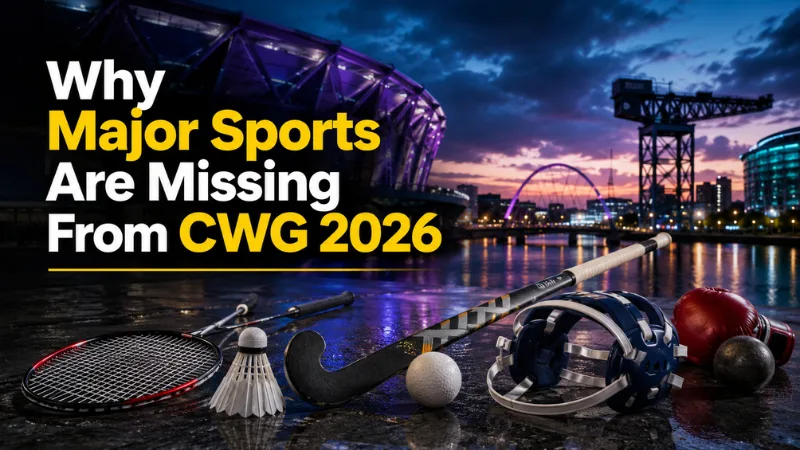
Why Are Hockey, Badminton, Wrestling & Cricket Missing From Commonwealth Games 2026?

For many Indian sports fans, the Glasgow 2026 programme looks incomplete. There is no cricket. No hockey. No badminton or wrestling. Table tennis and squash are missing too. These are not minor omissions from an Indian perspective. They include some of the country’s most popular sports and, more importantly, some of its most dependable sources of Commonwealth Games medals. At Birmingham 2022, India won 61 medals. Exactly 30 of them came from sports that are not being contested in Glasgow. So, why were so many major sports left out? The answer is not that the Commonwealth Games suddenly consider cricket, badminton or hockey unimportant. Glasgow inherited an event that had lost its original host and had very little time to prepare. The organisers responded by creating a smaller Games that could be delivered through existing venues, fewer athletes and a tightly controlled budget. In practical terms, Glasgow 2026 is not a normal edition of the Commonwealth Games. It is a rescue operation as much as a sporting event. Cricket, hockey, badminton and wrestling are missing from Commonwealth Games 2026 because Glasgow adopted a reduced ten-sport programme built around four existing venue sites. Cost, venue availability, athlete numbers and the short preparation period shaped the final selection. Which sports are included in Commonwealth Games 2026? Glasgow 2026 will feature ten sports and six integrated Para sports. Around 3,000 athletes from 74 nations and territories are expected to compete for 215 gold medals. The Games run from July 23 to August 2, 2026, with sporting competition beginning on July 24. The official Glasgow 2026 programme includes: Sport Para programme Athletics Para athletics Swimming Para swimming Track cycling Para track cycling Bowls Para bowls Weightlifting Para powerlifting 3×3 basketball 3×3 wheelchair basketball Boxing Not included Judo Not included Netball Not included Artistic gymnastics Not included Athletics and swimming are compulsory Commonwealth Games sports. The host has more flexibility when choosing the rest of the programme. That flexibility has become central to the future of the event. Instead of asking every host to stage a huge list of sports, Commonwealth Sport now allows cities to develop a programme that works with their venues, finances and local audience. In Glasgow’s case, that meant keeping the programme unusually small. Which major sports are missing from Glasgow 2026? The list of missing sports is substantial. Sport missing from Glasgow 2026 Why its absence matters Wrestling India won 12 medals at Birmingham 2022 Badminton India won six medals, including three golds Table tennis and Para table tennis India won seven medals Hockey India’s men and women both reached the podium Cricket India won silver in the women’s T20 competition Squash India won two bronze medals Rugby sevens A long-standing Commonwealth team sport Triathlon Offered individual and mixed-team medal events Diving A major medal sport for Australia, England and Canada Beach volleyball Featured at Birmingham 2022 Some cycling events have also disappeared. Track cycling remains, but road cycling and mountain biking are not part of the Glasgow programme. Shooting is absent too, although it should be treated separately. It was already missing from Birmingham 2022, which means Glasgow did not remove it from the previous edition. That distinction matters when calculating India’s lost medal opportunities. Shooting is historically India’s most successful Commonwealth Games sport, but it did not contribute to the country’s 61 medals in Birmingham. Why were so many sports removed from Commonwealth Games 2026? There was no single dramatic decision to remove cricket, hockey or badminton. The programme became smaller because Glasgow had to solve several problems at once. Victoria withdrew as the original host The 2026 Games were originally awarded to the Australian state of Victoria. Unlike a traditional single-city Games, Victoria planned to spread events across several regional centres. The state government later withdrew, citing the increasing cost of delivering the event. That decision left the Commonwealth Games without a host and created serious doubts about whether the 2026 edition would take place at all. Glasgow eventually stepped in, but it did not have the normal preparation period available to a host city. Major international events are usually planned many years in advance. Glasgow had to create a workable Games in a fraction of that time. Reusing infrastructure from the 2014 Commonwealth Games made that possible, but only if the scale of the event was reduced. Glasgow chose existing venues over new construction The 2026 Games are concentrated around four main venue sites: Scotstoun Stadium Tollcross International Swimming Centre Glasgow International Arena and Sir Chris Hoy Velodrome The Scottish Event Campus Using existing venues saves money and reduces the risk of construction delays. It also limits what the host can include. A cricket competition, for example, needs a suitable stadium and practice grounds. Hockey requires a competition pitch and training facilities. Adding another venue does not simply involve renting the ground for a few days. It also creates additional costs for: Security Transport Broadcasting Medical facilities Technology Branding Volunteers Event staff Athlete training areas This is why popularity alone could not guarantee a sport’s inclusion. Cricket may bring a large television audience, but that does not make it easy or inexpensive to fit into a four-site Games. Athlete numbers had to remain manageable The Glasgow programme has also been designed around approximately 3,000 athletes. Team sports can increase that number quickly. A men’s and women’s hockey competition requires several full squads, along with coaches, medical teams and other officials. Individual sports can create similar pressure. Wrestling includes numerous weight categories. Badminton can include singles, doubles, mixed doubles and a team competition. Table tennis offers several individual and team medal events. Each addition affects accommodation, catering, transport, training schedules and staffing. Glasgow therefore had to judge sports as pieces of a complete event rather than as individual attractions. Did organisers explain why each sport was excluded? No separate public explanation has been given for every missing sport. There is no official statement saying badminton was dropped for one exact reason, wrestling for another and squash

Why Are Hockey, Badminton, Wrestling & Cricket Missing From Commonwealth Games 2026? Read More »

India May Win Fewer Medals at Commonwealth Games 2026

The 30-Medal Problem: Why India May Win Fewer Medals at Commonwealth Games 2026

India finished the Birmingham Commonwealth Games in 2022 with an impressive 61 medals and fourth place in the overall medal standings. However, expecting the country to repeat that number at Commonwealth Games 2026 would create an unfair comparison. The reason is not necessarily a decline in the performance of Indian athletes. Glasgow 2026 has a much smaller sports programme. Several disciplines that delivered a large share of India’s medals in Birmingham—including wrestling, badminton, table tennis, hockey, squash and cricket—are not part of the 2026 Games. Together, those sports accounted for exactly 30 of India’s 61 medals at CWG 2022. This creates what can be called India’s “30-medal problem.” Even if Indian athletes perform well in Glasgow, the country could finish with approximately half as many medals simply because many of its strongest events are unavailable. Quick answer: A total of around 30 medals would be a realistic and respectable result for India at Commonwealth Games 2026. Athletics, weightlifting and boxing are likely to carry much of India’s medal responsibility, while judo, lawn bowls and Para sports could provide important additions. India’s Commonwealth Games 2026 medal outlook Key measurement Figure or outlook India’s medal total at CWG 2022 61 Gold medals won in 2022 22 Medals from sports absent in 2026 30 India’s Glasgow 2026 contingent 124 competitors Realistic editorial target Around 30 medals Main medal-producing sports Athletics, weightlifting and boxing Supporting opportunities Judo, lawn bowls and Para sports Glasgow 2026 dates July 23–August 2, 2026 Glasgow 2026 features a compact ten-sport programme, including six fully integrated Para sports, staged across four main venues. Readers can review the complete list of sports, dates and venues through the official Commonwealth Games 2026 programme. Why India’s 61-medal result cannot be the 2026 benchmark India won 22 gold, 16 silver and 23 bronze medals at Birmingham 2022. The country finished behind Australia, England and Canada in the final standings. The complete list of Indian medal winners can be viewed in the official Birmingham 2022 India medal tally. However, the Glasgow programme is very different from Birmingham. Six sports that contributed heavily to India’s medal total are missing in 2026: Sport absent from Glasgow 2026 India’s medals at CWG 2022 Wrestling 12 Table tennis, including Para table tennis 7 Badminton 6 Hockey 2 Squash 2 Cricket 1 Total 30 These were not minor sports for India. Every Indian wrestler who competed in Birmingham returned with a medal, producing a total of 12. Badminton delivered six medals, including three golds, while table tennis and Para table tennis contributed seven. India also reached the podium in men’s hockey, women’s hockey, women’s cricket and two squash events. Removing these disciplines does more than reduce the size of the Indian team. It eliminates dozens of possible medal routes across individual, doubles and team competitions. Those lost opportunities cannot automatically be replaced by stronger performances in athletics, boxing or weightlifting.   How different is Commonwealth Games 2026? Glasgow 2026 was designed as a smaller and more concentrated edition of the Commonwealth Games. The ten-sport programme includes: 3×3 basketball and 3×3 wheelchair basketball Artistic gymnastics Athletics and Para athletics Bowls and Para bowls Boxing Track cycling and Para track cycling Judo Netball Swimming and Para swimming Weightlifting and Para powerlifting The Games are being staged at four main venue groups located within an eight-mile corridor in Glasgow. This approach reduces the need for new construction and creates a more compact schedule for athletes, broadcasters and spectators. Glasgow 2026 also includes a record 47 Para medal events across six sports, making it the largest integrated Para sports programme in Commonwealth Games history. India is travelling with a smaller contingent India’s official team contains 124 competitors, including able-bodied and Para athletes. The team will compete in athletics, boxing, weightlifting, judo, gymnastics, cycling, lawn bowls and swimming, alongside Para athletics, Para powerlifting, Para swimming, Para track cycling and wheelchair basketball. The official contingent information is available through the Indian Olympic Association’s Glasgow 2026 announcement. A smaller team does not automatically mean that India is sending weaker athletes. It does mean that India has fewer entries, fewer events and fewer possible paths to the podium. That is why the total medal count must be evaluated in the context of the available opportunities. Which sports could deliver the most medals for India? India’s performance in Glasgow is likely to depend heavily on three sports: Athletics Weightlifting Boxing These sports produced 25 Indian medals at Birmingham 2022. With several traditional medal-winning disciplines removed, their importance has increased considerably. Athletics offers the widest range of opportunities Athletics gives India medal opportunities across javelin, long jump, triple jump, high jump, shot put, race walking, distance running and relay events. India has developed considerably greater depth in track and field over the past decade. The country is no longer dependent on a single athlete or event to produce results. However, Commonwealth athletics remains highly competitive. Indian athletes will face strong opposition from countries including Australia, England, Canada, Jamaica, Kenya, South Africa, Grenada and Pakistan. Strong qualification performances will not always guarantee medals. India will need its leading athletes to produce their best results during the finals. India’s outlook: Athletics should be one of the country’s largest medal sources, but it is also one of the hardest sports to predict accurately. Weightlifting remains India’s most dependable retained sport Weightlifting delivered ten medals for India at Birmingham 2022, making it the country’s most productive sport among those retained for Glasgow. India has traditionally performed well in Commonwealth weightlifting because several Indian lifters enter with totals capable of challenging for medals. The format also gives the country opportunities across multiple weight categories for both men and women. Nevertheless, repeating the ten medals won in Birmingham should not be considered automatic. Athlete form, weight-category changes, injuries and the final quality of the competition will influence the outcome. India’s outlook: Weightlifting could once again provide one of India’s highest medal-conversion rates. Boxing has strong potential but greater uncertainty Indian boxing has produced medals across

The 30-Medal Problem: Why India May Win Fewer Medals at Commonwealth Games 2026 Read More »

FIFA World Cup 2026’s $871M Prize Pool vs Cricket, IPL and NFL

FIFA World Cup 2026’s $871M Prize Pool vs Cricket, IPL and NFL

The FIFA World Cup 2026 is not only the largest edition of the tournament ever staged. It is also backed by a record financial distribution package. FIFA has increased the total amount allocated to the 48 participating national associations to $871 million. Its previously published prize structure lists a $50 million performance payment for the champion, while every qualified association is now assured at least $12.5 million in qualification and preparation funding. Those figures are far higher than the official tournament payments offered by major cricket competitions and the IPL. However, the comparisons require context because FIFA pays national associations, the ICC distributes tournament prize money to cricket teams, the IPL rewards franchises, and the NFL pays postseason bonuses to individual players. FIFA World Cup 2026 prize money: The quick answer Here are the most important figures: FIFA World Cup 2026 financial measure Amount Total distribution to participating associations $871 million Previously announced performance prize pool $655 million Published champion’s performance payment $50 million Runner-up payment $33 million Qualification funding per association $10 million Preparation funding per association $2.5 million Minimum qualification and preparation funding $12.5 million At the June 12, 2026 exchange rate of approximately ₹95.11 per US dollar, the $50 million champion payment is worth approximately ₹475.6 crore. The exact Indian rupee value will change as the exchange rate moves. How FIFA’s $871 million World Cup distribution works Understanding the figure requires separating two FIFA announcements. The original December 2025 prize structure In December 2025, FIFA announced a total financial contribution of $727 million for the tournament. Of that amount, $655 million was allocated as placement-based prize money among the 48 participating teams. The published distribution was: Final position Published payment Champion $50 million Runner-up $33 million Third place $29 million Fourth place $27 million Fifth to eighth $19 million each Ninth to sixteenth $15 million each Seventeenth to thirty-second $11 million each Thirty-third to forty-eighth $9 million each Each qualified team was also scheduled to receive $1.5 million for preparation costs. The April 2026 increase In April 2026, FIFA increased the wider distribution package by 15%, taking the total to $871 million. The updated announcement raised: Preparation funding from $1.5 million to $2.5 million Qualification funding from $9 million to $10 million Additional support for delegation costs and ticket allocations to more than $16 million This means every participating association has at least $12.5 million in confirmed qualification and preparation funding. FIFA did not publish a completely replacement stage-by-stage table in the April announcement. Therefore, it would be misleading to automatically add the $12.5 million baseline to the $50 million champion payment and claim a new total without further clarification from FIFA. The safest wording is: FIFA’s published champion performance payment is $50 million, while the wider distribution package has increased to $871 million and baseline qualification and preparation funding has risen to $12.5 million per association. FIFA World Cup 2026 prize money in Indian rupees Using the June 12, 2026 closing exchange rate of approximately ₹95.11 per US dollar: $50 million equals approximately ₹475.6 crore $33 million equals approximately ₹313.9 crore $12.5 million equals approximately ₹118.9 crore $10 million equals approximately ₹95.1 crore These conversions are provided for comparison only. Exchange rates can change significantly, so publishers should include the conversion date whenever they quote the rupee value. FIFA World Cup 2026 vs the ICC Men’s T20 World Cup India won the 2026 ICC Men’s T20 World Cup after defeating New Zealand in the final. The International Cricket Council confirmed that India received a final tournament distribution of $2,639,423, or approximately $2.64 million, from the tournament’s total $11.25 million players’ prize pool. That $2.64 million was not simply a single fixed winner’s cheque. It included India’s tournament participation, match results, progression and final placement payments. FIFA vs T20 World Cup comparison Tournament payment Amount FIFA World Cup 2026 champion performance payment $50 million FIFA minimum qualification and preparation funding $12.5 million India’s final ICC T20 World Cup 2026 distribution $2.64 million The FIFA champion’s $50 million payment is approximately 18.9 times India’s final ICC distribution. Even FIFA’s $12.5 million baseline funding is approximately 4.7 times India’s $2.64 million ICC amount. However, that is not the full financial picture for Indian cricket. After India won the T20 World Cup, the Board of Control for Cricket in India announced a separate ₹131 crore reward for the players, coaches, support staff and selectors. That BCCI reward was additional to the ICC distribution. It should be presented separately because it came from India’s national cricket board rather than the tournament organizer. FIFA World Cup vs the ODI Cricket World Cup The ICC Men’s Cricket World Cup 2023 had a total prize pool of $10 million. Australia, the winner, received $4 million, while the runner-up received $2 million. Teams also earned separate payments for group-stage victories. Comparing the headline winner payments: Competition Winner payment FIFA World Cup 2026 $50 million ICC Men’s Cricket World Cup 2023 $4 million The FIFA World Cup champion payment is 12.5 times the amount awarded to the 2023 ODI World Cup winner. FIFA’s $12.5 million minimum qualification and preparation funding is also more than three times the ODI World Cup champion’s $4 million payment. The comparison illustrates the scale of FIFA’s centralized tournament distribution. It does not mean cricket lacks commercial power. Cricket’s wider economy also includes national-board revenues, bilateral series, broadcasting agreements, sponsorships and domestic franchise leagues. FIFA World Cup 2026 vs IPL prize money Royal Challengers Bengaluru received ₹20 crore after winning the IPL 2026 title. At the June 12, 2026 exchange rate, ₹20 crore was worth approximately $2.1 million. The FIFA champion’s $50 million performance payment, worth about ₹475.6 crore at that exchange rate, is approximately 23.8 times the IPL winner’s ₹20 crore prize. Competition Winner payment FIFA World Cup 2026 Approximately ₹475.6 crore IPL 2026 ₹20 crore It would therefore be reasonable to say: The FIFA World Cup champion payment is worth almost 24 IPL championship prizes. But the comparison should

FIFA World Cup 2026’s $871M Prize Pool vs Cricket, IPL and NFL Read More »

FIFA World Cup 2026 Timings in India: IST Schedule & Live TV

FIFA World Cup 2026 Timings in India: IST Schedule and Where to Watch

The FIFA World Cup 2026 will begin for Indian viewers on June 12, 2026, and conclude with the final at 12:30 AM IST on July 20. Most matches will be played during late-evening, midnight or early-morning hours in India because the tournament is being hosted across Canada, Mexico and the United States. The expanded competition will feature 48 teams, 12 groups and 104 matches. Here is the stage-wise schedule, expected kickoff windows and viewing information Indian football fans need before the tournament begins. FIFA World Cup 2026 schedule in Indian time Although the tournament officially runs from June 11 to July 19 in North America, several matches fall on the following calendar day in India. Tournament stage Dates in India Group stage June 12–28, 2026 Round of 32 June 29–July 4, 2026 Round of 16 July 4–8, 2026 Quarterfinals July 10–12, 2026 Semifinals July 15–16, 2026 Third-place match July 19, 2026 FIFA World Cup final July 20, 2026 The Round of 32 and Round of 16 both have matches on July 4 in India. This happens because fixtures played on different North American dates can fall on the same Indian calendar date after conversion to IST. What time will FIFA World Cup 2026 matches start in India? World Cup matches will be hosted across multiple North American time zones. Indian viewers will therefore see several different kickoff times rather than one fixed daily slot. The most common match windows include: Late evening: Around 9:30 PM or 10:30 PM IST Shortly after midnight: Between 12:30 AM and 2:30 AM IST Early morning: Between 3:30 AM and 6:30 AM IST Morning: Between 7:30 AM and 9:30 AM IST The exact time depends on the host city and local kickoff. Matches played in eastern cities such as New York, Miami and Toronto generally appear earlier in the Indian morning than late-night fixtures hosted on the western side of North America. When is the opening match in Indian time? The opening match will be played between Mexico and South Africa at Mexico City Stadium. It begins at 12:30 AM IST on Friday, June 12, 2026. In Mexico, the fixture takes place on June 11, but the date changes after converting the kickoff to Indian Standard Time. This is why Indian viewers should follow an IST-based schedule instead of relying only on the date displayed by international broadcasters or North American websites. When are the knockout matches in India? The newly introduced Round of 32 starts on June 29 in India and continues until July 4. Sixteen teams will progress to the Round of 16, which runs until July 8. The four quarterfinals will be shown in India between July 10 and July 12. The two semifinals are scheduled for: Match Date and time in India Semifinal 1 July 15 at 12:30 AM IST Semifinal 2 July 16 at 12:30 AM IST The third-place playoff will begin at 2:30 AM IST on July 19. What time is the FIFA World Cup 2026 final in India? The FIFA World Cup 2026 final will be played at New York New Jersey Stadium. For Indian viewers, the final begins at 12:30 AM IST on Monday, July 20, 2026. The official host-country date is July 19, but the match starts after midnight in India. Fans planning a Sunday-night watch party should therefore remember that the kickoff technically falls early on Monday morning. Where can Indians watch the FIFA World Cup 2026? FIFA has confirmed that World Cup matches and related programming will be distributed in India through UNITE8 Sports television channels. Digital streaming will be available on Zee5. The coverage is also expected to be available in multiple languages, making the competition accessible to viewers across different regions of India. Fans should check the final channel numbers, Zee5 access conditions and pre-match programming closer to the tournament. Why are most World Cup matches late at night in India? India is several hours ahead of all the North American host cities. An afternoon match in the United States, Canada or Mexico can therefore begin shortly after midnight in India. An evening fixture in North America may appear early the following morning for Indian viewers. For example, a 3:00 PM match in New York converts to 12:30 AM IST on the next calendar day. A later evening match can begin between 5:30 AM and 8:30 AM in India. How can Indian fans plan their viewing schedule? Supporters should first identify the fixtures involving their favourite teams and save the Indian dates rather than the host-country dates. Late-evening games will be the easiest to watch, while midnight and early-morning matches may require alarms or advance planning. For knockout games, viewers should also allow additional time for extra time and penalties. Frequently asked questions When does the FIFA World Cup 2026 begin in India? The opening match begins at 12:30 AM IST on June 12, 2026. How many matches will be played? The expanded World Cup will contain 104 matches, including 72 group-stage fixtures and 32 knockout matches. What are the main World Cup match timings in India? Matches will commonly begin between approximately 9:30 PM and 9:30 AM IST, depending on the host city. Where will the World Cup be streamed in India? The tournament will be streamed digitally on Zee5 and shown on UNITE8 Sports television channels. When is the final in India? The final begins at 12:30 AM IST on July 20, 2026.

FIFA World Cup 2026 Timings in India: IST Schedule and Where to Watch Read More »