RethinkTrends

Pranali Shelar

The 100-Year-Old Psychology Trick Apps Use to Keep You Falling For It

The 100-Year-Old Psychology Trick Apps Use to Keep You Falling For It

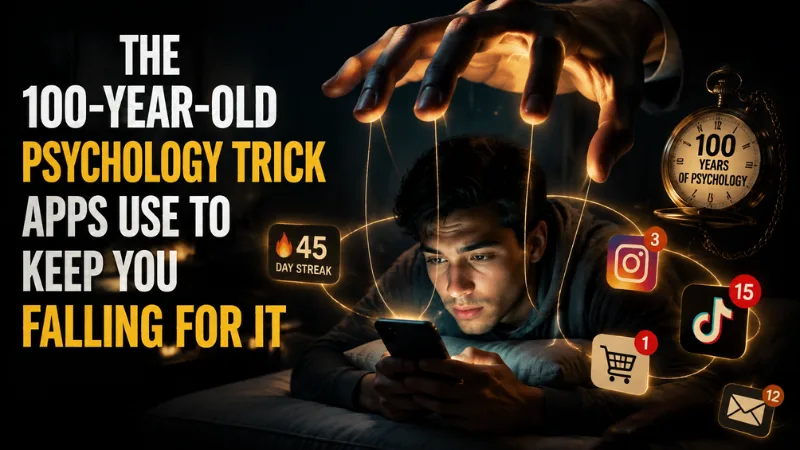
10 major brands using the Zeigarnik Effect to keep you clicking, drain your wallet, steal your screen time, and keep you coming back for more. It is midnight. You are exhausted, trying to sleep, and somehow your brain has chosen this exact moment to obsess over one thing: A $65 linen shirt still sitting in your shopping cart. You do not even need it. You added it while waiting for coffee and moved on with your day. Your brain, apparently, did not. You went through a full day of tasks, meetings, and things you actually finished. But that unfinished cart is still hanging around. Why does the stuff we don’t finish stay with us longer than the things we actually complete? That is the psychological trap of open loops, and nearly 100 years after psychologists first noticed it, app developers and growth marketers have become very good at using it to pull you back in and nudge you toward “Complete Order.”  The 1920s Berlin Waiter Who Started It All Long before product managers in Silicon Valley were running A/B tests to optimize your screen time, a Russian psychologist named Bluma Zeigarnik was hanging out at a bustling café in Berlin. It was 1927, and Zeigarnik noticed something deeply bizarre about the café’s serving staff. The waiter taking their table’s order possessed what appeared to be a superhuman memory. He managed complex, multi-course drink and food orders for massive groups entirely in his head. No notepad, no digital tablet, zero written notes. He knew exactly who ordered the extra espresso shot, who wanted oat milk, and who had a split bill running. Except there was a glaring catch. The moment a table paid their bill and walked out the front door, Zeigarnik stopped the waiter and asked a quick question about what those customers had eaten. The waiter looked at her with total, unblinking blankness. He couldn’t recall a single dish from the order he had served just three minutes prior. Once the transaction was settled, his brain executed a hard factory reset on that data. Fascinated, Zeigarnik headed straight to her psychology laboratory to run controlled experiments. She assigned subjects a series of small tasks like solving puzzles, stringing beads, or folding paper. Midway through half of the tasks, she deliberately interrupted them. When she tested their recall later, participants remembered the interrupted, unfinished tasks far better than the tasks they had finished undisturbed. This phenomenon became known as the Zeigarnik Effect. Shortly after, her colleague Maria Ovsiankina uncovered the second piece of the puzzle: the Ovsiankina Effect. Her experiments showed that when a task is interrupted, people feel a strong urge to return and complete it. Together, they explain two parts of the same pull: The Zeigarnik Effect: unfinished tasks can stay more mentally active than completed ones. The Ovsiankina Effect: once a task is started or interrupted, you feel a pull to return and finish it. 10 Brands Weaponizing Your Unfinished Business If your phone currently feels like an inescapable trap of red notification badges and abandoned shopping carts, it isn’t an accident. Modern UX designers know all about Zeigarnik and Ovsiankina. They purposefully engineer interfaces that open psychological loops, ensuring your brain remains in a state of subtle tension until you open the app to close them. Here are 10 major brands using 100-year-old brain science to dominate your digital life: 1. Nike & ASOS: The Abandoned Cart Ping You add a coat on ASOS or sneakers on Nike, hit the checkout screen, see a surprise $15 shipping fee, close your browser tab, and try to walk away. Two hours later, your phone buzzes: “Your items miss you! Finish checking out before stock runs out!” Because you started the checkout, your mind logged it as an active project. The notification acts as a deliberate interruption, poking that open loop and triggering enough psychological discomfort that you re-open the app just to make the feeling go away. 2. LinkedIn: The “Profile Strength” Trap Ever signed up for LinkedIn and been hit with a progress bar claiming your profile is “64% Complete”? That incomplete bar is visual friction designed to trigger the Ovsiankina Effect. If LinkedIn demanded you fill out 15 tedious form fields on day one, you would delete the app immediately. But by showing a bar that is already partially filled, your brain gets tricked into believing the task has already commenced. The unfilled space acts as an open loop, driving you to spend twenty minutes adding skills, bios, and headshots just to experience the relief of a 100% status bar. 3. Duolingo: The Daily Streak Ultimatum The infamous Duolingo owl doesn’t just remind you to practice Spanish; it threatens to break your 45-day streak. An active streak is the ultimate open loop. Letting a streak die feels like abandoning a project halfway through, which drives tens of millions of users to open the app daily just to keep the loop intact. 4. Sephora: The Visual Preview Nudge Sephora takes cart abandonment a step further. They don’t just send a generic email; they trigger push notifications featuring a high-res visual preview of the exact lipstick or moisturizer shade you left sitting in your cart. Seeing the specific product reignites the original goal-directed tension, making it almost impossible to ignore. 5. Slack & Apple iOS: The Red Badge Friction That tiny red dot sitting on your Slack, Gmail, or Instagram icon? It exists solely to exploit task interruption. Your brain interprets that red badge as an incomplete conversation or unresolved task, creating a low-level itch that forces you to tap the app just to clear the screen. 6. TikTok: The Infinite “For You” Loop TikTok’s algorithm doesn’t just serve hyper-personalized content; it structures video edits so that transitions feel seamless. Because videos loop endlessly and auto-play the next clip before your brain can process the end of the previous one, you never experience a natural stopping point. Without a closed loop, your brain stays locked in a

The 100-Year-Old Psychology Trick Apps Use to Keep You Falling For It Read More »
The Living Room Takeover: Is Your TV About to Become an Instagram Feed?

The Living Room Takeover: Is Your TV About to Become an Instagram Feed?

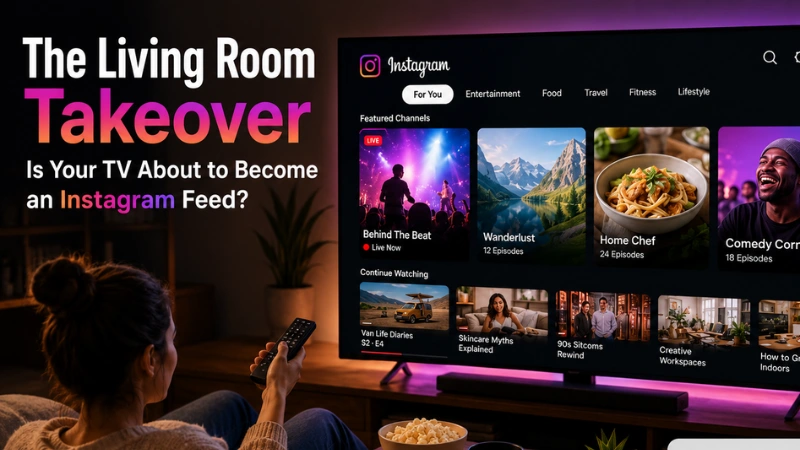
Remember when the TV was just for watching movies and that one show your parents had to watch? It was just a big, clunky box in the middle of the room. You sat on the couch, grabbed the remote, and accepted your fate.  Then came the era (honestly, the one we’re all still trapped in) of the phone, where we devolved into doomscrolling gremlins (you know the ones, hunched over in the dark at two in the morning).  Well, Meta has decided those two worlds should not be apart anymore. With the recent expansion of Instagram for TV to Samsung Smart TVs, the platform is making a power play for your living room. The speculation is running wild. First, Instagram copied TikTok to capture the short-form crown. Then, it nudged its way into X territory with the Threads integration.  Now? It looks like they have their sights set on the ultimate prize: the YouTube-dominated landscape of long-form video. The reality is actually simple: YouTube will no longer be the only social media platform for long-form content. The tides are shifting, and the big screen is officially the new battleground.  When YouTube Broke The Treaty To understand why Instagram is making this move, we have to talk about how we got here. For years, the digital ecosystem was cleanly divided. Instagram was for the curated, the square, and the aesthetic. YouTube was for the deep, the educational, and the long-form content. It was a beautiful, balanced ecosystem. Then, YouTube got itchy. They saw the astronomical growth of TikTok and realized that people were not just watching thirty minute video essays. They were obsessed with thirty second dopamine hits. So, YouTube launched Shorts. It was a brilliant move to protect their turf. By integrating vertical, short-form content directly into their platform, they effectively stopped users from leaving the app. They turned a search heavy engine into a scrolling machine. They proved that a long-form giant could easily become a short-form player. But that move did not just expand YouTube’s footprint. It broke the unspoken treaty. It signaled that no category of content is off limits for any platform. If YouTube could move into Instagram’s backyard, why could Instagram not walk right into the living room? Getting The TV Experience Right We have seen this dance before. Remember when Instagram tried to force feed us IGTV as a standalone app? It was like that one friend who tries to make a niche hobby happen at a party. It just felt a little awkward. The original Instagram TV experiment was a noble attempt, but the user experience was essentially a vertical video struggle bus on a horizontal world. Fast forward to 2026, and they are finally reading the room. Literally. The new Instagram for TV update is not just about dumping your phone feed onto a 65 inch display. They are testing channels organized by interest, casting capabilities, and horizontal video formats. So they are not trying to force you to tilt your TV sideways anymore. They are finally acknowledging that human beings like to sit back and relax without getting a crick in their neck. Why This Matters And Why YouTube Should Sweat a Little YouTube has held the keys to the long-form social video castle for years. It is where you go to learn how to fix your leaky sink, watch a three-hour video essay on the fall of a niche toy brand, or catch up on your favorite creators. But here is the kicker: Instagram has the social graph. Think about your behavior. You probably spend hours in the app and already know which creators you vibe with. Your Saved folder is likely full of recipes, comedy skits, and deep-dive explainers. By bringing those into your living room, Meta is turning your TV into a personalized entertainment network, rather than a giant list of videos you have to search for. When you can cast those curated Reels directly from your phone to the big screen without losing the quality, the friction of watching long-form content drops to near zero. You are not just watching a video. You are watching a feed that already knows exactly what you like. That is a dangerous, sticky advantage. A New Path For Creators This is not just a win for us couch potatoes. It is a seismic shift for creators. For years, creators have been trapped in the short-form funnel. You make a 15-second hook, you hope for the algorithm gods to smile upon you, and you move on to the next one. It is exhausting. It turns content into a commodity and is fast, cheap, and easily forgotten. But by pushing longer-form, episodic content and Live on TV, Instagram is giving creators permission to slow down. Imagine watching an episodic docuseries from your favorite creator directly on your TV, right after you finish your nightly Netflix session. It bridges the gap between social media creator and streaming service star. If they pull this off, the thin line between a YouTuber and an Instagram influencer is going to get blurrier than a low-resolution video from 2007. Will YouTube Lose To Instagram? Not exactly. Let us not get ahead of ourselves. YouTube is a search engine, an archive, a music player, and a community hub all rolled into one. It is hard to beat that kind of utility. However, Instagram is betting on something else: community connection. They are leaning into the idea that watching is better when it is a group sport. With features meant to help friends share and watch together, they are trying to reclaim the watercooler moment. They want to own whatever is going viral in the group chat. We do not just watch videos anymore. We want to talk about them, share them, and laugh at them with people we actually like. If Instagram can capture that social pulse on the big screen, they do not have to kill YouTube. They just have to carve out their own, very cozy, very

The Living Room Takeover: Is Your TV About to Become an Instagram Feed? Read More »

Why The Fifa World Cup Is No Longer Just A Sport It’s The Marketing Hijacking

Why The Fifa World Cup Is No Longer Just A Sport: It’s The Marketing Hijacking

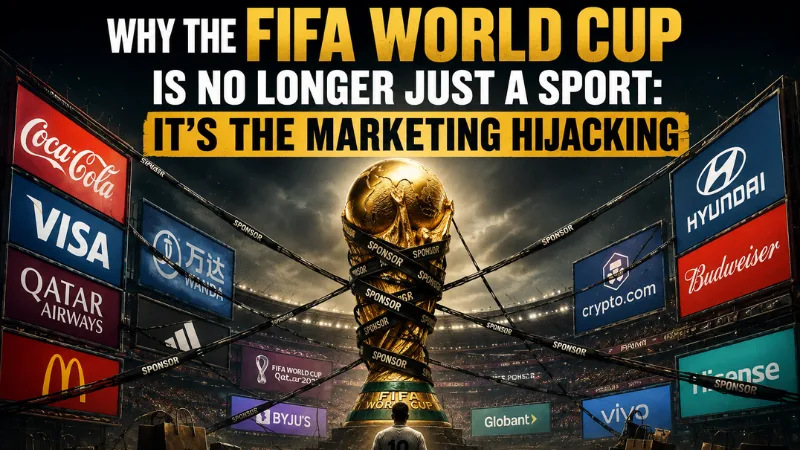
For ninety minutes, the FIFA World Cup looks beautifully simple. It is twenty-two people chasing a ball, a referee whose eyesight is universally questioned by millions of screaming fans, and a collective drop in global productivity. But the second the referee blows the final whistle, the sport stops, and the real monster wakes up. Behind the tactical formations and emotional penalty shootouts lies a truth that sports networks try very hard to hide. The World Cup is no longer a football tournament. It is a massive, multi-billion-dollar corporate holiday that happens to feature some sport in the background. Calling it a sports event today is like calling Disney a cartoon studio. It completely misses the actual business model. Brands do not spend hundreds of millions of dollars just to get their logos stamped on a pitch-side billboard. They do it because the World Cup solves the single hardest problem in modern media. It grabs five billion highly distracted, hyper-fragmented humans by the collar and forces them to look at the exact same screen at the exact same time. But while regular marketing agencies stare at television ratings and count public tweet impressions, the smartest players on earth have quietly realized the old ways are completely useless. The internet has broken public attention into tiny, chaotic pieces, and standard advertising rules have melted down. If you look closely at how the current tournament cycle is running across Canada, Mexico, and the United States, a much more interesting game is happening in the dark. The 90-Minute Game is Just Live Bait The old way of doing sports marketing was straightforward and incredibly dull. You bought a thirty-second commercial slot during halftime, hoped people did not leave the room to grab a snack, and prayed they remembered your logo the next morning. That approach belongs in a museum. The physical match has been systematically repurposed. It is no longer the main event. It is the anchor content, the high-octane live bait used to hook you into a massive digital network. The real business happens in the chaotic media storm that spins around those ninety minutes. Think about how you actually experience a massive tournament moment now. A superstar scores an impossible goal in extra time. You do not just sit there staring at your television like it is 1998. You are living across three different digital apps simultaneously. Your phone instantly buzzes with text threads. You check Reddit or X to find the exact moment a manager lost his mind on the sidelines, which someone already turned into a meme format within two minutes. You open Instagram to see vertical video clips of fans losing it in a pub in London. Later that night, you watch a twenty-minute YouTube breakdown where a creator analyzes the tactical mistakes that led to the goal. For anyone trying to sell a product, this fragmented reality is an absolute goldmine. Live sports are the last remaining thing people refuse to watch on a delay. You cannot binge-watch a live World Cup final on a streaming app three weeks later without ruining the entire point. Because you are constantly jumping between screens to keep up with the collective panic, brands get to stop interrupting your entertainment. They just buy a seat right next to you inside the conversation. Streaming Fractured the Broadcast and Multiplied the Money There was a massive panic a few years ago that streaming would kill sports broadcasting by dividing audiences into tiny groups. Instead, it did the exact opposite. It gave media networks and sponsors thousands of new ways to get in front of your face. The minute a match concludes, the content ecosystem actually kicks into overdrive. Official media partners drop localized highlight reels on YouTube before the players even make it back to the locker room. Sports platforms produce vertical analytical breakdowns optimized entirely for mobile viewing. Short-form video networks rack up billions of impressions from casual viewers who never intend to watch a full ninety-minute game but love the culture surrounding it. This means global corporate sponsors are no longer putting all their eggs in a single television ad basket. They can sponsor the live push notifications on your favorite sports app, fund the behind-the-scenes travel vlogs on TikTok, or slap their branding across post-match video essays. When you can exist on every screen a fan owns, you win by default. Room Reactions Over Studio Analysis The days of traditional television analysts dictating how we feel about a game are officially over. A massive portion of global media power has moved straight into the hands of creators filming videos in their apartments or walking through stadium gates with a smartphone. A whole generation of sports fans now interacts with tournaments through their favorite internet personalities rather than network anchors. If a massive underdog pulls off an upset, younger viewers do not wait for the post-game show on a cable network. They pull up a live watch-along stream to see a human being they actually relate to completely lose their sanity in real time. Corporate sponsors quickly realized they could not replicate this connection with a standard billboard. So, they started giving their budgets directly to the creators. The strategy works beautifully because it fixes a massive structural hurdle, specifically the problem of trying to talk to the entire planet without sounding like a generic corporate robot. A massive company can build one central marketing framework at headquarters, but they let regional creators handle the voice. A content creator in New York will talk about a brand using dry humor, while a creator in Seoul will use high-energy pop culture references. The corporate backing stays identical, but the delivery feels like it came from a friend. The Video Game That Erased the Offseason A massive problem with regular sports tournaments is the calendar. The physical World Cup happens once every four years, which is an eternity in modern business. If you only talk to your consumers twice a decade, your brand

Why The Fifa World Cup Is No Longer Just A Sport: It’s The Marketing Hijacking Read More »

8 Weird Websites That Instantly Reset Your Brain at Work

8 Weird Websites That Instantly Reset Your Brain at Work

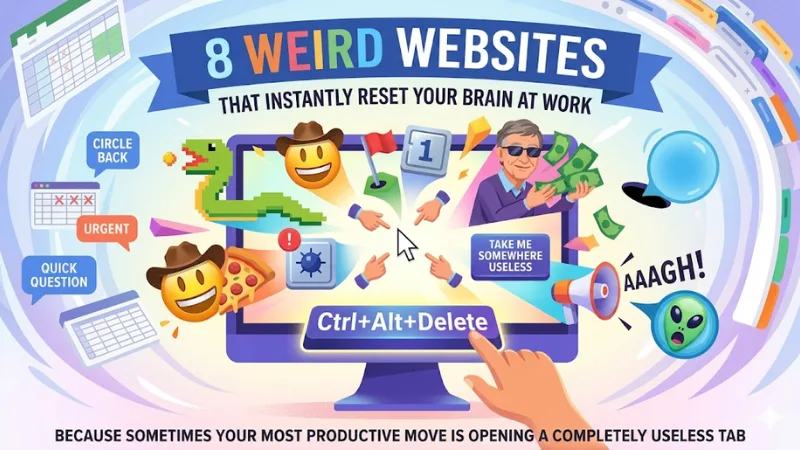
Because sometimes your most productive move is opening a completely useless tab. Let’s acknowledge a truth that every office worker, remote employee, freelancer, marketer, designer, founder, analyst, developer, and professional Slack message survivor already knows: Your brain was never designed for this. It was not built to attend seven video calls before lunch. It was not built to decipher messages like: “Just circling back on this.” “Quick question.” “Can we hop on a quick call?” We definitely were not built to stare at forty-two browser tabs while pretending everything is under control. Yet here we are. Every day, millions of people spend their working hours bouncing between spreadsheets, dashboards, email threads, project trackers, and group chats that somehow generate more notifications than a breaking news network. And when your mental battery hits ZERO? The standard corporate “WELLNESS” advice is usually a total miss. Someone, somewhere, probably told you to take a 30-minute mindfulness walk, take a short nap, download an expensive meditation app, or sit quietly with your own chaotic thoughts.  Fantastic suggestions for someone who doesn’t have an inbox overflowing with “URGENT” requests. Unfortunately, you have a scheduled meeting that could have been an email. You don’t need a life transformation; you need a two-minute escape hatch. You need a mental reset that works instantly. The common instinct is to open a new tab and scroll social media. (Will that help though? No, it’s a bad idea.) Why? Doomscrolling is designed to hijack your dopamine receptors, leaving your nervous system more overstimulated, envious, and cognitively depleted than before you took a break. If you want a genuine mental health reset that actually clears the fog. Enter one of the internet’s greatest hidden features: weird little corners of the web. Not another app asking you to subscribe for $14.99 a month.  Just tiny pockets of delightful nonsense designed to reset your brain before returning you to civilization. Some live inside Google itself. Others are strange independent websites that somehow survived twenty years of internet evolution while maintaining the energy of someone who built them at 2 AM and said, “Yeah, this is perfect.“ Here are eight of the best. 1. Emoji Kitchen Search: Emoji Kitchen (click “Get Cooking”) This is Google’s secret weapon. It’s a design experiment that lets you smash two emojis together to create a custom digital sticker. A cowboy pizza? A ghost wearing sunglasses? A monkey that looks like it’s survived three consecutive financial crises? It is absurd, it is high-quality, and it is entirely pointless. Modern work is full of consequences. Every decision carries weight, performance metrics, or the potential for a critique in your next 1:1. Emoji Kitchen is the absolute peak of risk-free validation. You click random things, you receive chaos, and there is zero penalty for your experimentation. For two glorious minutes, your brain gets permission to stop optimizing, stop strategizing, and just play. 2. Google Snake Search: Snake Game A classic that remains strangely addictive because it requires exactly what your brain is currently missing: focus. When you’re spiraling about deadlines and your brain feels like a browser with 87 tabs open, Snake closes 86 of them. The moment the game starts, your entire attention shifts toward one objective: do not crash into the wall. It’s a kinetic, digital version of grounding. It’s simple, immediate, and arguably more therapeutic than refreshing your inbox for the tenth time this hour. 3. Minesweeper Search: Minesweeper Workplace stress often feels like you’re trying to navigate a minefield where the mines move every time you look away. Priorities shift, projects change, and people forget to reply to your “urgent” threads. So, Minesweeper is the antidote because it operates on rigid, predictable logic. The numbers don’t lie, they don’t change their minds, and they don’t send late-night status updates.  In a world full of ambiguity, there is immense comfort in a puzzle that actually makes sense. Winning a round gives you a clean win that your chaotic inbox refuses to provide.  4. Pointer Pointer Visit: pointerpointer.com  Move your cursor anywhere, and the site finds a photo of a random human being pointing directly at it. It’s simple, slightly creepy, and endlessly mesmerizing. Your brain loves surprise, and even though you know what’s coming, you’ll still laugh when it happens.  When you are checked out of a meeting that should have been an email, this bizarre, random tool snaps your brain out of its rut and resets your focus through pure, unexpected curiosity. 5. Neal.fun Visit: Neal.fun  Neal.fun feels like the internet before every website became a SaaS product. Think of this as a digital amusement park for people who are tired of spreadsheets. With one click, you’re spending Bill Gates’ money. Next, you’re discovering how many moons fit inside Jupiter. It feeds your brain’s natural drive to explore without the pressure of a to-do list. Five minutes later you’re questioning where the afternoon went.  6. The Useless Web Visit: TheUselessWeb.com  One button. That’s it. Press it, and it drops you somewhere ridiculous. Maybe it’s a site dedicated to bouncing cats, maybe it’s a site that lets you race checkboxes, or maybe it’s something that makes you question the internet’s entire development history. Sometimes, the healthiest response to modern productivity culture is simply clicking a button labeled “Take Me Somewhere Useless.” It keeps your brain lightly intrigued without causing any cognitive strain. 7. Scream Into The Void Visit: ScreamIntoTheVoid.com Type your frustrations, launch them into a digital black hole, and watch them vanish with a satisfying auditory scream. Every professional has had a moment where they wanted to shout about a “quick call” that lasted an hour. Instead of sending a Slack message you’ll regret, send it into the void. No one will ever read it, no data is saved, and it just disappears. It’s not therapy, but it is the quickest, cleanest way to vent without the messy corporate fallout. 8. The One-Minute Breathing Exercise Search: Breathing Exercise Sometimes the simplest tools survive because they solve

8 Weird Websites That Instantly Reset Your Brain at Work Read More »

Why the Cannes Film Festival Has Become a 12-Day Influencer Fever Dream

The unofficial dress code at Cannes 2026 wasn’t black tie. It was brand visibility. If you have spent the last two weeks doom-scrolling, you have noticed the shift. Your Instagram explore page is suddenly 70% floor-length gowns, 20% yachts that cost more than your rent, and 10% “I am just here for the art” captions written by people who haven’t watched a Hollywood blockbuster since Ratatouille. Welcome to Cannes 2026. Or, as I like to call it, the world’s most expensive background for a sponsored TikTok transition. The Great Vibe Shift Let’s be real. The movies were there, sure, doing their absolute best to be high-art, serious, and cinematic. But they were constantly being elbowed out of the spotlight by ten-foot trains, architectural bodices that defied the laws of physics, and enough diamonds to light up a small solar system. And here is the funny part: most of us could probably identify who wore Schiaparelli, Gucci, Valentino, or Louis Vuitton at Cannes faster than we could name a single Cannes Film Festival 2026 winner.  We know the gowns. The jewelry is just as recognizable. And at this point, we can even recall which celebrity had the internet collectively zooming into fabric details at 2 a.m. But the actual award winners?  For many people, that information is currently sitting in the same mental storage folder as high school trigonometry and forgotten streaming passwords. The fashion moments became group-chat material.  The films, despite being the reason Cannes exists in the first place, often felt like the opening act for the world’s most glamorous game of “Who Are You Wearing?” In 2026, the red carpet wasn’t just part of the festival. For a huge chunk of the internet, it was the festival.  Forget the film snobs. This year, the real show was not happening in the dark, velvet-seated theaters of the Palais des Festivals. It was happening on the stairs. We hit a point where a “Who Wore What” list got way more clicks than some pretentious review about cinematic tension. It felt like every big fashion house in Paris was playing a high-stakes game of capture the flag with our collective attention spans. And honestly? They were winning. Cannes stopped feeling like the legendary, high-brow festival we all grew up hearing about. It stopped being a place where cinema was the main event with a little sparkle on the side. Instead, it transformed into the Met Gala’s posh, European cousin. It is the one who drinks exclusively sparkling water, never raises its voice, and definitely judges your shoes the second you look away. The Cannes Paradox: Two Parties, One Staircase One of the most fascinating things about Cannes 2026 was that two completely different events seemed to be happening simultaneously. Inside Cannes Conversations centered around: Film premieres Awards contention Directorial achievements Industry deals Critical reception Standing ovations Outside Cannes The conversation looked very different: Who wore what? Which designer won the night? What look went viral? Which celebrity dominated social media? Which fashion house generated the most buzz? Every major event now has a body double: the event itself and the internet’s version of it. And in 2026, the second version almost always wins. The Rise of the “Custom By” Economy “Custom by” became the unofficial heartbeat of the festival. It is more than a fashion credit; it is a flex. When a celebrity shows up in a garment made specifically for their body, something that never graced a retail rack and never will, they are not just getting dressed. They are launching a strategic marketing campaign. Brands have realized that a movie’s theatrical run might be short, but a legendary fashion moment lives in the saved folder of a million Pinterest boards for the next decade. It is a perfect symbiotic relationship: The Celebrity: Gains fashion credibility and massive engagement. The Fashion House: Gains “Earned Media Value” that money could not buy in traditional ads. The Audience: Gains the drama, the memes, and the audacity of looking at people who can wear a piece of art that costs more than a house. Don’t believe me? The 2026 festival cemented this shift for good. From Bella Hadid’s viral Schiaparelli look to Demi Moore’s sculptural custom-made gown by Demna at Gucci, the red carpet was basically our new favorite runway. Check the receipts: The Viral Moment: Pure, unadulterated “Custom By” energy. As the legend herself noted in The Devil Wears Prada, “A million girls would kill for that job,” but at Cannes 2026, it felt like a million creators would kill just to be the one answering that “Custom By” question for a viral video. Vogue’s Cannes 2026 Fashion Edit: A breakdown featuring Renate Reinsve’s daring custom Louis Vuitton cape and Cate Blanchett’s fringed Givenchy gown. Elle’s 2026 Lookbook: Every celebrity arrival, curated, including Chloé Zhao’s crystal-spiked Schiaparelli ensemble and Colman Domingo’s theatrical purple Valentino cape. We do not view this as advertising. We view it as culture. The gown does not interrupt the show. The gown is the show.  From Actors to Everyone The guest list also got a major glow-up. It is not just Hollywood royalty anymore. Now, you have digital creators and entrepreneurs rubbing elbows with directors who have not touched a smartphone since 2005. It seems chaotic, but there is a method to the madness: Attention. Luxury brands know that an influencer with ten million loyal followers can move the needle faster than a classic movie star. They know that a premiere is a moment, but a viral “#GRWM” (Get Ready With Me) video from a balcony in Cannes is a movement. In the attention economy, reach is reach. Why We Can Not Look Away At the end of the day, Cannes 2026 taught us that the most valuable asset is not necessarily a golden trophy. It is our time. We love the spectacle because it is the ultimate escapism. In a world of spreadsheets, laundry, and daily errands, watching someone walk a red carpet in a dress

Why the Cannes Film Festival Has Become a 12-Day Influencer Fever Dream Read More »

9 Best Free Ecommerce Platforms for Dropshipping 2026

9 Best Free Ecommerce Platforms for Dropshipping 2026

Let’s get one thing straight: “free” in ecommerce is like a Costco free sample. You walk in for a bite of cheese; you walk out having spent $300 on cheese and a kayak you didn’t plan for. Most platforms that advertise as free will charge you somewhere. It might be through transaction fees, listing limits, or premium “must-have” plugins you basically cannot function without. No cap, it’s a whole setup (Or a Trap). That said, there are genuinely viable free and near-free ecommerce platforms for dropshipping in 2026. You just need to know what you’re actually signing up for. This is not another listicle that copies a marketing page and calls it research. We’re going deep on what each platform costs you in real terms, which ones actually support dropshipping workflows, and who is actually the winner for value. Since you are high on screen time anyway, grab a coffee. First: A Quick Reality Check on Dropshipping Platforms in 2026 No major ecommerce platform ships with dropshipping built in. That would be too easy. You will always need a third-party app like DSers, Spocket, Printful, or AutoDS to connect to suppliers and automate order fulfillment. What separates the platforms is how well their ecosystems support those integrations, how much they charge you for the privilege, and how fast you can get operational without hiring a developer (a whole other bill, by the way, big yikes). The Platforms at a Glance Platform Free Plan Type Best For Transaction Fee Dropshipping App Support Square Online Truly free (unlimited products) Beginners testing the model 2.9% + 30¢ per sale Basic via integrations WooCommerce Free plugin (hosting costs money) WordPress users, full control None (self-managed) Excellent Shift4Shop Free if you use Shift4 Payments US sellers wanting enterprise energy None on Shift4 Good Big Cartel Free up to 5 products Creators, niche sellers None Limited Ecwid Free widget tier (limited) Sellers with an existing site None from Ecwid Moderate PrestaShop Free to download Ambitious builders/Total control None (self-managed) Good via modules OpenCart Free to download Tech-savvy, multi-store setups None (self-managed) Good via extensions Wix Free website, paid ecommerce Design-first beginners None Moderate (Modalyst) Shopify Free trial only Serious dropshippers ready to invest None with Shopify Payments Best in class 1. Square Online: The Most Genuinely Free Option If you want a real store with zero monthly fees and no time limit, Square Online is the most honest free option on this list. You get unlimited product listings, mobile-optimized checkout, SSL hosting, and basic inventory tools for absolutely nothing. You only pay when you make a sale. Usually, that is around 2.9% + 30 cents per transaction. It’s giving “low risk, high reward” energy. What’s the catch? The store has Square branding unless you upgrade to a paid plan ($29/month), and the design freedom is a bit mid. For dropshipping specifically, the integrations are thin compared to WooCommerce or Shopify. You are not getting native automation out of the box, so you’ll be doing some manual workarounds or using Zapier-style bridge tools to connect to your suppliers (Elegant? No. Functional? Yes.) Who it’s actually for: Someone who wants to validate that their product hits before investing anything. A pet accessory seller testing a niche. An Etsy seller expanding to their own storefront. If your goal is to see if a product concept makes money before you spend 500 dollars on a setup, Square Online is a smart starting point. The Reality: It’s great for testing, but it doesn’t play nice with the “lazy” dropshipping apps that automate everything. You’ll be doing more manual clicking. Best For: Proving your product isn’t a flop before spending real money. 2. WooCommerce: The Free Plugin That Isn’t Really Free WooCommerce is the G.O.A.T. (Greatest of All Time) of ecommerce solutions. It’s a WordPress plugin, it’s open source, and the core software costs exactly $0. It also powers around 28% of all online stores globally. That’s not an accident. Here’s the honest math, though. You need WordPress hosting ($20-50/month for something decent), a domain (~$12/year), an SSL certificate, and likely a premium theme and 2-4 paid plugins. Realistic WooCommerce costs can hit around $122/month in software subscriptions alone once you add everything needed for a production-ready store. Free, technically. Cheap, not exactly. None of that makes WooCommerce a bad choice. It makes it a different kind of choice: one where you own the infrastructure, pay no platform percentage on your revenue, and have virtually unlimited flexibility. For dropshipping, AliDropship and WooDropship are purpose-built plugins that work seamlessly here. Who it’s actually for: People who already have a WordPress site, people with some technical rizz, and anyone building a content-heavy brand. If you want to rank on Google for your product niche and build a long-term brand, the WooCommerce + WordPress combination slaps. The Reality: It’s like being gifted a puppy. The puppy is free, but the food, vet bills, and chewed-up shoes are on you. You own everything, but you also have to fix everything when it breaks. Best For: People who want to own their brand and hate paying a “platform tax.” 3. Shift4Shop: The Sleeper Pick for US Sellers Shift4Shop has what might be the most underrated deal in ecommerce right now. They offer a fully featured store for $0/month if you use Shift4 Payments. We’re talking unlimited products, built-in CRM, abandoned cart recovery, SEO tools, and 24/7 support; features that other platforms charge $200+/month to access. The conditions are real and worth understanding. It’s US-only, it requires Shift4 as your primary payment gateway, and you need to process at least $500/month to stay on the free tier. If you don’t hit that $500 mark? Sus. Then you are charged a fee (often around $29/month).  What’s the catch beyond the conditions? The interface is noticeably dated compared to Shopify or even Wix. Customer support reviews have been mixed since the 2020 acquisition. The app ecosystem is smaller; there’s nothing like Shopify’s 8,000-app marketplace here. It looks like 2014

9 Best Free Ecommerce Platforms for Dropshipping 2026 Read More »

The Content Marketing Strategy Playbook 2026

The Content Marketing Strategy Playbook 2026

Stop treating your brand’s content like a bag of party streamers. Most brands aren’t losing online because their product is bad. They’re failing because they treat their marketing like a series of disjointed, desperate accidents. Often, this isn’t due to laziness but rather limited resources, competing priorities, or simply not knowing where to start with a cohesive strategy. A caption here, a blog post there, a YouTube video uploaded with zero strategy and zero context. Then they wonder why nobody shows up. In 2026, content marketing isn’t a side project for your social media manager. It’s the operating system. Think of it as the silent partner holding the whole strategy together. It’s the common sense and the follow-through that makes everything else work. It’s the engine that helps people find you and, more importantly, builds enough genuine trust that they’re actually happy to buy from you. When you do this right, your customers feel like they made a smart choice. When you do it wrong, they feel like they were cornered by a loud sales pitch they’ll regret by morning. Nailed properly? You’re the clear voice in a room full of people shouting. Get it wrong? You’re just throwing confetti into a category-five hurricane and wondering why no one is celebrating. What is Content Marketing and Why is it Important for Businesses? At its core, content marketing is the strategic art of communicating with your customers and prospects without explicitly selling anything to them. Instead of pitching your products or services, you are educating or delivering information to your buyer that makes them feel more intelligent or entertained. The traditional “forced-pitch” is failing because consumers have developed an innate resistance to advertising. Content marketing is the bridge. It is important for three non-negotiable reasons: 1. It Owns the “Zero Moment of Truth.” Before a customer ever speaks to a salesperson or hits “Add to Cart,” they do 7 to 11 touchpoints of research. Content marketing ensures that your brand is the one providing the answers during that research phase. If you aren’t the one educating them, your competitor will be. 2. It Builds Unshakeable Trust (The “Halo Effect”) When you consistently provide value for free, you win the battle for their attention, the “mental monopoly.” By the time a lead is ready to buy, they don’t look for three quotes. They come to you because you’ve already proven your expertise. You aren’t a stranger; you’re a trusted advisor. Trust is one of the most valuable business assets, and consistent content marketing is among the most scalable ways to build it systematically. 3. It Drastically Lowers Customer Acquisition Cost (CAC) Paid ads are a “tax” on your business that increases every year as platforms become more crowded. Content marketing, however, is an investment. While an ad disappears the moment you stop paying for it, a great piece of content continues to generate leads while you sleep. It creates a “flywheel effect” where your past work makes your future growth easier. The Reality Check: In a world saturated by AI-generated filler, businesses that don’t invest in high-quality content marketing are essentially invisible. You aren’t just competing for dollars; you are competing for unfiltered human attention, and in 2026, that is the rarest commodity in the market. The Infrastructure Mindset On one side is your brand; on the other are your future fans. Without content, you are essentially on different planets. You can’t just set off a flare and expect a crowd to form. You have to build the bridge, plank by plank, by proving your value before you ever ask for theirs. Defining the Battlefield: Content Strategy vs. Marketing Whether it’s content strategy or content marketing, these buzzwords are often confused together, but if you don’t know the difference, you’ll misallocate your budget and wonder why your “writing” isn’t selling anything. Content Writing: The Craft. This is the “how it sounds and feels”; it’s the actual act of creation. It’s the blog post, the video script, the whitepaper, or the infographic. It’s about fine-tuning readability, nailing the brand voice, and ensuring the value is clear. Content Marketing: The Strategy Umbrella. It answers the “why” and the “where.” It’s the planning, the research, the distribution, and the cold, hard analysis. You can have the best blog post in the world, but if it sits on a dead website with no links and no social promotion, it’s not marketing. It’s a diary entry. Content marketing ensures that the “meal” actually gets served to the right people at the right time. Digital Marketing: The Biggest Lens. This is the whole house. It includes content marketing, but it also encompasses the technical stuff: paid ads (PPC), technical SEO, site performance, and backend conversion rate optimization (CRO). The Analogy: Content is the fuel; digital marketing is the vehicle. You can have a flashy sports car, but without high-octane fuel, it’s just a very expensive lawn ornament. Blogs: The Authority Engine Despite the “death of reading” rumors, long-form blogs and articles still build the most serious authority in the B2B and B2C worlds. Why? Because a tweet has the lifespan of a bubble, but a killer blog post is “old money.” It lives for years. The Compounding Asset: Unlike paid ads, where the traffic stops the second you stop paying, a well-optimized blog is a compounding asset. A post you wrote in 2024 could still be your #1 lead generator today. The Math: Companies that publish blogs consistently (2-4 times a week) see 55% more website traffic and 67% more leads than those that treat their blog page like a ghost town. The ROI: Marketers who prioritize blogging are 13x more likely to see a positive ROI. Domain Authority (DA) & Page Authority (PA): If SEO were a massive, global video game, DA and PA would be your power-ups. Domain Authority (DA): This is a score that predicts how likely your whole website is to rank. It’s based on the quantity and quality of other reputable sites

The Content Marketing Strategy Playbook 2026 Read More »

The Easter Cart Takeover: How AI Is Quietly Deciding What You Buy

The Easter Cart Takeover: How AI Is Quietly Deciding What You Buy

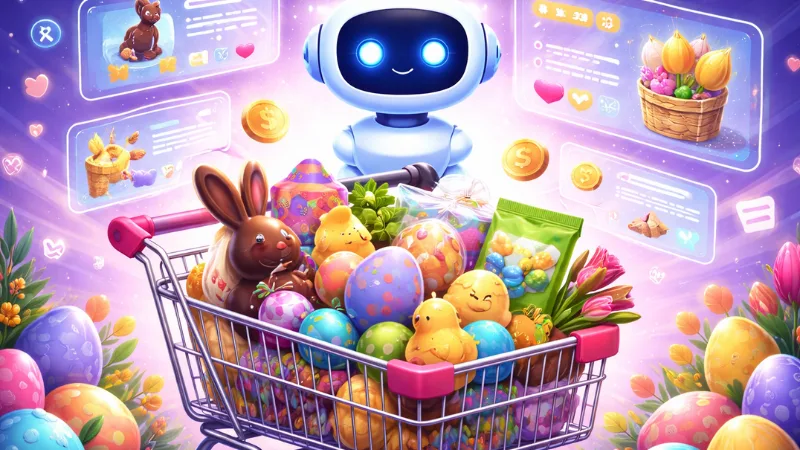
You were just talking about something. Out loud. Not searching. Not typing. Just casually mentioning to a friend that your apartment feels a little empty. And then it shows up. In your feed. In your ads. In your “recommended for you,” it’s that specific brand of digital déjà vu that makes you wonder if your phone is actually your closest confidant. Now fast forward to the actual moment of impact. You opened the app to just look. Head empty, zero thoughts of spending a single cent. You were probably just killing time between meetings or waiting for your coffee. Then suddenly, your cart is “looking like a complete Pinterest aesthetic” that your savings account definitely didn’t expect. You have items in there you didn’t even know existed five minutes ago. Pastel candles for an apartment you never clean. A bunny-shaped waffle maker that you will use exactly once. A full hosting setup is like you are actually inviting Martha Stewart over for brunch. And you are sitting there like, “Wait, when did this become my type of cart?” The plot twist? It didn’t. You didn’t choose the vibe. The vibe was assigned to you by a series of high-performing algorithms that know you better than your own mother does.  Welcome to Easter 2026, where your cart does not get filled by your own hand. It gets plotted and twisted by a digital ghost that knows exactly how to make you hit that checkout button. Shopping Does Not Start With You (RIP Free Will) Shopping used to be a very linear, very normal process. If you felt a need, you went to a store or a website. You searched for a specific item. You compared a few prices. You made a final decision. You bought the thing. Now? That whole “I want” part of the equation is literally optional. We have entered the era of predictive consumption, where the needs and wants are created for you before you even feel the itch. AI is already ten steps ahead of your own brain, mapping out your next three moves like a grandmaster playing chess against a toddler. Platforms like Google Gemini have turned shopping into a literal DM. You aren’t browsing through endless pages of search results anymore. You are just having a conversation, and products are appearing as if by magic. This is not a coincidence. This is the result of massive data sets being fed into big data models that understand your intent better than keywords ever could. When you ask a simple question like, “What should I get for Easter brunch?” you aren’t getting a list of blue links to different websites. You are getting a pre-packaged lifestyle delivered in a conversational tone. You are being sold a feeling, not just a product. AI has the receipts because it has been studying your digital body language: It knows exactly what you bought last spring and whether you actually kept it. It tracked that one item you hovered over for 0.5 seconds while scrolling at 1 AM last week. It has categorized your entire personality as “clean girl” or “maximalist chaos” based on your media consumption. That perfect Easter basket that feels so you? It’s not luck. It’s data doing soft manipulation. It’s the algorithm whispering that this specific shade of sage green is what your life is currently missing to finally feel “complete.” Your Cart Has Main Character Energy (You Don’t) Earlier retailers waited for you to come to them. They spent money on SEO and hoped you would land on their page. But that model is dead. Brands aren’t waiting for you to find them anymore. They are basically pre-shopping for you, acting like a digital personal assistant that also happens to be a “world-class salesperson.” Take Amazon, for example. It’s no longer just a warehouse with a search bar. It’s an optimization engine. Amazon is optimizing the logistics of what you will buy before you even buy it, building dynamic bundles in real-time. We are talking about Easter decor, specific candy assortments, and hosting kits that change based on who is looking at them. Your cart is not just a reflection of your taste anymore. It’s a mathematical output of: Your past taste, algorithmic pressure, and people also bought this gaslighting. AI-driven recommendations are now responsible for a massive 10 to 30 percent of total e-commerce revenue. That is billions of dollars generated by things people didn’t even know they wanted until an AI suggested it. So when your cart randomly grows while you are just clicking around? It’s not a glitch. It’s the system working perfectly to optimize your average order value. The Easter Bunny Is An Algorithm Now The Easter Bunny has officially retired to a beach in Florida. The new one is a complex line of code living in a server farm in Northern Virginia. This shift is what the tech world likes to call agentic commerce. It’s the evolution from AI that suggests things to AI that actually does things. We are moving past the era of “You might also like” and into the era of “I have handled this for you.” Inside tools like Gemini or advanced Shopify integrations, the AI does not just show you a bunny waffle maker. It compares the reviews across five different sites, checks which one has the fastest shipping to your house, applies a discount code it found in a dark corner of the internet, and asks if you want to use the card on file. You can gift-wrap and check out without ever leaving the chat. There aren’t fifty open tabs. There are no rabbit holes of research. There is only the smooth, frictionless path to spending money.  You just say, “Yeah, this slays, buy it.” It’s dangerously convenient because it removes the “friction of thought” that used to save our bank accounts from ourselves. Instagram Didn’t Just Influence You. It Programmed You. This is where the whole situation gets slightly unhinged and a

The Easter Cart Takeover: How AI Is Quietly Deciding What You Buy Read More »

How Self-Love Is Rewriting Valentine's Week Culture

How Self-Love Is Rewriting Valentine’s Week Culture

Valentine’s Week still arrives every February like clockwork. Same dates, same calendar presence, and the same subtle background noise suggesting love should be visible, celebrated, and maybe even showcased. Yet the vibe has shifted. It does not land with the same intensity anymore. The emotional pressure feels dialed down. Conversations feel easier. Fewer awkward pauses, fewer polite explanations, less of that strange social choreography where people felt obligated to justify their plans or lack thereof. Valentine’s Week did not vanish. It simply stopped feeling like a performance review for your personal life. That transition was not loud or dramatic. No cultural press release. No sudden turning point. It unfolded gradually as people began relating to love in ways that actually mapped to their real experiences rather than inherited scripts. This evolution is not just unreliable. Recent Pew Research Center analysis shows that the share of adults living without a spouse or partner has shifted over time, a reminder of how partnership culture continues to change and how traditional sets of rules no longer define most adult lives in the way they once did. Not Just “Taken” or “Single” Anymore There was a time when relationship identity felt binary, with people largely seen as married, dating, or single. Those statuses seemed to matter more than expected, especially during Valentine’s Week. The holiday had a way of turning into an unspoken social scoreboard, nudging people to measure where they fit. Being single rarely felt neutral. It often felt like something you were expected to explain away with humor or casual indifference. Now the landscape looks very different. People move through far more nuanced relational spaces. Single. Happily single. Focused on self-love. In something undefined. Emotionally involved but not formally labeled. Somewhere in between. There is no universal template anymore, which subtly rewrites the emotional contract of Valentine’s Week. The question is no longer just who you are choosing. It increasingly becomes how you are choosing to experience connection, affection, and care. That shift changes everything. When Valentine’s Week Came With Expectations, Before Self-Love Shifted the Narrative Valentine’s Week once carried a set of invisible rules that most people absorbed without discussion. If you were in a relationship, participation was assumed. If you were not, you learned adaptive strategies. Deflect. Joke. Downplay. Stay busy. The awareness never really disappeared though. Plans meant something. Gestures meant something. Even opting out somehow meant something. Silence could feel as loaded as action. The holiday did more than reflect dating culture. It reinforced it. It made the most sense in a world where relationships followed predictable trajectories and intentions were easy to define. That version of dating has largely dissolved. Pew Research Center’s analysis of the modern dating landscape highlights how relationships today are more fluid, less linear, and increasingly shaped by digital interactions rather than traditional pathways. Commitment itself is being reimagined, with many connections no longer viewed as permanent milestones but as relationships that evolve over time. In many ways, love is starting to resemble a subscription model, where participation, intensity, and expectations adjust as circumstances change rather than settling into fixed paths. Dating changed. The holiday just lagged behind for a while. Modern connections often resist neat categorization. People spend long stretches in ambiguous territory. Emotional closeness can precede clarity. Commitment unfolds slowly or never quite stabilizes. Deep care can coexist with uncertainty about direction. This is not a retreat from love. It is a more honest reflection of how complex relationships can be. How Self-Love Softened the Pressure Self-love did not emerge as a rejection of romance. It arrived more like a pressure release valve. Initially, it functioned as relief. Relief from expecting one relationship to supply identity, stability, validation, and meaning. Relief from treating a single week as evidence of whether life was on track. Relief from the exhausting ritual of public happiness displays. Over time, that relief became normalized. Self-love reshaped the emotional texture of Valentine’s Week. Opting out stopped feeling like a statement. Quiet celebration stopped feeling incomplete. Not providing explanations started to feel entirely acceptable. The cultural energy moved from obligation toward choice. What Self-Love Looks Like Now The self-love that endured is not necessarily aesthetic or performative. It rarely resembles the curated social media version. Instead, it shows up in ordinary decisions. Canceling plans without guilt spirals. Spending money based on desire rather than expectation. Prioritizing comfort over optics. Saying no without elaborate justifications. Friendships are no longer framed as substitutes. Staying in does not automatically read as protest or failure. Being single is not treated as a temporary malfunction. It is simply one valid mode of living. That neutrality marks the real transformation. How Self-Love Quietly Changed Behavior First Cultural change rarely announces itself directly. It surfaces through patterns of behavior long before formal narratives catch up. Around Valentine’s Week, attention is no longer monopolized by dates, gifts, and couple rituals. There is comparable interest in rest, personal care, comfort, and low-pressure experiences. Turning inward does not require an excuse. Even broader consumer behavior data shows Valentine’s Day evolving beyond couple-centric rituals. Recent retail and spending insights for 2026 reveal that self-gifting has gone mainstream, and many shoppers now approach Valentine’s Day with low-pressure and intentional personal care, suggesting the holiday increasingly doubles as a moment for self-celebration and well-being rather than external validation. When the Pressure Faded and Self-Love Became More Visible Valentine’s Week once carried an unspoken evaluation framework. People often wondered whether the gesture was thoughtful enough, excessive, insufficient, too casual, or too intense. That ambient pressure has noticeably eased. Couples feel less compelled to stage grand performances. Single individuals feel less socially exposed. Friends require fewer disclaimers. Choosing yourself does not demand narrative defense. People did not stop valuing love. They simply stopped treating the holiday as a mandatory demonstration of success. Recent YouGov survey data on Valentine’s Day attitudes shows that most Americans now view the holiday as celebrating both romantic and platonic relationships, suggesting people are increasingly treating Valentine’s Day

How Self-Love Is Rewriting Valentine’s Week Culture Read More »

Are red light therapy wearables worth the hype?

Are Red Light Therapy Wearables Worth the Hype or Just Another Trend?

Glow Up or Just Glow-Up Marketing? Scroll through TikTok, Instagram, or celebrity stories for five minutes, and it becomes clear: red light therapy masks, pads, and panels are everywhere. Gwyneth Paltrow and Kim Kardashian have flaunted them, fitness influencers are flexing post-workout glow sessions, and everyday users are snapping selfies that practically scream “future wellness vibes.” The trend comes with the full influencer package: “before and after” montages, glow-up reels, and testimonials about clearer skin, less soreness, or speedier recovery. But here’s the plot twist: separating actual effects from social media optics is tricky. A few studies hint at benefits, yet it is hard to tell if the glow is from the therapy or just good lighting and filters. What is Red Light Therapy Anyway? Red light therapy, aka photobiomodulation if you’re feeling fancy, is basically giving your cells a little hype boost with light. Think of it like your skin and muscles getting a mini energy shot for a glow-up from the inside out. Red light, around 630 to 700 nm, hangs near the surface of your skin. People say it smooths things out, helps zap pimples, and leaves you with that soft “just got out of a spa” vibe. Near-infrared light in red light therapy vibes deep, hitting muscles and tissues at 700–850 nm for recovery and chill energy boosts. It’s basically your body’s backstage pass to feel less sore and more flex-ready. The science suggests possible boosts in collagen production and circulation, though results are highly variable. In short, it is like sending cells motivational texts: the effect is gradual and consistency is key. Celeb Hype Check: Real Results or Just Flexing? Celebrities make RLT look undeniably cool. Kim Kardashian posts anti-aging mask sessions, Gwyneth Paltrow features devices on Goop, and fitness influencers showcase panels after workouts. Research is a bit more low-key. Some studies show small improvements in skin or muscle recovery, but those flawless selfies online might be a little extra compared to what actually happens. Experiences differ, so one person’s radiant selfie does not equal universal proof. Wearables vs. Panels Not all red light devices play the same game: Panels: Bigger, more intense, and cover a larger area. Ideal for wellness enthusiasts aiming for maximum effect. Usually stationary due to size. Wearables (masks, pads): Portable, easy, and convenient. Perfect for short, consistent sessions, though less intense than panels. The debate is not really about “better” or “worse.” It’s about lifestyle fit: want power and coverage? Panels. Want convenience and portability? Wearables. What Users Actually Notice People who use red light therapy (RLT) often report: Skin: Notice a soft glow, smoother texture, and fewer breakouts. Fitness: Less soreness after workouts and a bit of joint comfort. Wellness: A small energy lift, better sleep for some, and lower stress levels. The key is consistency. One random session won’t do much. Results depend on the device, how long you use it, and your own body’s vibes. What the Science Actually Says Red light does seem to help with things like collagen production, tissue repair, circulation, and even muscle recovery. But the whole “instant anti-aging” or “life-changing mood boost” vibe? The evidence for that is way less convincing. At the end of the day, everyone’s cells are unique, so while some people notice small but real improvements, others barely see a difference. Why Everyone is Talking About It Social media has turned RLT wearables into viral content. Tutorials, “day in the life” clips, and celeb posts keep curiosity alive. For some, the devices are wellness tools; for others, they are just futuristic accessories that make for great content. Either way, the trend is not disappearing soon. Things to Keep in Mind FDA clearance varies by device. Wavelength, intensity, and coverage differ across brands. Eye protection is a must, and overuse is a no-go. Outcomes vary: celebrity results are not universal. Who Might Be Interested RLT wearables are basically catnip for skincare junkies, fitness fam, and anyone chasing that next big wellness flex. But if you’re a skeptic or expecting overnight miracles, the glow might feel more “meh” than magic. Looking Ahead As research grows and the tech gets better, RLT wearables could shift from a passing trend to an everyday essential. Whether they turn into a daily go-to or just remain a niche wellness gadget really depends on the science, the innovation, and how much people actually stick with using them. Conclusion Red light therapy wearables occupy a space between science and social media sparkle. Some users see genuine results, others enjoy the futuristic aesthetic, and a few may just be in it for the selfie factor. They are not miracle machines, but they could be a useful tool for those willing to use them consistently. Are they the future of at-home wellness? Maybe. Are they the avocado toast of self-care trends: flashy, fun, but not for everyone? Also maybe. Either way, the devices shine in cultural conversation, and the scrollable glow on social media shows no signs of dimming.

Are Red Light Therapy Wearables Worth the Hype or Just Another Trend? Read More »