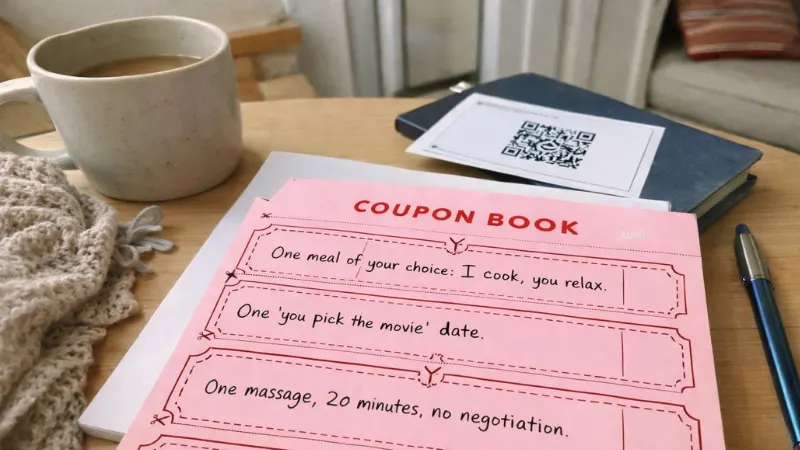
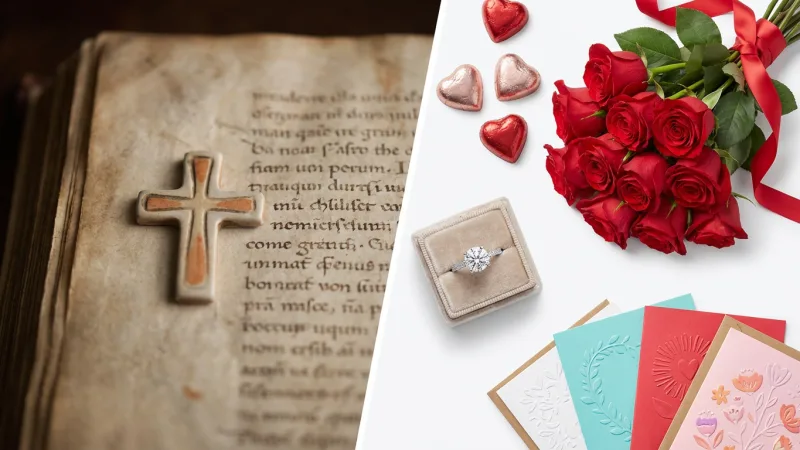
In the second week of February, suddenly hearts pop up everywhere on store fronts, social feeds, restaurant menus, and brand emails. Valentine’s Day has become not just a celebration of love, but a season of spending and cultural expectation.
But it wasn’t always like this. What if we told you that it wasn’t always the same.
What began as a religious observance slowly evolved into a multi-billion-dollar commercial holiday shaped by marketers, advertisers, cultural trends, and shifting social values.
From Martyrdom to Romance: The Origins of Valentine’s Day
Valentine’s Day has deep roots, but not initially in love and commerce. In 496 AD, Pope Gelasius I set February 14 as the feast day of Saint Valentine, a Christian martyr.
Legends vary about who Valentine was, but one story describes him secretly marrying off young couples in defiance of Roman law, linking him retrospectively to love and companionship.
For centuries, Valentine’s Day remained relatively obscure, tied more to native traditions and Christian observance than mass culture.
It was European poets like Geoffrey Chaucer in the Middle Ages who helped shift the day’s meaning toward romantic love. He began writing about the time where birds and humans paired up in courtly affection. Romance at this stage was literary and symbolic, not commercial.
There were love poems and perhaps tokens exchanged privately, but the holiday did not yet drive product categories or sales.
Cards, Candy, and the Commercial Turn (19th–20th Century)
The Rise of Valentine’s Cards
The first major pivot toward commercialization came with the industrial revolution and mass printing.
In the 1840s Esther Howland, later called the “Mother of the American Valentine” began selling elaborate lace-trimmed Valentine’s cards in the United States, turning what had been a local custom into a marketable product. These were not just notes; they were ornamental, collectible expressions of sentiment.
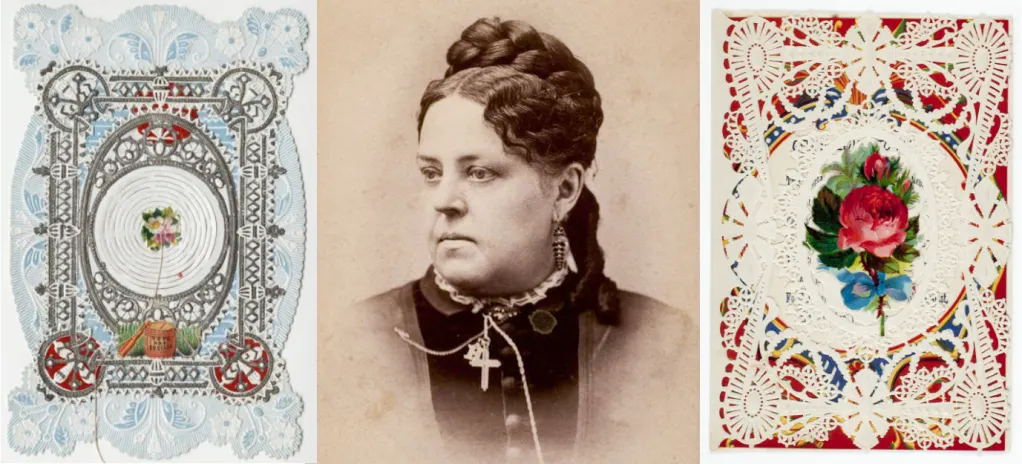
By the early 20th century, companies like Hallmark had embraced Valentine’s Day as a key seasonal product category. Hallmark and other greeting card manufacturers expanded designs and distribution, encouraging people to buy tokens of affection rather than craft them by hand.
Today, Valentine’s Day cards are second only to Christmas in the number of cards exchanged each year, with Hallmark reporting sales of 145 million Valentine’s cards annually in the U.S. alone.
Chocolates and Flowers: Packaging Love
As greeting cards became widespread, other industries saw opportunity. In the 1920s, Russell Stover introduced heart-shaped boxes of chocolates specifically for Valentine’s Day, pairing sweetness with symbolism.
Meanwhile, the floral industry particularly rose growers and national delivery networks like Florists’ Transworld Delivery (FTD) made bouquets a seasonal must-have. The Valentine’s floral rush now fills shops and online orders with millions of roses in mid-February.
These products were not incidental; they were framed as essential gifts, marketed with imagery that tied them to romance, affection, and the emotional currency of the day.
“A Diamond Is Forever”: Marketing That Shaped Contemporary Culture
One of the most influential pieces of advertising in 20th-century history belongs to the diamond industry. In 1947, copywriter Frances Gerety created the iconic slogan “A Diamond Is Forever” for De Beers not originally tied to Valentine’s Day but soon adopted into it as the holiday became a major gift-giving occasion.
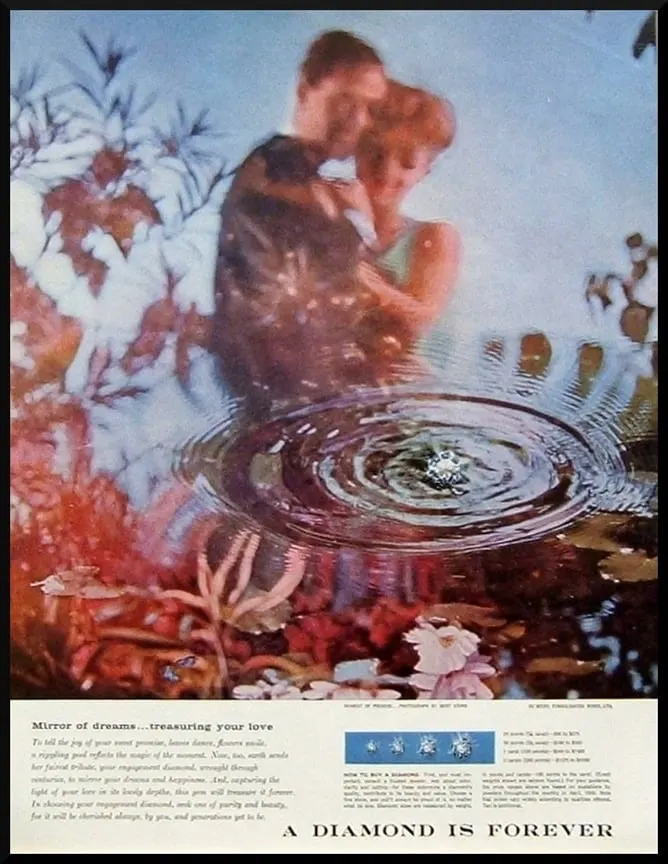
Before this campaign, diamond rings were not universally expected in engagements or romantic rituals. Afterward, by the early 1980s, more than 80% of American engagement rings contained diamonds, up from around 10% in the 1940s, a transformation credited largely to this campaign’s influence.
De Beers played a significant role in shaping cultural narratives around diamonds and love, contributing to the widespread association between enduring love and diamond jewelry and by extension, made them a Valentine’s Day staple as well as an engagement tradition.
This campaign redefined romantic expectations for an entire generation, embedding luxury gifts within emotional rituals and shaping how people visually express love.
Valentine’s Day Today: A Multi-Billion-Dollar Cultural Phenomenon
The influence of marketing and commercialization is perhaps clearest in the scale of contemporary Valentine’s spending.
In the United States alone, the National Retail Federation (NRF) expects Valentine’s Day spending to reach a new record of $29.1 billion in 2026, with consumers budgeting about $199.78 per person.
This level of spending encompasses:
- Jewelry is one of the largest categories, often driven by diamond and luxury gifting.
- Dining and experiencing restaurants and hospitality venues benefit from one of their busiest seasons.
- Flowers and chocolates perennial favorites with broad participation.
- Cards and personal gifts tokens of affection across relationships.
According to recent retail data, about 53% of Valentine’s spending in 2025 went toward significant others, while the rest was split among gifts for friends, family, and even pets, a sign that the holiday’s reach has broadened well beyond the couple’s paradigm.
This commercial scale is not accidental; it reflects decades of strategic marketing that linked specific products to emotional needs, convincing audiences that tokens of affection were a meaningful part of celebrating love.
Cultural Shifts: From Romance to Inclusive Expressions of Love
While commercialization has driven growth, cultural attitudes toward Valentine’s Day have also shifted.
In the early 2000s and 2010s, Valentine’s narratives began expanding beyond romantic couples. What started as a joke on the TV show Parks and Recreation Galentine’s Day on February 13 became a genuine cultural phenomenon, celebrated by friends and embraced by brands looking to tap into broader definitions of love and connection.
This reflects a wider trend: Valentine’s Day is now less about protocol and more about personal feel and meaning. Some people celebrate with partners, others mark the day with friends, family, self-care, participation is voluntary and varied.
Yet the commercial machinery continues rolling, adapting to these cultural layers rather than driving them unilaterally.
How Brands Continue to Shape Valentine’s Day in the Digital Age
Valentine’s Day marketing has evolved with the media. In the 20th century, television commercials and print ads set visual norms for romance; in the 21st century, digital media and social platforms carry the narrative.
Brands now launch social campaigns, user-generated content activations, and personalized offers weeks ahead of February 14, turning Valentine’s into a season of engagement rather than a single date on the calendar.
Retailers begin promotions as early as December, leveraging data insights and targeted advertising to secure attention well before the holiday arrives.
Recent campaigns still tie back to deep emotional narratives such as De Beers’ revival of the “A Diamond Is Forever” slogan through its “Forever Present” holiday campaign, which reframes diamond gifting as a celebration of diverse relationships and milestones.
This blend of legacy messaging and modern platforms shows how brands keep Valentine’s Day culturally relevant by meeting people where they already are in their lived experiences and digital spaces.
Why Valentine’s Day Still Matters: Beyond the Purchases
With all this commercial weight, Valentine’s Day might seem like just another marketing holiday. But the story is more nuanced.
Consumer data suggests participation is steady even as some people choose not to observe it, the ones who do tend to spend meaningfully on gifts and experiences. According to a latest survey in January 2026, over half of U.S. adults plan to celebrate Valentine’s Day, a sign that despite commercialization, the occasion still holds personal and emotional value for many.
Rather than rejecting Valentine’s Day outright, many people adapt it, turning it into a day for all meaningful relationships, for self-appreciation, or for small, thoughtful gestures.
What Valentine’s Day Means for Brands and Marketers Today
If the evolution of Valentine’s Day could teach one lesson, it’s this: meaning isn’t always static, it’s co-created between culture and commerce.
For brands and marketers, this has three key implications:
1. Emotional resonance beats transactional messages.
Valentine’s Day has always succeeded when brands tap into real feelings, not just push products.
2. Inclusive storytelling matters.
Valentine no longer has a single narrative. Campaigns now resonate more widely when they celebrate various forms of love and connection.
3. Authenticity trumps cliché.
Modern audiences are savvy. They respond to messages that reflect their lived experiences whether romantic or platonic, traditional or non-traditional.
Conclusion: A Holiday That Keeps Evolving
Valentine’s Day has traveled a long way from religious feast to commercial juggernaut. Greeting cards, chocolates, flowers, and diamonds all found their place on February 14 through strategic marketing that tapped into emotional expression and cultural norms.
Today, Valentine’s Day is a multi-billion-dollar holiday that reflects how we define love, connection, and even community.
Yet at its core, the holiday is not just about spending money, it’s about meaning. And that meaning continues to evolve, shaped by culture, conversations, and how people choose to celebrate the relationships that matter to them.
Want more insights into how cultural trends shape our world?
Dive deeper into the stories behind everyday phenomena at RethinkTrends where we uncover the fascinating evolution of everything from holidays to habits