RethinkTrends

Sports

FIFA World Cup 2026’s $871M Prize Pool vs Cricket, IPL and NFL

FIFA World Cup 2026’s $871M Prize Pool vs Cricket, IPL and NFL

The FIFA World Cup 2026 is not only the largest edition of the tournament ever staged. It is also backed by a record financial distribution package. FIFA has increased the total amount allocated to the 48 participating national associations to $871 million. Its previously published prize structure lists a $50 million performance payment for the champion, while every qualified association is now assured at least $12.5 million in qualification and preparation funding. Those figures are far higher than the official tournament payments offered by major cricket competitions and the IPL. However, the comparisons require context because FIFA pays national associations, the ICC distributes tournament prize money to cricket teams, the IPL rewards franchises, and the NFL pays postseason bonuses to individual players. FIFA World Cup 2026 prize money: The quick answer Here are the most important figures: FIFA World Cup 2026 financial measure Amount Total distribution to participating associations $871 million Previously announced performance prize pool $655 million Published champion’s performance payment $50 million Runner-up payment $33 million Qualification funding per association $10 million Preparation funding per association $2.5 million Minimum qualification and preparation funding $12.5 million At the June 12, 2026 exchange rate of approximately ₹95.11 per US dollar, the $50 million champion payment is worth approximately ₹475.6 crore. The exact Indian rupee value will change as the exchange rate moves. How FIFA’s $871 million World Cup distribution works Understanding the figure requires separating two FIFA announcements. The original December 2025 prize structure In December 2025, FIFA announced a total financial contribution of $727 million for the tournament. Of that amount, $655 million was allocated as placement-based prize money among the 48 participating teams. The published distribution was: Final position Published payment Champion $50 million Runner-up $33 million Third place $29 million Fourth place $27 million Fifth to eighth $19 million each Ninth to sixteenth $15 million each Seventeenth to thirty-second $11 million each Thirty-third to forty-eighth $9 million each Each qualified team was also scheduled to receive $1.5 million for preparation costs. The April 2026 increase In April 2026, FIFA increased the wider distribution package by 15%, taking the total to $871 million. The updated announcement raised: Preparation funding from $1.5 million to $2.5 million Qualification funding from $9 million to $10 million Additional support for delegation costs and ticket allocations to more than $16 million This means every participating association has at least $12.5 million in confirmed qualification and preparation funding. FIFA did not publish a completely replacement stage-by-stage table in the April announcement. Therefore, it would be misleading to automatically add the $12.5 million baseline to the $50 million champion payment and claim a new total without further clarification from FIFA. The safest wording is: FIFA’s published champion performance payment is $50 million, while the wider distribution package has increased to $871 million and baseline qualification and preparation funding has risen to $12.5 million per association. FIFA World Cup 2026 prize money in Indian rupees Using the June 12, 2026 closing exchange rate of approximately ₹95.11 per US dollar: $50 million equals approximately ₹475.6 crore $33 million equals approximately ₹313.9 crore $12.5 million equals approximately ₹118.9 crore $10 million equals approximately ₹95.1 crore These conversions are provided for comparison only. Exchange rates can change significantly, so publishers should include the conversion date whenever they quote the rupee value. FIFA World Cup 2026 vs the ICC Men’s T20 World Cup India won the 2026 ICC Men’s T20 World Cup after defeating New Zealand in the final. The International Cricket Council confirmed that India received a final tournament distribution of $2,639,423, or approximately $2.64 million, from the tournament’s total $11.25 million players’ prize pool. That $2.64 million was not simply a single fixed winner’s cheque. It included India’s tournament participation, match results, progression and final placement payments. FIFA vs T20 World Cup comparison Tournament payment Amount FIFA World Cup 2026 champion performance payment $50 million FIFA minimum qualification and preparation funding $12.5 million India’s final ICC T20 World Cup 2026 distribution $2.64 million The FIFA champion’s $50 million payment is approximately 18.9 times India’s final ICC distribution. Even FIFA’s $12.5 million baseline funding is approximately 4.7 times India’s $2.64 million ICC amount. However, that is not the full financial picture for Indian cricket. After India won the T20 World Cup, the Board of Control for Cricket in India announced a separate ₹131 crore reward for the players, coaches, support staff and selectors. That BCCI reward was additional to the ICC distribution. It should be presented separately because it came from India’s national cricket board rather than the tournament organizer. FIFA World Cup vs the ODI Cricket World Cup The ICC Men’s Cricket World Cup 2023 had a total prize pool of $10 million. Australia, the winner, received $4 million, while the runner-up received $2 million. Teams also earned separate payments for group-stage victories. Comparing the headline winner payments: Competition Winner payment FIFA World Cup 2026 $50 million ICC Men’s Cricket World Cup 2023 $4 million The FIFA World Cup champion payment is 12.5 times the amount awarded to the 2023 ODI World Cup winner. FIFA’s $12.5 million minimum qualification and preparation funding is also more than three times the ODI World Cup champion’s $4 million payment. The comparison illustrates the scale of FIFA’s centralized tournament distribution. It does not mean cricket lacks commercial power. Cricket’s wider economy also includes national-board revenues, bilateral series, broadcasting agreements, sponsorships and domestic franchise leagues. FIFA World Cup 2026 vs IPL prize money Royal Challengers Bengaluru received ₹20 crore after winning the IPL 2026 title. At the June 12, 2026 exchange rate, ₹20 crore was worth approximately $2.1 million. The FIFA champion’s $50 million performance payment, worth about ₹475.6 crore at that exchange rate, is approximately 23.8 times the IPL winner’s ₹20 crore prize. Competition Winner payment FIFA World Cup 2026 Approximately ₹475.6 crore IPL 2026 ₹20 crore It would therefore be reasonable to say: The FIFA World Cup champion payment is worth almost 24 IPL championship prizes. But the comparison should

FIFA World Cup 2026’s $871M Prize Pool vs Cricket, IPL and NFL Read More »

Who are the favorites to win FIFA World Cup 2026?

Who are the favorites to win FIFA World Cup 2026?

Who are the favorites to win FIFA World Cup 2026?  I am not Paul the Octopus. Neither am I Achilles the Cat. World Cup tends to bring out oddities and its strange theatre when it comes to predictions. Neither am I Gary Neville, the football pundit and nor am I Statman Dave, the football data analyst. I am just a football fan, and one of football’s most irresistible ways to embarrass yourself is predicting who will win the World Cup.  And with the FIFA World Cup 2026 just around the corner, there are plethora of predictions and lists, by pundits, football writers and data analysts alike. Some based on data, some on individual player’s form and some merely based on their gut feeling and ardent following.  I promise, this is not going to be yet another list where I rank teams. And I am aware this will not age well if my predictions don’t come true. And with the new format in for FIFA World Cup 2026, more nations will be part of the tournament meaning more competition and more chances of upsets. However, what I will make sure to do is to rank the teams based on team composition and recent form for context and give you my top 7 teams who have the best chance to lift the trophy come 19th July 2026.  So here we go. My list of Top 7 teams in ascending order of likelihood to win the upcoming 2026 FIFA World Cup.  Netherlands Led by Ronald Koeman, Oranje are tactically well-balanced heading into this edition. With the backline being their strongest aspect, the team oozes Premier League quality and experience. The nation that gave the world Total Football have time and again beaten the odds and risen to the occasion whenever called upon. The Oranje topped their qualifying group with a positive goal difference of +23 and remained unbeaten.  Koeman, a Netherlands legend, knows what it takes to perform at the highest level and will bring the same meticulous preparation to this edition. Alternating between 4-3-3 and 4-2-3-1, the team has demonstrated fluidity in and out of possession, with the wide forwards playing an important role, especially in transition and counterattacks.  Pros: Netherlands’ biggest strength is their defensive unit, arguably one of the strongest in the tournament. Featuring Brighton shot-stopper Verbruggen between the sticks, he kept 10 clean sheets in the 2025/2026 Premier League season and made 106 saves.  The backline is further reinforced by two explosive full backs in Inter’s Dumfries and Spurs’ Micky van de Ven. Incredible speed, powerful bursts and second-to-none ball-carrying abilities mean their defence can spring forward in a blink of an eye with flair and creativity.  But their biggest advantage lies in the form of their centre-back, who is equally capable in both the boxes. Captain Virgil van Dijk remains the spine of this team, bringing aerial dominance, leadership and set-piece threat. However, Timber’s injury could prove to be a big blow to the squad.  Netherlands have a decent midfield with the return of Frenkie de Jong and Gravenberch, who had a decent season with Liverpool. The City star, Tijjani Reijnders, might occupy the #10 role and could become an integral player to gel the whole team into one cohesive unit. It is not optimum, especially for a nation that saw the rise of the legendary Johan Cruyff, and when other squads are much better packed in the middle of the park. Set pieces could become vital for Netherlands if there is a lack of creativity and decisiveness while going forward.  Cons: The biggest chink in their armour is the lack of an out-and-out striker. A proper #9 who can lead the line. The nation that saw van Basten, Dennis Bergkamp, Ruud van Nistelrooy and Robin van Persie finds it hard to believe that they cannot produce a striker of that calibre. Dutch strikers of the past were not just technically gifted but had swagger and a touch of elegance.  Be it van Persie’s flying header or Bergkamp’s immaculate first touch to control the ball for his stunning and iconic 89th-minute winner against Argentina in the 1998 World Cup, each striker of the past had a highlight-reel fans around the world would watch to this date.  Then to now, with Memphis showboating without end product, Gakpo’s inconsistency and reliance on Wout Weghorst, the erstwhile Burnley striker, it not only reeks of imbalance and lack of depth but also speaks of desperation to fill in.  Players to Watch: Virgil van Dijk & Tijjani Reijnders.  Winning Probability: 5.5%  Elite defence and tournament pedigree give them a chance, but the lack of a reliable No. 9, consistent output from midfield, creativity concerns, Timber’s injury and a difficult knockout ceiling keep them below the top six.  Argentina The current world champions, Argentina remain one of the top favourites to lift the cup this year. In what will most likely be the last outing of Lionel Messi, can La Albiceleste follow up their Copa America triumphs and defend the title? The majority of the squad remains the same from their previous success, with head coach Lionel Scaloni knowing exactly what it takes to go deep into the tournament and dethrone some of the top contenders.  Their run of form is solid, and because most of the same squad members have played together for the last four years, the team is well-drilled and plays in tandem with almost telepathic co-ordination. The only major change will be Angel Di Maria no longer making the playing XI after his retirement, making way for youth to come in and add pace to an otherwise experienced squad.  Scaloni will look to stick with his 4-3-3 formation, with Enzo Fernandez at the centre of the park playing a crucial role. Almada and Alvarez will have to do the bulk of the running to cover spaces for Messi, who will be deployed as a False 9. And with Como’s breakout star Nico Paz looking to make his mark on his World Cup debut, there is no shortage of firepower in the squad.  Pros: The presence of Lionel Messi is enough to take down any opposition. But football is a team sport, and the ageing legend will need his team around him to succeed.  With the highest shot conversion ratio, Argentina’s frontline is the biggest threat to every squad. Their recent form is also a testament

Who are the favorites to win FIFA World Cup 2026? Read More »

FIFA World Cup 2026 Timings in India: IST Schedule & Live TV

FIFA World Cup 2026 Timings in India: IST Schedule and Where to Watch

The FIFA World Cup 2026 will begin for Indian viewers on June 12, 2026, and conclude with the final at 12:30 AM IST on July 20. Most matches will be played during late-evening, midnight or early-morning hours in India because the tournament is being hosted across Canada, Mexico and the United States. The expanded competition will feature 48 teams, 12 groups and 104 matches. Here is the stage-wise schedule, expected kickoff windows and viewing information Indian football fans need before the tournament begins. FIFA World Cup 2026 schedule in Indian time Although the tournament officially runs from June 11 to July 19 in North America, several matches fall on the following calendar day in India. Tournament stage Dates in India Group stage June 12–28, 2026 Round of 32 June 29–July 4, 2026 Round of 16 July 4–8, 2026 Quarterfinals July 10–12, 2026 Semifinals July 15–16, 2026 Third-place match July 19, 2026 FIFA World Cup final July 20, 2026 The Round of 32 and Round of 16 both have matches on July 4 in India. This happens because fixtures played on different North American dates can fall on the same Indian calendar date after conversion to IST. What time will FIFA World Cup 2026 matches start in India? World Cup matches will be hosted across multiple North American time zones. Indian viewers will therefore see several different kickoff times rather than one fixed daily slot. The most common match windows include: Late evening: Around 9:30 PM or 10:30 PM IST Shortly after midnight: Between 12:30 AM and 2:30 AM IST Early morning: Between 3:30 AM and 6:30 AM IST Morning: Between 7:30 AM and 9:30 AM IST The exact time depends on the host city and local kickoff. Matches played in eastern cities such as New York, Miami and Toronto generally appear earlier in the Indian morning than late-night fixtures hosted on the western side of North America. When is the opening match in Indian time? The opening match will be played between Mexico and South Africa at Mexico City Stadium. It begins at 12:30 AM IST on Friday, June 12, 2026. In Mexico, the fixture takes place on June 11, but the date changes after converting the kickoff to Indian Standard Time. This is why Indian viewers should follow an IST-based schedule instead of relying only on the date displayed by international broadcasters or North American websites. When are the knockout matches in India? The newly introduced Round of 32 starts on June 29 in India and continues until July 4. Sixteen teams will progress to the Round of 16, which runs until July 8. The four quarterfinals will be shown in India between July 10 and July 12. The two semifinals are scheduled for: Match Date and time in India Semifinal 1 July 15 at 12:30 AM IST Semifinal 2 July 16 at 12:30 AM IST The third-place playoff will begin at 2:30 AM IST on July 19. What time is the FIFA World Cup 2026 final in India? The FIFA World Cup 2026 final will be played at New York New Jersey Stadium. For Indian viewers, the final begins at 12:30 AM IST on Monday, July 20, 2026. The official host-country date is July 19, but the match starts after midnight in India. Fans planning a Sunday-night watch party should therefore remember that the kickoff technically falls early on Monday morning. Where can Indians watch the FIFA World Cup 2026? FIFA has confirmed that World Cup matches and related programming will be distributed in India through UNITE8 Sports television channels. Digital streaming will be available on Zee5. The coverage is also expected to be available in multiple languages, making the competition accessible to viewers across different regions of India. Fans should check the final channel numbers, Zee5 access conditions and pre-match programming closer to the tournament. Why are most World Cup matches late at night in India? India is several hours ahead of all the North American host cities. An afternoon match in the United States, Canada or Mexico can therefore begin shortly after midnight in India. An evening fixture in North America may appear early the following morning for Indian viewers. For example, a 3:00 PM match in New York converts to 12:30 AM IST on the next calendar day. A later evening match can begin between 5:30 AM and 8:30 AM in India. How can Indian fans plan their viewing schedule? Supporters should first identify the fixtures involving their favourite teams and save the Indian dates rather than the host-country dates. Late-evening games will be the easiest to watch, while midnight and early-morning matches may require alarms or advance planning. For knockout games, viewers should also allow additional time for extra time and penalties. Frequently asked questions When does the FIFA World Cup 2026 begin in India? The opening match begins at 12:30 AM IST on June 12, 2026. How many matches will be played? The expanded World Cup will contain 104 matches, including 72 group-stage fixtures and 32 knockout matches. What are the main World Cup match timings in India? Matches will commonly begin between approximately 9:30 PM and 9:30 AM IST, depending on the host city. Where will the World Cup be streamed in India? The tournament will be streamed digitally on Zee5 and shown on UNITE8 Sports television channels. When is the final in India? The final begins at 12:30 AM IST on July 20, 2026.

FIFA World Cup 2026 Timings in India: IST Schedule and Where to Watch Read More »

What is the format for FIFA World Cup 2026?

What is the format for FIFA World Cup 2026?

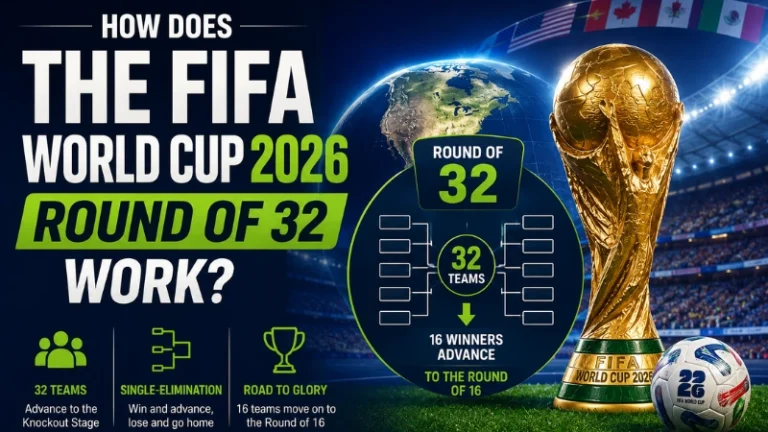
What is the format for FIFA World Cup 2026?  Jointly hosted by Canada, The USA and Mexico, the FIFA World Cup 2026 edition will see 48 nations featuring in this mega sporting event. This is the first time that the World Cup will see 48 nations going head-to-head, keeping up with sport’s global pull, growing fanbase and ever-increasing quality of the competing nations. Since 1998, the tournament featured 32 teams, divided into 8 pools, with top two nations from each pool then progressing to the round of 16.   The 23rd edition of FIFA World Cup will see an additional 16 teams battle it out in a 39-day tournament to etch their name in the sports’ most glorious global event. This amounts to a total of 104 matches over 39-day period spread across 16 cities, co-hosted by 3 nations.   How does this change the fixtures for FIFA World Cup 2026?   Due to increased number of participating teams, nations will progress to a new knock-out round of 32 teams. The teams are divided into 12 groups A to L, with top two teams from each group progressing directly to the next round. The top two teams from each of the 12 groups, plus the eight best third-placed teams, will advance to the Round of 32. FIFA’s official ticketing FAQ confirms 12 groups of four, 72 group-stage matches, and the eight best third-placed teams advancing.  Back in 2013 Michel Platini, the then UEFA president, had already suggested expanding the tournament given the quality, participation and popularity of the sport across nations. This was echoed by the then FIFA president Gianni Infantino back in 2016. While this was viewed as a political move back then, FIFA Council driven by the quality of the participating nations finally made the decision to expand the format.    FIFA World Cup’26: The First of Many:  Apart from expanding the format from 32 to 48 teams, FIFA World Cup 2026 has a host of other feats that it will record for the first time:   Co-hosted by 3 nations: This 23rd edition will see 3 nations co-host the tournament, something that has never happened before.   Longest duration: The duration of the tournament will stretch to 39 days from otherwise 32 days. A week extension will mean squeezing the upcoming domestic leagues into a tighter schedule for players to return; or pushing the campaigns further into latter half of the month.   Most number of matches: As opposed to 64 matches, FIFA World Cup 2026 will see a busier fixture schedule with 104 matches. With European players coming off from competitive domestic leagues, it will be interesting to see how the longer format affects the fatigue and fitness level of players.   Record-player participation: 1,248 players are on the roster featuring from 449 domestic clubs across 71 nations. Out of which, 357 players have already featured on at least one of the previous editions and remaining 891 are making their debut on the world’s biggest stage.   Domestic club contribution: As always, English Premier League is contributing over 200 players this season, whereas Bundesliga is contributing around 109 players. Ligue 1, La Liga and Serie A are contributing a combined total of 243 players. Saudi Pro League since its rise is seeing a record contribution of 49 players with MLS following shortly thereafter at a count of 44 players.   Club level contribution: Manchester City holds the record of highest player contribution at 19, followed by Bayern Munich with 18, PSG & Arsenal with 16 and Barcelona with 15.   Record Appearance: Cristiano Ronaldo is leading the appearance count at 226 caps at the start of 2026 World Cup with Lionel Messi following shortly after for national caps. However, Messi leads the World Cup appearance with 26 appearances. They will be the only players alongside Guillermo Ochoa to feature in 6 world cups. This World Cup could also see Cristiano break his own record of scoring in 6 different world cups with his current tally standing at 8 goals across 5 World Cup in 22 matches.   Goals: Messi’s current world cup goals tally stands at 13, closely behind the leader Miroslav Klose (16), Brazilian Ronaldo (15) and Gerd Muller (14). Kylian Mbappe is poised to close the gap as his tally stands at 12. The Galactico star is expected to surpass these legends with the France being current favorite to lead the tournament.   How did teams qualify for World Cup 2026?  There is an extensive regional tournament each nation was part of. From those qualifying tournaments, some of the nations got direct entry while some made it into play-offs. The final 48 teams made it into the final roster by qualifying across 6 regional confederations:  Host Nations: Host nations get automatic seats at the World Cup. Canada, The US and Mexico made it through without any qualifiers.   Regional Confederations:  a. Europe’s UEFA Nations League saw 12 nations making it directly to the World Cup. The remaining 4 European spots were decided by play-off among 12 group runners up.  b. CONMEBOL allowed top 6 South American nations to qualify directly into the world cup through a single round-robin tournament.  c. CAF allow 9 group winners direct entry to the world cup. 1 team is selected from the play-off between 4 runners-up from each group. A total of 10 out of 54 makes it to the final cut. d. AFC, CONCACAF and OFC make up for the remaining teams from Asia, North America, Carribean, and Oceania.  e. DR Congo and Iraq made their way to the World Cup via Intercontinental Play-offs.   Here’s a detailed breakdown of nations as per regional confederations:   Co-hosts: Canada, Mexico, USA   AFC: Australia, Iraq, IR Iran, Japan, Jordan, Korea Republic, Qatar, Saudi Arabia, Uzbekistan   CAF: Algeria, Cabo Verde, Congo DR, Côte d’Ivoire, Egypt, Ghana, Morocco, Senegal, South Africa, Tunisia   Concacaf: Curaçao, Haiti, Panama   CONMEBOL: Argentina, Brazil, Colombia, Ecuador, Paraguay, Uruguay   OFC: New Zealand   UEFA: Austria, Belgium, Bosnia and Herzegovina, Croatia, Czechia, England, France, Germany, Netherlands, Norway, Portugal, Scotland, Spain, Sweden, Switzerland, Türkiye  Of these, Cabo Verde, Curaçao, Jordan & Uzbekistan are making their debut in the tournament.   What does this mean for the fans?  The longer duration, more nations, and a new Round of 32 will ensure football fans relish this period. Football fans usually face a 2–3 month hiatus after domestic leagues end before they can watch their favorite players in action again. However, the World Cup, which arrives only once every four years, changes that. As the most anticipated sporting event in the world, it is expected to be the highest-grossing event of the year. The tournament is set to begin on 11th June with the final to be hosted on 19th July.While the giants are favored to go all the way, history shows that even newcomers can cause major upsets. That unpredictability is what makes the tournament worth the four-year wait. 

What is the format for FIFA World Cup 2026? Read More »

AI in Sports

AI in Sports: How Teams Use Data, Wearables and Analytics to Win

AI in sports uses artificial intelligence, machine learning, computer vision, wearables, and analytics to improve athlete performance, injury prevention, coaching, scouting, officiating, and fan engagement. It matters because modern teams no longer compete only on talent; they also compete on how quickly they can turn real-time data into smarter decisions. Introduction Sports teams are no longer asking whether data matters; they are asking how fast they can use it. AI in sports is now helping coaches monitor training loads, analysts break down opponents, scouts find talent, and broadcasters create personalized fan experiences. A 2026 SportsPro and Sportradar report found that 82% of sports organizations are already using AI, while 98% plan to increase its use within the next 12 months (SportsPro and Sportradar, 2026). This guide explains what the technology means, why it matters in 2026, how teams use it step by step, and which mistakes organizations should avoid before investing in sports AI tools. What is AI in sports? AI in sports is the use of artificial intelligence systems to analyze athlete data, match footage, biometric signals, and fan behavior so teams can make better decisions. It combines technologies such as machine learning, computer vision, predictive analytics, natural language processing, and wearable sensors. In practice, AI can help a football club analyze off-ball movement, a cricket team monitor bowler workload, or a basketball team study shot selection. It can also support sports media by generating highlights and helping fans find relevant content faster. The market reflects this rapid adoption. Grand View Research estimated the global AI sports market at USD 10.61 billion in 2025 and projected it to reach USD 49.92 billion by 2033, growing at a 21.6% CAGR from 2026 to 2033 (Grand View Research, 2026). Why AI in sports matters in 2026 AI in sports matters in 2026 because the margin between winning and losing is often tiny. A better recovery plan, faster tactical adjustment, or more accurate scouting report can change a season. Sports analytics has moved from a back-office advantage to a core competitive tool. Grand View Research valued the global sports analytics market at USD 5.68 billion in 2025 and projected it to reach USD 23.15 billion by 2033 (Grand View Research, 2026). The contrast is simple: traditional coaching relies mainly on observation and experience, while AI-assisted coaching adds real-time evidence. The best teams do not replace human expertise with algorithms. They use AI to help coaches, medical teams, analysts, and scouts see patterns that would be difficult to detect manually. How to use AI in sports — step by step Define the performance problem.Choose one measurable goal, such as reducing injuries, improving substitutions, or increasing fan retention. Clear goals prevent expensive tools from becoming unused dashboards. Collect clean, relevant data.Use wearables, match footage, GPS trackers, medical records, scouting reports, or fan engagement data. The model is only as useful as the data behind it. Choose the right AI method.Use computer vision for video tracking, predictive analytics for injury risk, and natural language processing for scouting notes or media content. Keep experts in the loop.AI should support coaches, doctors, analysts, and referees, not override them. Human review keeps recommendations practical and accountable. Measure and refine outcomes.Track results such as fewer soft-tissue injuries, faster scouting shortlists, better tactical decisions, or higher content engagement. A real example is FIFA’s semi-automated offside technology, which uses 12 tracking cameras and up to 29 data points per player, 50 times per second, to support offside decisions (FIFA, 2023). Common mistakes to avoid Starting with technology instead of a problem.A team should not buy an AI platform before knowing which decision it wants to improve. Ignoring data quality.Poor tracking data, inconsistent labels, or missing medical context can produce misleading conclusions. Treating AI as a replacement for experts.Coaches, doctors, and analysts still understand pressure, motivation, fatigue, and tactical context better than software alone. Overlooking athlete privacy.Wearables and biometric tools collect sensitive information, so consent, security, and data governance must be clear. Expert tips for AI in sports Use the CRISP-DM framework, a structured data-mining methodology, before building any AI project. It moves teams through business understanding, data understanding, preparation, modeling, evaluation, and deployment. Start with low-risk use cases. Automated video tagging, scouting filters, training-load alerts, and fan-content personalization are usually easier to test than medical or officiating decisions. Use wearables carefully. GPS trackers, heart-rate monitors, inertial sensors, and sleep tools can reveal useful workload patterns, but they should be interpreted with coaching and medical context. Finally, build trust with users. If athletes and coaches do not understand the recommendation, they will not act on it. Conclusion AI in sports is changing how teams train, scout, recover, compete, broadcast, and connect with fans. The real advantage does not come from collecting more data. It comes from turning the right data into decisions people trust. Start today by choosing one measurable sports problem, identifying the data you already have, and testing one small AI use case. Improve it with feedback before expanding it across the team or organization.

AI in Sports: How Teams Use Data, Wearables and Analytics to Win Read More »

How Much Are World Cup Tickets? 2026 FIFA World Cup Ticket

How Much Are World Cup Tickets? 2026 FIFA World Cup Ticket Prices Explained

The FIFA World Cup is one of the most in-demand sporting events in the world, and the 2026 edition is expected to attract millions of fans across the United States, Canada, and Mexico. Naturally, one of the biggest questions fans are asking is: how much are World Cup tickets? The answer depends on the match, seat category, host city, tournament stage, and whether you buy directly from FIFA or through resale platforms. For the 2026 FIFA World Cup, official ticket prices can vary significantly, from affordable group-stage seats to premium final-match tickets costing thousands of dollars. How Much Are 2026 World Cup Tickets? As of 2026, FIFA World Cup ticket prices can range from approximately $60 to more than $10,000, depending on the match and ticket category. Britannica reports that 2026 World Cup ticket prices on the official direct sale platform ranged from around $60 to $10,990, based on fixture demand, seating category, dynamic pricing, and purchase timing. Generally, group-stage tickets are the most affordable, while knockout matches, semifinals, and the final are the most expensive. A lower-category ticket for a group-stage match may be available at a much lower price, while premium seating for high-demand matches can cost several thousand dollars. Why Do World Cup Ticket Prices Vary? World Cup ticket pricing is not fixed across all matches. Several factors influence how much fans pay: Match stage: Group-stage games are usually cheaper than knockout rounds, semifinals, and the final. Teams playing: Matches involving highly popular national teams often attract higher demand. Seat category: Seats closer to the pitch or with better views usually cost more. Host city: Prices may differ depending on the venue, local demand, and match schedule. Dynamic pricing: FIFA has used dynamic pricing for 2026, meaning prices can change based on demand and availability. Because of these variables, two World Cup tickets for the same tournament can have completely different prices. Where Can You Buy World Cup Tickets? The safest place to buy tickets is through the official FIFA ticketing platform. FIFA’s official website directs fans to ticket and hospitality information for the FIFA World Cup 2026. Fans can also register interest and access ticket-related updates through FIFA’s official ticket pages. For premium experiences, FIFA also offers hospitality packages. These usually cost more than standard tickets and may include benefits such as premium seating, food and beverage options, lounge access, and other matchday services. FIFA’s hospitality platform notes that packages are purchased by host country and priced in the relevant local currency. Are Resale Tickets Safe? Resale tickets may be available, but fans should be careful. The safest resale option is FIFA’s official resale or exchange marketplace when available. Third-party resale platforms may list World Cup tickets, but they can carry additional risk, higher prices, and no guarantee from FIFA. This is especially important because major events like the World Cup often attract scams. Reuters reported that watchdogs have warned fans about increased scam risks around 2026 World Cup tickets, travel, and online transactions due to high ticket prices and demand. To reduce risk, fans should avoid unofficial sellers, social media ticket offers, and deals that seem too good to be true. How Many Matches Are in the 2026 World Cup? The 2026 FIFA World Cup will be the biggest edition in tournament history, featuring 104 matches across the United States, Canada, and Mexico. FIFA has stated that tickets are available for all 104 matches through FIFA.com/tickets. The tournament will run from June 11 to July 19, 2026, according to FIFA’s ticket and hospitality information. Which Cities Are Hosting the 2026 World Cup? The 2026 tournament will be hosted across multiple cities in North America. The U.S. Department of State lists U.S. host cities including Atlanta, Boston, Dallas, Houston, Kansas City, Los Angeles, Miami, New York/New Jersey, Philadelphia, San Francisco Bay Area, and Seattle. Canada and Mexico will also host matches, making travel planning an important part of the total World Cup cost. Fans should budget not only for tickets, but also flights, hotels, transportation, food, and local expenses. Final Answer: How Much Should You Budget? For most fans, a realistic budget for a 2026 World Cup ticket may start around $60–$150 for lower-demand group-stage tickets, while better seats or knockout matches can cost several hundred dollars or more. Premium matches, especially semifinals and the final, can reach thousands of dollars. The best approach is to buy early, use official FIFA channels, compare match options, and plan travel costs in advance. If your main goal is simply to experience the World Cup atmosphere, group-stage matches may offer the best value. If you want to attend a major knockout match or the final, expect to pay a premium. In short, World Cup tickets can be affordable for some matches but extremely expensive for high-demand games. The final price depends on when, where, and how you buy.

How Much Are World Cup Tickets? 2026 FIFA World Cup Ticket Prices Explained Read More »

What Is SkiMo? Why Is It Making Headlines at the Winter Olympics

What Is SkiMo? Why Is It Making Headlines at the Winter Olympics

When most people think of the Winter Olympics, they picture speed. Downhill skiers carving through ice at 130 km/h. Bobsleds screaming down frozen tracks. Figure skaters floating across polished arenas. But at the 2026 Winter Olympics, something very different made its debut. It wasn’t louder. It wasn’t flashier. And it didn’t rely on billion-dollar arenas. It was SkiMo! It may quietly represent the future of the Winter Games. In the winter of 1943, Swiss soldiers moved across the Alps under cover of darkness, skis cutting through wind-hardened snow. They were not racing for medals. They were testing endurance, navigation, and survival in unforgiving terrain. Heavy packs pressed into their shoulders. Glaciers stretched beneath them. Avalanches were not a metaphor; they were a threat. Those military patrol missions would later evolve into the legendary Patrouille des Glaciers, one of the most demanding alpine races in the world. Early editions were so brutal that fatalities forced suspensions. The mountain did not forgive mistakes. SkiMo, a.k.a ski mountaineering, was not created for spectacle. It emerged from necessity. And in February 2026, that same discipline stepped onto the Olympic stage at the 2026 Winter Olympics. To understand why that moment matters, you have to understand what SkiMo carries with it. Climbing, Descending, Repeat: What SkiMo Really Is Ski mountaineering, unlike traditional skiing which is performed in downward motion, it combines both uphill climbing and downhill skiing in one continuous race. Athletes attach removable “skins” to their skis so they can grip snow while ascending steep slopes while playing SkiMo. At transition zones, they strip the skins off in seconds, lock their bindings, and descend technical terrain at speed. Some sections require competitors to shoulder skis and climb on foot before dropping back into a descent. The Olympic sprint format condenses this entire cycle into roughly three to four minutes of high-intensity racing. It is explosive and fast enough for modern broadcast rhythms, yet the essence of SkiMo remains unchanged: lungs burning at altitude, legs straining against gradient, precision demanded at every transition. Unlike many winter disciplines shaped by engineered tracks or enclosed arenas, SkiMo remains visibly dependent on landscape. The terrain dictates rhythm. The snowpack influences tactics. Altitude shapes pacing. Even in a compressed Olympic format, the mountain remains an active participant. From Survival Skill to Structured Sport SkiMo’s origins lie in practicality. In Alpine regions, skis were tools for winter mobility long before they became competitive equipment. Military patrols during World War II formalized endurance skiing into organized events, but the skill itself had centuries of precedent. Ski mountaineering belongs to a broader lineage of Olympic sports that began as survival or warfare skills. Archery developed from battlefield practice. The marathon traces back to military dispatch. Wrestling evolved from combat training. Biathlon emerged directly from Scandinavian military patrol competitions. Over time, these necessities for survival became rituals of peaceful competition. What once preserved life became a celebration of human capability. SkiMo stands out because its connection to that origin is still palpable. Watching a race, you can see the practical logic embedded in every movement. Climb efficiently. Transition quickly. Descend decisively. Conserve energy. Adapt to terrain. The sport has modern equipment and refined rules, but its core remains elemental. Why Mountains Are Drawing People Again SkiMo’s Olympic debut in 2026 arrives during a period of renewed fascination with mountains and endurance culture. Trekking communities are expanding globally. Ultra-endurance races fill within hours of opening registrations. Mountaineering documentaries consistently draw international audiences. This attraction reflects more than recreational preference. In an era defined by digital saturation, urban density, and constant connectivity, mountains offer contrast. The Culture Behind the Climb The timing of SkiMo’s Olympic debut comes amid a noticeable cultural shift: across the globe, participation in winter sports and related outdoor pursuits has been growing. It is not a mere contemplation but the statistics back it up. The global number of winter sports participants reached 358 million in 2022, up 4.2 % since 2020. Alpine skiing alone had 145 million participants worldwide that year. Beyond structured sports, trekking, backcountry skiing, and mountain exploration communities have expanded rapidly in recent years, with outdoor and adventure tourism emerging as a major cultural force. Mountains offer challenge, silence, and consequence, a counter-rhythm to urban life and digital saturation. The Olympic Moment: Milan-Cortina 2026 The 2026 Winter Olympics marks Italy’s return to hosting the Winter Games, with events spread across northern regions that blend metropolitan venues in Milan with historic alpine settings in Cortina d’Ampezzo. Approximately 2,800 athletes from more than 90 nations are competing in 116 medal events across eight winter sports. The official mascots Tina and Milo were chosen from over 1,600 entries from Italian schoolchildren. They’re stylised stoats meant to capture agility, adaptability, and the alpine spirit traits that also reflect SkiMo’s character. Within that broader Olympic program, SkiMo’s debut includes sprint and mixed relay events staged in high-altitude environments that maintain the sport’s connection to natural terrain. Its inclusion expands the Winter Games while preserving their mountain character. A Contemporary Undercurrent Ski mountaineering’s arrival on the Olympic stage also reflects broader global dynamics. Winter sports increasingly navigate questions of sustainability as climate variability affects snow reliability. Disciplines that rely more directly on adaptable alpine terrain offer flexibility within this shifting landscape. At the same time, audiences have shown sustained interest in endurance competitions that foreground visible effort. Mountain sports carry a narrative of resilience that resonates beyond podium results. In a world often marked by political tension and accelerated information cycles, mountains offer a different rhythm. They are indifferent to rhetoric. They demand preparation and humility. SkiMo channels that ethos into a structured, international competition without stripping away its origins. From Battlefield to Broadcast The arc from wartime patrol missions to Olympic finals is not merely a timeline of sport; it is a transformation of context. What began as a military endurance test now unfolds in peaceful competition among nations. Uniforms have changed. Equipment has evolved. Spectators line the course and broadcasts reach

What Is SkiMo? Why Is It Making Headlines at the Winter Olympics Read More »

Stronger or Injured The Truth About Football Training

Stronger or Injured? The Truth About Football Training

Curious How Football Training Has Evolved These Days? Ever wondered why NFL players today move like superheroes compared to the guys from the ’90s? Don’t you think football training has leveled up in a big way? Athletes now use GPS trackers, AI analytics, and recovery monitoring to optimize every sprint, lift, and rest period. Coaches tailor programs for each player to maximize performance and minimize injury risks, making training smarter and more efficient than ever before. The NFL Combine highlights this evolution. Forty-yard dash times, vertical jumps, and bench presses are all at an elite level thanks to high-tech training programs. With the upcoming Kansas City Chiefs vs Buffalo Bills game, fans can witness firsthand how athletes use these techniques onto the field play. Speed, agility, and explosive power are at an all-time high, making the sport faster and more intense than ever. Football training evolution doesn’t just stop at physical performance. Rest and recovery are now a regular part of training. Using data from wearables, coaches can adjust workloads, plan rest days, and ensure players do not overtrain. This combination of technology and strategy has redefined how athletes prepare for the season. Want to Know Why Players Are Getting Stronger Than Ever? Have you noticed how players like Derrick Henry and Tyreek Hill dominate the field? Their strength and speed are incredible. Power: Derrick Henry runs through defenders with sheer force, changing how teams approach tackling and blocking. Speed: Tyreek Hill moves with lightning-fast acceleration that makes defenders look like they’re standing still. Training Tools: Plyometrics, advanced weight programs, and personalized nutrition plans give these athletes the edge. It’s not about lifting heavy or running fast anymore. Modern programs focus on functional strength, explosive power, and sport-specific drills that mirror game conditions. Athletes are also using video analysis and biomechanics feedback to perfect their movements and reduce risk of injury. The takeaway is that modern football players are more explosive and powerful, but this comes with trade-offs. The faster and bigger they get, the harder the collisions on the field, which increases the risk of injury. As training evolves, managing the balance between strength and safety has become critical. Wondering Why Injuries Are Still Rising? Think being stronger automatically makes players safer?  Not always! Even with advanced training, injuries in the NFL are still climbing, and everyday athletes are not immune. Alijah Vera-Tucker (NY Jets): Torn triceps, seven-month recovery. Rob Jones (Dallas Cowboys): Broken neck, two to three months on injured reserve. Common Injuries: ACL tears, hamstring pulls, concussions, and shoulder injuries remain widespread. One reason is that muscle strength doesn’t automatically protect joints and ligaments. The human body can only handle so much stress, especially with collisions happening at higher speeds and forces than ever before. Even players with peak conditioning spend weeks or months recovering because injuries are often unavoidable in high-impact sports. With the upcoming Chiefs vs Bills game, we will likely see high-intensity plays that test player durability. These matches demonstrate the ongoing challenge teams face in keeping players both strong and healthy throughout the season. Want to Know How NFL Players Recover Faster and Stay Safe? Recovery isn’t just rest. It’s a science. NFL teams are investing heavily in football recovery tools and recovery protocols to keep players on the field. Mobility and Flexibility: Yoga, dynamic stretches, and joint drills reduce sprains and improve overall movement efficiency. Load Management and Prehab: Monitoring fatigue and strength imbalances and incorporating core stability drills can prevent injuries before they happen. Recovery Tools: Cold tubs, compression gear, sleep optimization, and extremely cold pads speed up healing and improve performance. Medical Advances: PRP (platelet-rich plasma) injections and stem cell therapy are increasingly used to accelerate recovery for injured players. Nutrition and Hydration: Balanced meals, protein intake, and proper hydration play a huge role in muscle repair and injury prevention. Even if you are not an NFL player, implementing some of these recovery strategies can drastically improve performance and reduce injury risk. Simple habits like stretching before and after workouts, prioritizing sleep, and staying hydrated go a long way. Thinking About How to Stay Safe While Getting Stronger? Training smart isn’t just physical; your mental game matters too. Mindfulness and Focus: Meditation, visualization, and mental rehearsal improve concentration and reduce the chances of mistakes that cause injury. Reaction Drills: Quick-thinking exercises enhance agility and prevent awkward collisions. Cross-Training: Engaging in sports like swimming or tennis improves overall fitness while giving joints a break from repetitive stress. Youth Safety Programs: Safer tackling techniques and concussion education are helping young athletes avoid long-term injuries. Strength alone is not enough to stay safe and perform at a high level. Longevity comes from a combination of mental focus, smart training, and proper recovery. Even professional players are constantly learning how to balance intensity with injury prevention. Conclusion So are football players stronger or just more injury-prone?  The answer is both. Modern football training evolution has created athletes who are faster, stronger, and more explosive than ever before, but injuries like ACL tears, concussions, and muscle strains still happen, as we have seen with Vera-Tucker and Jones. For everyday athletes, the key is balance. Train hard, recover smarter, and focus on flexibility, mental sharpness, and safety. Long-lasting success in sports depends on strategy, not just brute force. Challenge yourself this week to add one recovery habit. Stretch more, hydrate better, or try a mental focus drill. Small efforts now can save you from bigger setbacks later. By integrating football recovery tools, following the latest training techniques, and learning from NFL injuries, you can perform better and reduce the risk of injury, whether you’re playing at a competitive level or just staying active. FAQ Q: What is the biggest injury in football? A: ACL tears are considered the most serious and common major injury in football. Q: What causes the most injuries in football? A: Most injuries come from high-impact tackles, sudden changes in direction, and overuse stress. Q: Can stretching prevent football injuries? A:

Stronger or Injured? The Truth About Football Training Read More »

What’s the Best Sport for All-Age Fitness

What’s the Best Sport for All-Age Fitness?

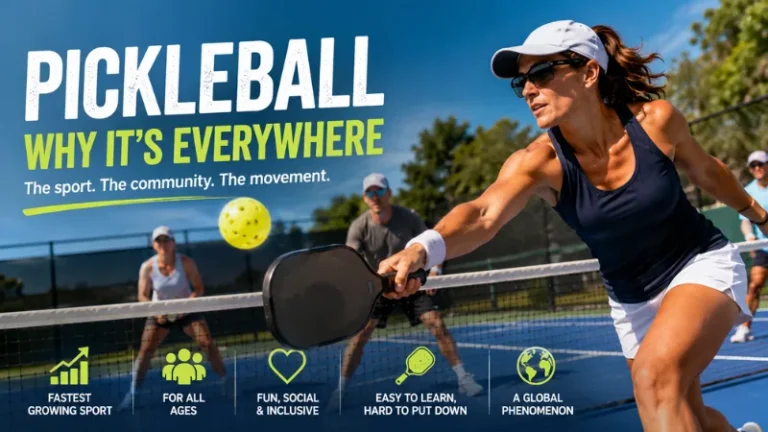
Introduction  Have you noticed how everyone around you is suddenly into some sport?  Pickleball is blowing up with new courts in every neighborhood.  Football season is back, and stadium vibes are everywhere.  After major tournaments, tennis courts are packed with players dusting off their rackets.  Kids are chasing soccer balls, adults are hitting tennis serves, and grandparents are walking laps. But here is the real question: which sport actually works for every age group? Not just fun, but fitness-friendly too.  Read this blog to the end because we will compare sports for kids, teenagers, adults, and seniors, and then crown the all-age winner that the whole family can play together. Why Sports Work for Every Age Ever wondered why sports feel so good no matter how old you are? Why does your doctor keep telling you to “just move more”? Sports build fitness that sticks. It keeps your body strong. They boost immunity and help you stay healthier. They sharpen the mind and improve mood instantly. From football fields to tennis courts, sports are basically medicine in motion. And according to the CDC, kids and teens need about 60 minutes daily, while adults and seniors should aim for 150 minutes weekly. Whether it is football fields, tennis courts, or local gyms, staying active is less about age and more about finding your fit. The best part is that sports make fitness feel less like a chore and more like a lifestyle. Best Sports for Kids (from 5 to 12 Years)  What sport do kids actually love while also learning life skills? For kids, sports are not just workouts; they are growth tools. Soccer (football): teamwork, coordination, resilience. Swimming: life skill plus full-body strength. Martial arts: discipline, focus, and confidence. Gymnastics: balance, flexibility, and body control. Health Level Needed: Instead of kids spending hours on screens, let them burn that energy outdoors. Sports now mean fewer health struggles later and less pressure to “get fit” in a gym as adults. And how healthy kids need to just play: Just basic energy and enthusiasm; no special fitness level needed. Great for building early movement skills. These activities keep energy levels in check, improve social skills, and set the stage for lifelong healthy habits. If you are searching for the best sports for kids fitness or sports for child development, these are the top picks. Think of it this way: soccer is teamwork in sneakers, swimming is safety plus strength, and martial arts turns playtime into life lessons. Best Sports for Teenagers (from 13 to 17 Years) Which sports keep teens active while also boosting confidence? Teenagers thrive on energy, social bonding, and challenges. Best options include: Basketball: cardio, teamwork, and leadership Track and field: stamina, discipline, and personal growth Football and volleyball: teamwork, strategy, and energy release Swimming and tennis: building fitness while sharpening focus and skills Health Level Needed: Teens can start at any level. Sports help them grow flexibility, stamina, and mental resilience. Encourage teens to replace some screen time with sports time. Staying naturally active now means they won’t feel the need to chase quick-fix workouts at a gym later. If you are searching for the best sports for teenagers or sports for teen fitness, these tick all the boxes. Think of basketball as cardio with friends, track as a confidence booster, and tennis as focus training that works on and off the court. Best Sports for Adults (18 to 40 Years) How do you squeeze fitness into a busy adult schedule without it feeling like a workout chore? These sports fit perfectly: Tennis: It’s basically cardio disguised as fun. Cycling: Ideal for commutes or weekend rides. Pickleball: easy to learn, fun to play, social buzz. Recreational football: exercise plus social escape. Health Level Needed: Beginners can start with lighter options like pickleball. Fitness levels can scale up with intensity and time. If you are searching for the best sports for adults or fitness sports for a busy lifestyle, these are the go-tos. Real talk: weekend football with friends is not about touchdowns; it is about laughs, heart health, and bonding. Sports like tennis, cycling, or even weekend football keep you fit naturally. Best Sports for Seniors (60+ Years) What is the secret to staying active without putting too much strain on the body?  Do you think sports stop after retirement? Not even close. Walking: It is underrated, easy, brain-boosting, and joint-safe. Swimming: low impact, builds strength. Pickleball or doubles tennis: social, light, and trending. Golf: relaxation with steady movement. Yoga: flexibility and balance. Health Level Needed: Light to moderate fitness is enough. The focus is on mobility, balance, and consistency. Forget the idea that gyms are the only way to stay healthy later in life. Let’s be real; sports like walking, swimming, or pickleball keep you naturally fit and happy, no heavy weights required. Simply moving, laughing, and enjoying time with friends. Age Group Recommended Sports Key Benefits Kids (5-12 years) Soccer, Swimming, Martial Arts, Gymnastics Teaches life skills like teamwork, discipline, coordination, and full-body strength. Teenagers (13-17 years) Basketball, Track and Field, Football, Volleyball, Swimming, Tennis Boosts confidence, stamina, leadership, and social bonding. Adults (18-40 years) Tennis, Cycling, Pickleball, Recreational Football Offers a fun way to get cardio and socialize, fitting easily into a busy schedule. Seniors (60+ years) Walking, Swimming, Pickleball, Doubles Tennis, Golf, Yoga Focuses on mobility, balance, and consistency without excessive strain. The All-Age Winner So which sport can everyone in the family actually play together? Swimming and pickleball take the crown. Swimming is full-body, safe, and low-impact for all ages. Pickleball is fun, easy to learn, and brings everyone to the court. Tennis (especially doubles) remains a solid runner-up. Pickleball courts are basically the new family reunion spot; kids, parents, and grandparents can all get in on the fun. Quick Tips to Start Want to start but feel nervous about “not being sporty enough”? Join a community soccer or tennis league for social fun. Get a family swim pass for weekend bonding.

What’s the Best Sport for All-Age Fitness? Read More »

Healthcare in Sports Safety, Recovery & Performance

Healthcare in Sports: Safety, Recovery & Performance

Introduction Hey there! Have you ever wondered what keeps athletes healthy and performing at their best, whether they are regular people participating in weekend sports or the pros we watch on TV? Or maybe you ever joined a new sport or workout class and thought to yourself, “Please don’t let me get injured”? That is where sports healthcare comes in. And don’t worry, this isn’t just about professional athletes with million-dollar contracts or about fixing injuries after they happen. Today’s sports healthcare is about prevention, smarter recovery, and boosting performance with the help of science and technology. This is about you, the person who loves a good pickleball game with friends, or training for your first marathon, or simply keeping active as part of a healthy lifestyle. Advances in this field are changing the way we move, train, and heal. Preventing injuries, recovering more quickly with smarter recovery, and strengthening training with tech-powered performance tools are the three primary pillars of sports healthcare that you will explore in this blog. Also let’s look at trends influencing the sport in America, from pickleball injury prevention to AI-driven wearables, and explain why these shifts matter for anyone who wants to stay active. Prevention: Staying in the Game Prevention is where the smartest healthcare begins. The best win is not getting hurt in the first place.  Pickleball’s Injury Boom Pickleball has quickly become one of the most popular sports in the country, drawing in players from every age group. Yet, as more people join the game, the number of injuries is climbing too.  Reports show nearly 19,000 pickleball-related injuries each year, with 90 percent involving people over age 50. The most common injuries include ankle sprains, Achilles tendon tears, and wrist fractures. Estimates suggest medical costs from pickleball injuries range from 250 million to 500 million dollars annually. The sport is fun but can be demanding, especially for players who skip warm-ups or wear the wrong shoes. The good news is that prevention is simple: Warm up and stretch before games Wear supportive court shoes Avoid backpedaling, which often causes falls Add strength and flexibility exercises to your weekly routine Data-Driven Insights for Women Athletes Another important conversation in sports healthcare is around women athletes and ACL injuries. Research indicates that ACL injuries occur more often in women than in men. Prevention programs are proving effective. Neuromuscular training methods like PEP and FIFA 11+ focus on balance, agility, and strength. Studies suggest they can cut ACL injury risk by nearly 88 percent. Coaches are also beginning to use more holistic approaches. Training plans are adjusted around menstrual cycles, while mindfulness and mental health strategies are included to reduce fatigue-related risks. This makes prevention more personal and effective. Speedy Recovery: Smarter Ways to Bounce Back Even with the best prevention, injuries still happen. Recovery is the second big piece of the puzzle. The smarter the recovery process, the faster people can get back to the activities they enjoy. Mobile High-Tech Biomechanics Biomechanics labs once belonged only to elite athletes and research centers. They analyze how people move, using sensors and cameras to spot risky patterns. Now, mobile versions are becoming available. For example, Des Moines University created a mobile biomechanics unit that travels to athletes. Picture a van pulling up to your sports field, setting up equipment, and giving real-time feedback. This helps prevent re-injury and creates personalized rehab programs. Smarter Rehab Tools Beyond fancy labs, recovery gadgets you can actually use at home are leveling up too. Some of the coolest include: Compression boots that reduce swelling after tough workouts Cold therapy systems that target sore muscles Electrical stimulation devices that keep muscles active during downtime Virtual PT apps where you chat with a therapist on your phone These tools are not just for elite athletes anymore. They are slowly becoming accessible for regular people who want faster, smarter recovery. That’s the best part! Optimizing Performance: Powering Up with Tech Once people are recovered, the next question is how to train better without risking burnout or injury. Wearables and AI Insights Wearable devices have evolved far beyond step tracking. Today’s fitness bands and smartwatches can measure sleep, heart rate variability, oxygen levels, and training load. This information helps athletes know when to push and when to rest. AI makes this even smarter. Apps can now analyze wearable data and create personalized training plans that adapt daily. Instead of following a rigid schedule, you get guidance that matches your body’s needs. Predictive Injury Prevention Solutions Another trend is predictive healthcare. The sports injury prediction market is projected to grow from nearly 2 billion dollars in 2024 to more than 2.1 billion dollars in 2025. These systems combine motion tracking, posture analysis, and vital signs with AI. They can detect early warning signs of overload, nudging athletes to rest before a serious injury develops. Why This Matters: Research, Market, and Momentum Big Names in Research Behind all these advances are powerhouse research centers like Harvard Medical School and Mayo Clinic. They are leading studies on everything from ACL prevention to regenerative treatments like platelet-rich plasma (PRP) therapy. This kind of research is shaping how athletes at every level are treated, proving sports healthcare is not just a trend but a full-on movement. A Growing Market And here’s the kicker: money is pouring into sports healthcare. The market was valued at 2.36 billion dollars in 2024 and is projected to more than double to 5.29 billion dollars by 2034. That growth is being fueled by people staying more active, gyms and sports leagues booming, and the rise of AI-driven rehab and diagnostics. Translation: demand is only getting bigger. Wrapping It Up So, what did we just learn? Sports healthcare is basically your all-in-one safety net. It keeps you from getting sidelined, helps you recover when you do, and lets you train smarter with tech that feels straight out of the future. And the coolest part is this: you do not need to be a pro to

Healthcare in Sports: Safety, Recovery & Performance Read More »