
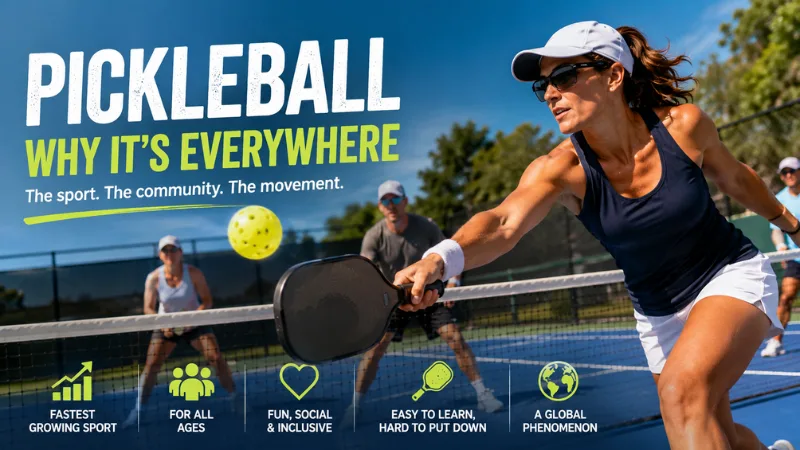
A few years ago, many people had barely heard of pickleball. Today, courts are appearing in parks, clubs and recreation centers across the United States, while players ranging from teenagers to retirees are picking up paddles.
So, why is pickleball so popular?
The short answer is that pickleball combines a relatively easy learning curve, social gameplay, a smaller court and accessibility across age groups. But its remarkable growth also shows something bigger: people are looking for sports that are competitive without being intimidating and social without requiring an entire team.
How Popular Is Pickleball?
Pickleball’s growth is no longer based simply on hype.
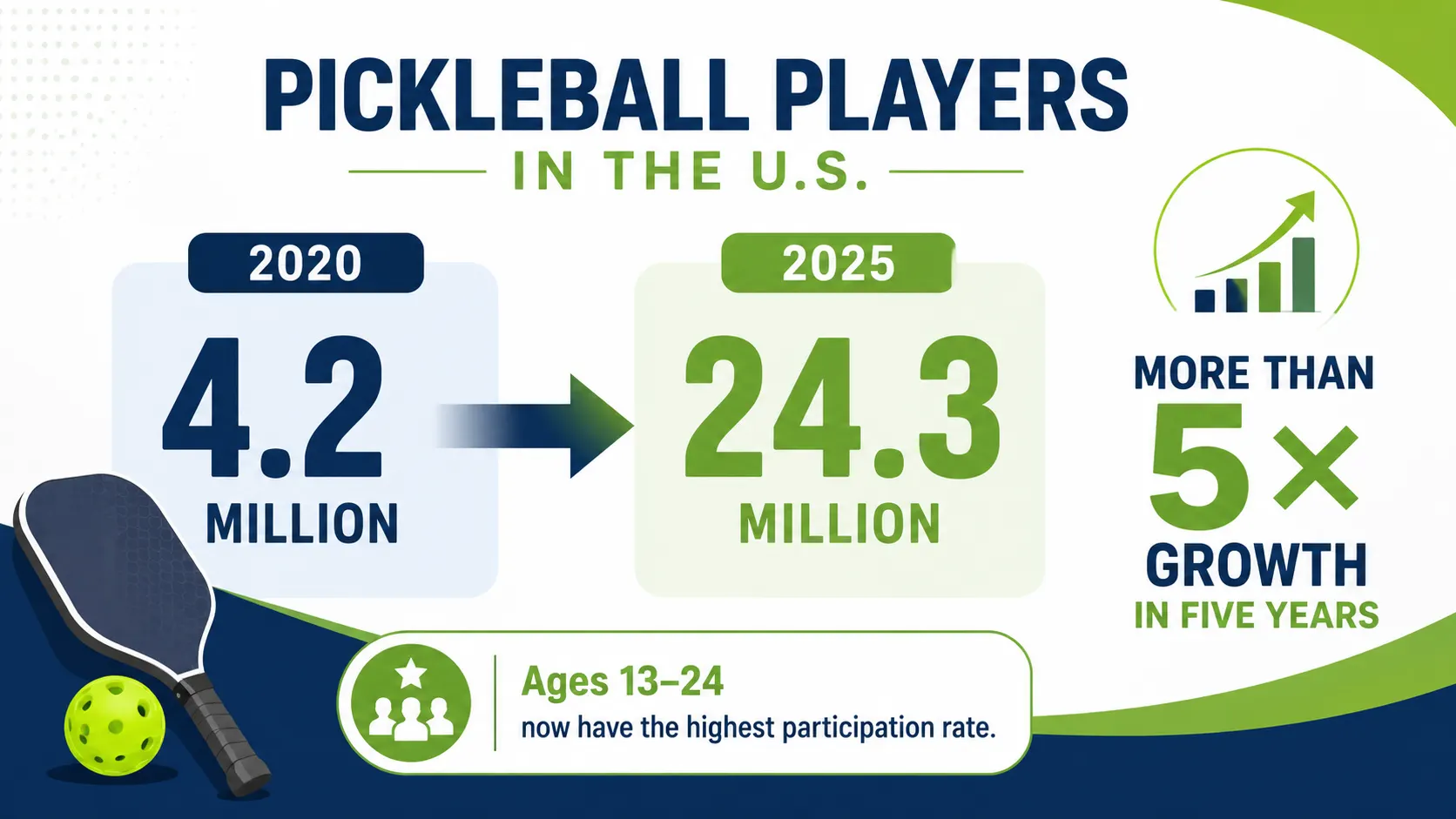
According to the Sports & Fitness Industry Association (SFIA), 24.3 million Americans played pickleball in 2025, compared with about 4.2 million in 2020. That represents roughly 479% growth over five years, and SFIA says pickleball has been the fastest-growing sport in the United States for five consecutive years.
Perhaps more surprising is who is playing.
Pickleball was once stereotyped as primarily a sport for retirees, but players aged 13 to 24 now have the highest participation rate of any age group. Women also represented 42.9% of U.S. players in 2025, up from 38.6% in 2020.
That makes pickleball popularity much broader than it first appears.
Why Is Pickleball Growing So Fast?
1. Pickleball Is Relatively Easy for Beginners
One of pickleball’s biggest advantages is that new players can understand the basics quickly.
A pickleball court measures just 20 by 44 feet, and the game uses a solid paddle and a perforated plastic ball. Serves are made underhand or with a drop serve, while the seven-foot non-volley zone near the net—better known as the “kitchen”—adds strategy without making the basic concept difficult to understand.
Beginners can therefore start having rallies and enjoying games before mastering advanced techniques.
That low barrier to entry matters. People are more likely to return to an activity when their first experience feels rewarding rather than frustrating.
2. Pickleball Is Naturally Social
Pickleball is commonly played as doubles, putting four people on a relatively compact court.
That creates a different atmosphere from many individual sports. Players are close enough to talk between points, rotate partners and turn a workout into a social activity.
Research supports that social element. A recent U.S. study of adults over 50 found that current pickleball participation was associated with less perceived loneliness and social isolation, although the researchers noted that more studies are needed to establish cause and effect.
In other words, people may come for the exercise but stay for the community.
3. It Works Across Generations
Another reason why pickleball is growing is that the same sport can appeal to very different players.
A beginner can enjoy a casual game while advanced players can turn the same basic rules into a fast, highly strategic contest.
SFIA’s numbers show this transition clearly. Pickleball is no longer growing only because more people try it once. The number of CORE players—people playing eight or more times per year—rose from 1.4 million in 2020 to 7.5 million in 2025.
That suggests the sport is building regular participants rather than depending entirely on curiosity.
4. Pickleball Can Feel More Approachable Than Tennis
The inevitable comparison is pickleball vs. tennis.
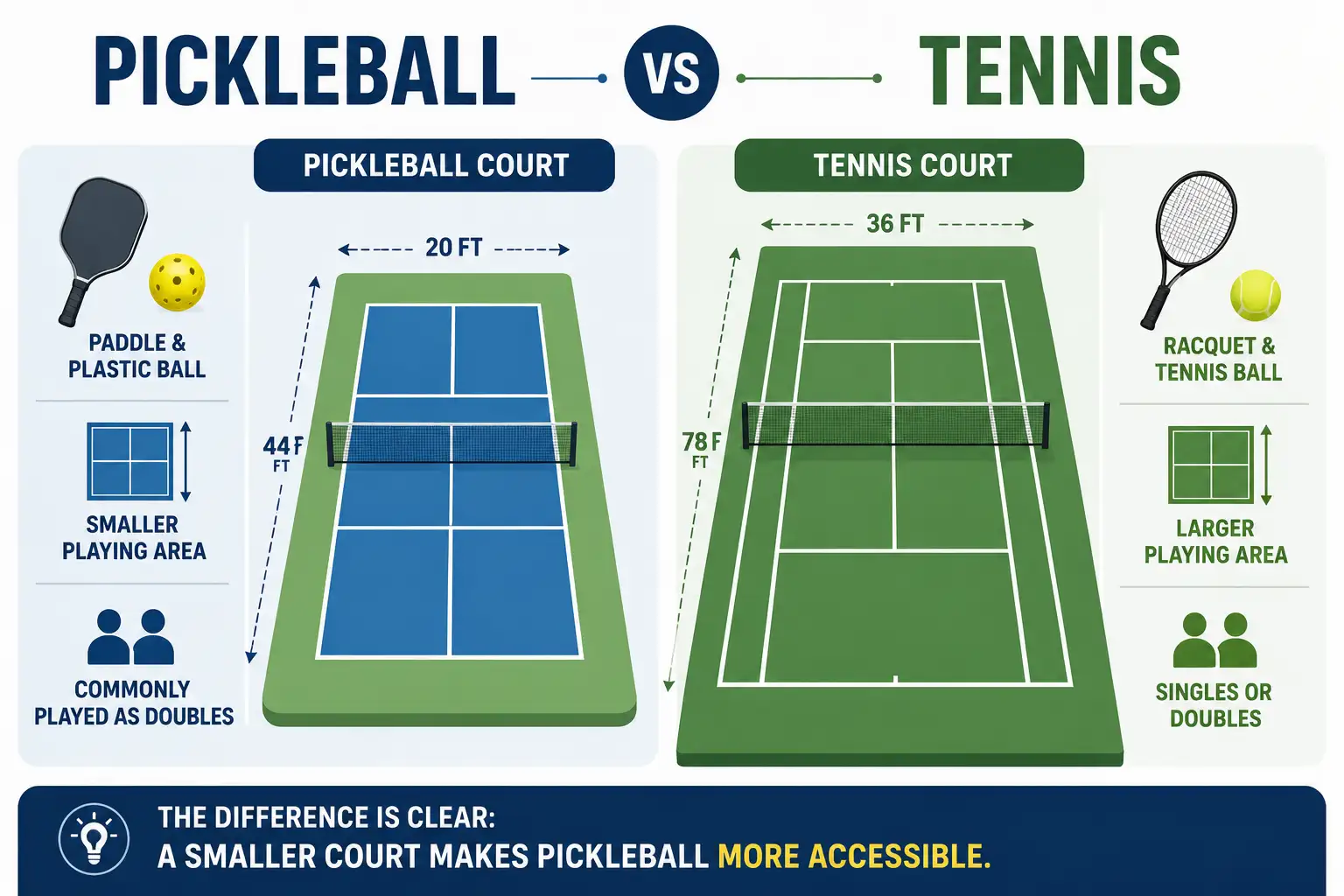
A regulation tennis court is 78 feet long and 27 feet wide for singles, while a pickleball court is only 44 feet long and 20 feet wide.
The smaller playing area means players generally have less territory to cover. Combined with the paddle, plastic ball and underhand serving style, this can make pickleball feel less intimidating to someone starting a racquet sport for the first time.
That doesn’t mean pickleball is simply “easy tennis.” At higher levels, fast exchanges at the kitchen, placement, spin, positioning and shot selection make the game highly competitive.
Its advantage is that the floor for entry is low while the ceiling for improvement remains high.
5. More Courts Make the Sport Easier to Join
Participation growth is being matched by rapid expansion in places to play.
USA Pickleball’s latest annual growth report lists 82,613 known courts across 18,258 locations nationwide, while USA Pickleball membership reached 104,828.
More courts create a powerful growth cycle: more people discover the sport, demand for courts increases, new facilities open and even more beginners get an opportunity to play.
Is Pickleball Just a Trend?
The numbers increasingly suggest otherwise.
A temporary craze might attract millions of first-time participants, but pickleball is simultaneously gaining younger players, repeat players, organized facilities and a growing national infrastructure.
Its future will inevitably bring challenges, including competition for court space and the need to accommodate rapid participation growth. But a sport that expanded from 4.2 million U.S. participants in 2020 to 24.3 million in 2025 has already moved well beyond being a niche pastime.
Pickleball became popular because it solved a simple problem: it made racquet sports easier to start without removing the competition, strategy or social experience that keeps people playing.
That combination may be exactly why pickleball’s growth is proving harder to dismiss as just another sports fad.
Frequently Asked Questions
Why is pickleball so popular?
Pickleball is popular because it is relatively easy to learn, social, playable across multiple age groups and requires a smaller court than tennis.
Is pickleball the fastest-growing sport in America?
According to SFIA, pickleball has been the fastest-growing U.S. sport for five consecutive years, with 24.3 million participants in 2025.
Is pickleball only popular with older people?
No. Although pickleball remains popular among older adults, Americans aged 13–24 currently have the highest participation rate among age groups measured by SFIA.
Is pickleball easier than tennis?
Pickleball generally has a smaller court, underhand serving and a shorter distance to cover, which can make it easier for beginners to start. Advanced pickleball, however, still requires significant skill, strategy and coordination.