8 Weird Websites That Instantly Reset Your Brain at Work
0
0


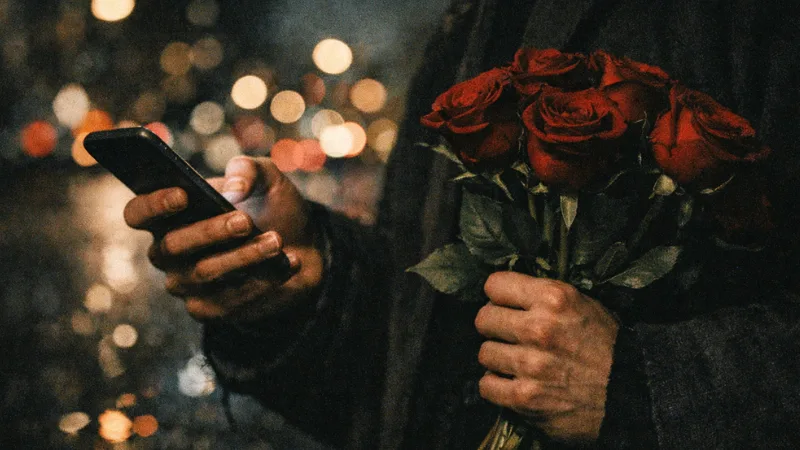
Some say it like a joke, some serious, it is usually seen next to screenshots of flower deliveries and surprise getaways. It’s meant to be funny but it also does a lot of ideological work. And somewhere along the line, love stops being a feeling and becomes a service tier.
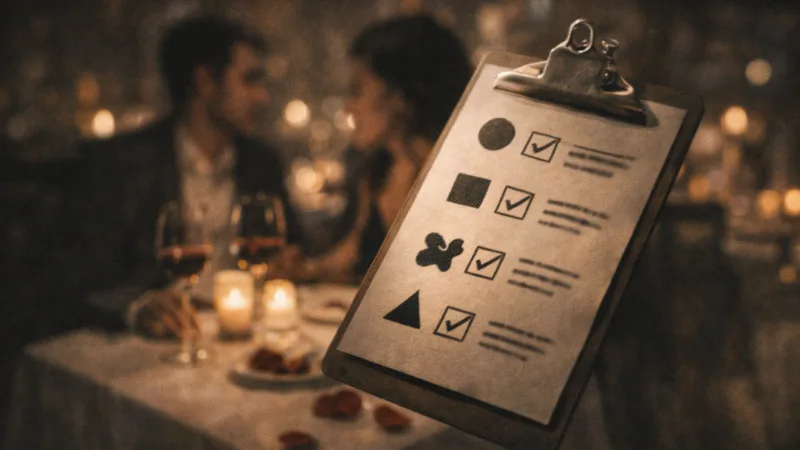
You’ll notice this prominently during Valentine’s Day (or a week now, thanks to capitalism), our entire feed is flooded with proof, not affection, not love, proof. A big bouquet of roses, dim lighting in diners especially calibrated for instagram and captions that sound almost like a product review. “Grateful.” “Spoiled.” “He understood the assignment.”
So your love was an assignment? Okay.
See it’s not that people are shallow for wanting nicer things, no. I want nice things too. I like big gestures. I love effort. But I also feel my shoulders tense every February, like I’m being silently evaluated by a rubric no one admits exists but everyone seems to know by heart.
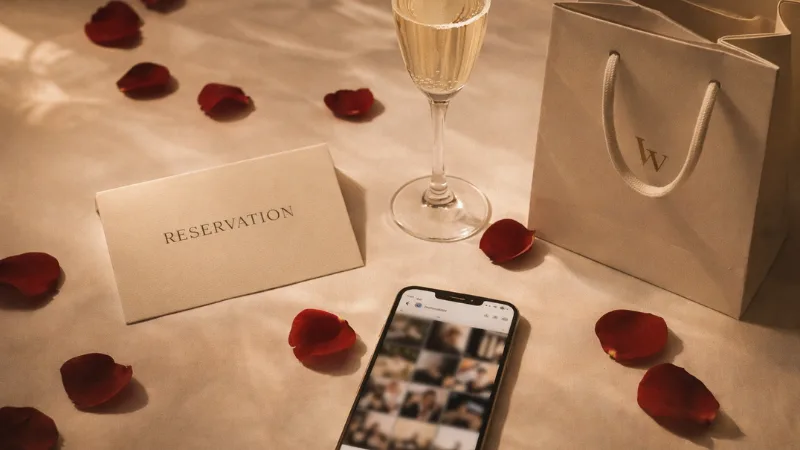
You can feel the anxiety leaking through the posts. People online say it outright. “If he doesn’t post you, that’s a red flag.” “If there’s no reservation, don’t even bother.” “Bare minimum behavior.” These aren’t jokes. They’re norms pretending to be humor.
Capitalism’s favorite trick: expectations as vibes, pressure as aesthetics: Capitalism loves that move. Turn expectations into vibes. Turn pressure into aesthetics.
What bothers me isn’t the spending. It’s the scripting.
Valentine’s marketing doesn’t ask whether you love someone. It asks whether you can show that you do. There’s a right scale, a right timeline, a right visual language. Romance becomes legible only when it passes through brands, platforms, and public validation. If it can’t be seen, it starts to feel suspect.
We are all co-conspirators. We too measure movements by how shareable they’re, wondering if something “counts” if no one else knows about it.
A lot of us do feel weirdly underwhelmed by perfectly good experiences if they didn’t translate aesthetically on Instagram. And that is a part no one wants to admit. It’s not just about big bad corporations manipulating us, it is also us. Participating, comparing and internalizing.
Dating apps have made love browsable. Desire is sortable. Everyone is one swipe away from someone theoretically better. When abundance is engineered, commitment starts to feel like settling, unless it’s constantly justified with upgrades and displays.
So love gets louder. Bigger. More cinematic. Not because that’s what intimacy requires, but because that’s what attention rewards.

Stable, boring, unremarkable love does not do numbers. No one goes viral for mutual respect or quiet loyalty. There’s no algorithmic incentive for emotional consistency. So those forms of love slowly disappear from the cultural imagination, replaced by spectacle and urgency.
At the same time, I don’t buy the clean critique that says “just opt out.” That’s a fantasy. We live inside this system. Symbols matter. Gifts can be sincere. Performance and feeling are not always opposites. Sometimes they overlap. Sometimes buying flowers is exactly what love looks like at that moment.
That’s the tension I can’t resolve neatly. I resent how commercialized love has become. I also resent the smugness of pretending I’m immune to it. Both things are true.
What feels dangerous is not Valentine’s Day itself, but how easily love becomes a recurring expense. Something you have to keep paying into or risk emotional overdraft.
Miss one moment and you’re behind. Skip one gesture and it means something about your worth.
Capitalism doesn’t destroy love by mocking it. It destroys love by professionalizing it. By making people doubt their actions and outsource meaning to external signals. By convincing us that intimacy needs constant visible reinforcement or it starts to depreciate.
The quiet stuff gets lost first. The unphotogenic parts. Showing up when no one’s watching. Staying when it’s boring. Choosing someone again without announcing it.
Those don’t sell. So they don’t circulate. And eventually they start to feel less real.
If love today feels expensive, performative, and oddly exhausting, that’s not a personal failure. It’s a cultural one. But pretending we’re above it doesn’t help either.
Maybe the most honest position is to admit we’re compromised. Online, influenced, aware, still wanting connection anyway. Trying to care without turning care into content. Trying to feel without constantly proving that we feel.
Not rejecting the system. Just refusing to let it fully narrate our relationships. That’s not a solution. It’s a tension.
But it feels closer to the truth than another heart-shaped ad telling me how love is supposed to look this year.

Log in to support this story.
New here? Create an account


Discussion · 0 Comments
No comments yet — be the first to share your thoughts.