
Why Ai Is booming? ChatGPT vs Google Bard
0
0



Your side hustle made $2,000 last month. That sounds like a success, but how much did you actually keep?
Once you subtract platform fees, supplies, software subscriptions, transportation, and other business costs, your earnings may look very different. And if you spent 80 hours doing the work, you also need to consider whether the return was worth your time.
To determine whether your side hustle is profitable, subtract business expenses from revenue, calculate your effective hourly earnings, estimate your taxes, and check whether you consistently cover your costs.
Here’s how to calculate the numbers and decide whether your side hustle is worth continuing.
Revenue is the total money your side hustle earns before expenses.
Profit is the amount remaining after subtracting business costs.
The basic formula is:
Profit = Revenue − Business Expenses
Imagine you run a freelance design business with the following monthly figures.
| Item | Amount |
|---|---|
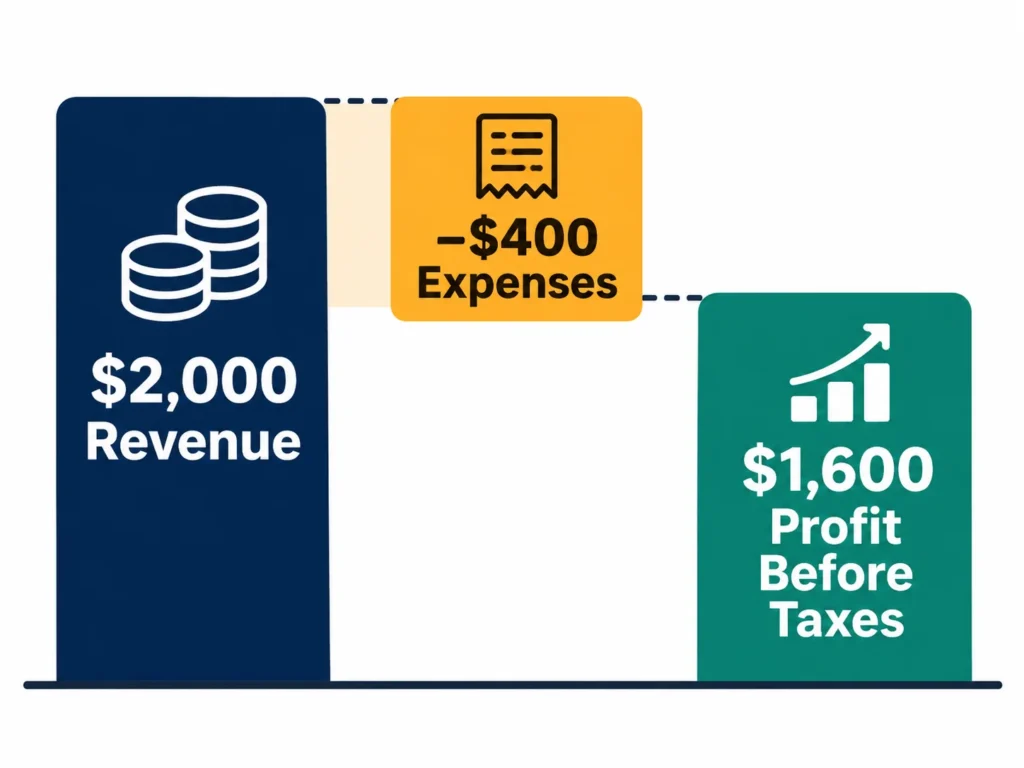
| Client payments | $2,000 |
| Software subscriptions | −$80 |
| Advertising | −$150 |
| Payment processing fees | −$70 |
| Allocated equipment and other costs | −$100 |
| Profit before taxes | $1,600 |
This is an illustrative example, not a typical earnings estimate.
Although the business generated $2,000 in revenue, its estimated profit before taxes was $1,600.
That distinction matters because revenue alone cannot tell you whether a business is financially successful.
One reason side hustles appear more profitable than they really are is that owners overlook smaller costs.
Common expenses include:
Record these costs consistently instead of estimating them from memory.
For purchases used partly for personal purposes, distinguish the business-related portion. Also remember that accounting expenses and tax deductions do not always follow the same rules.
If you’re considering launching a business but haven’t chosen a model, exploring small business ideas and their practical requirements can help you think about startup costs before investing.
A side hustle can generate profit while paying relatively little for your time.
Use this formula:
Effective hourly earnings = Profit before taxes ÷ Total hours worked
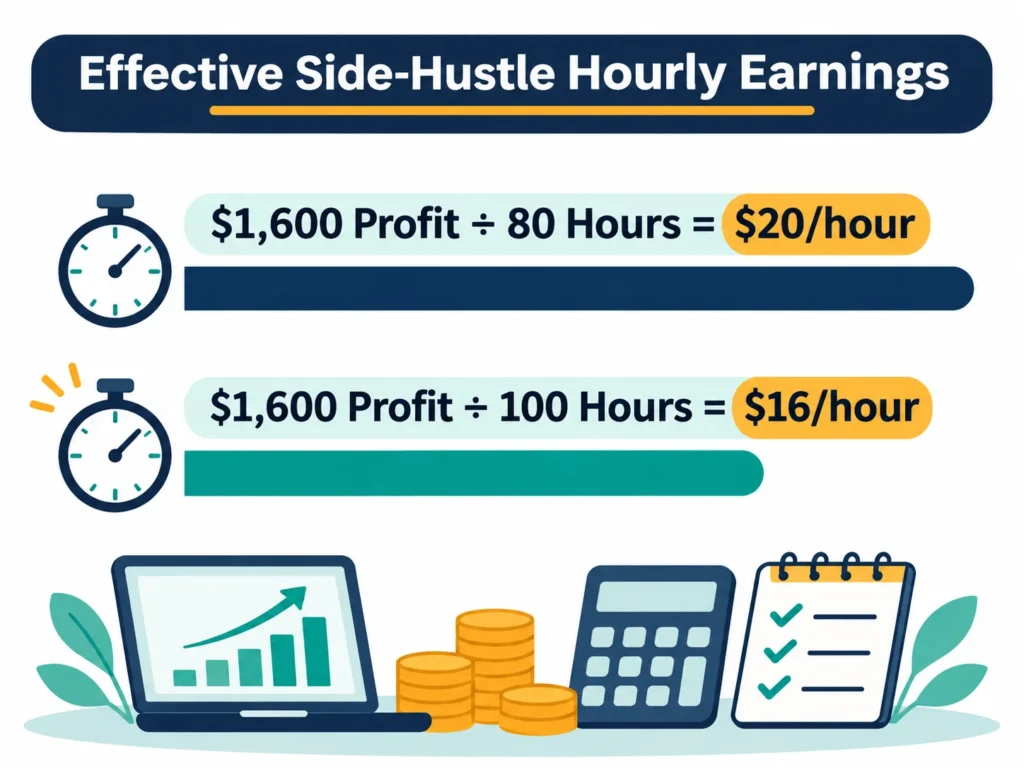
Suppose you earn $1,600 in monthly profit and spend 80 hours running the business.
$1,600 ÷ 80 = $20 per hour
But what if you forgot to include 20 additional hours spent finding customers, replying to messages, preparing invoices, and completing administrative tasks?
Your total time becomes 100 hours.
$1,600 ÷ 100 = $16 per hour
Your effective hourly earnings fall even though your business profit stays the same.
Track all the time you invest, including unpaid work. This gives you a more realistic basis for comparing your side hustle with other opportunities.
These figures are before personal taxes and do not represent a guaranteed wage.
Profit margin shows what percentage of revenue remains after expenses.
Profit margin = (Profit ÷ Revenue) × 100
Using the freelance example:
($1,600 ÷ $2,000) × 100 = 80%
Now consider a small online store.
Suppose it generates $3,000 in monthly revenue but spends $2,400 on products, shipping, advertising, and operating expenses.
Its profit is $600.
($600 ÷ $3,000) × 100 = 20%
The online store generates more revenue than the freelance business but retains less profit.
Neither model is automatically better. Different businesses have different costs, risks, and growth opportunities.
For example, someone exploring ecommerce can review our guide to starting a dropshipping business before estimating supplier costs, fulfillment expenses, and customer acquisition costs.
Your break-even point is the sales level at which revenue covers business costs.
For a business selling one type of product, the formula is:
Break-even units = Fixed Costs ÷ (Selling Price per Unit − Variable Cost per Unit)
Imagine you sell handmade products with these costs:
| Item | Amount |
|---|---|
| Selling price per product | $40 |
| Variable cost per product | $25 |
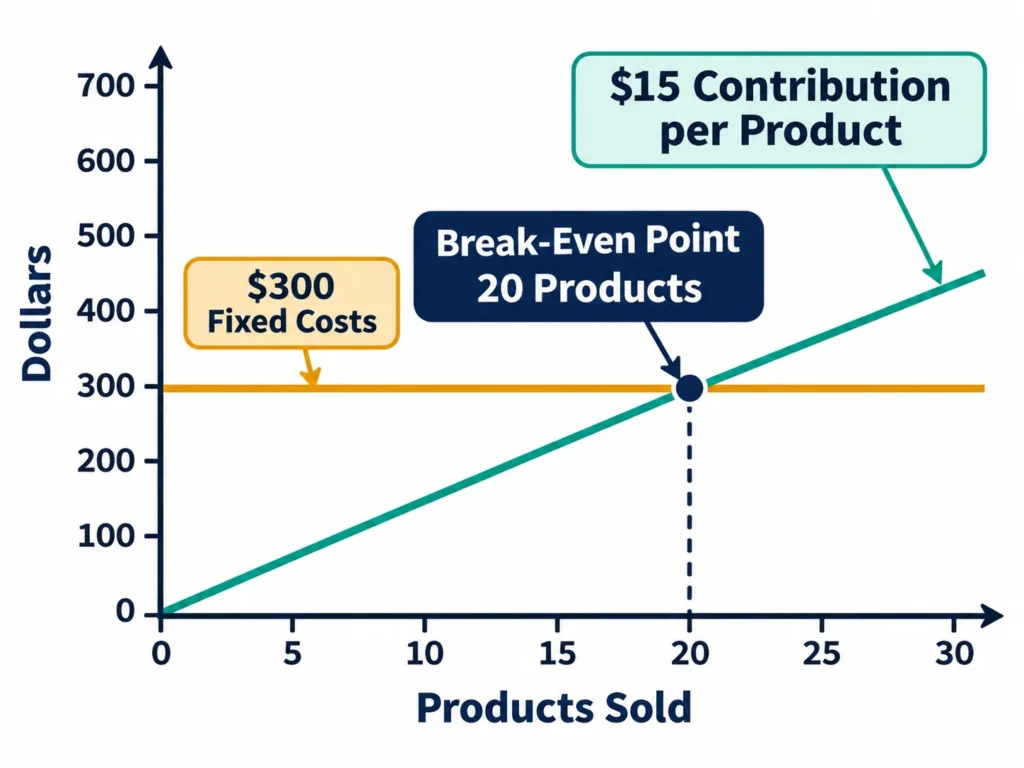
| Monthly fixed costs | $300 |
Each sale contributes $15 toward fixed costs.
$40 − $25 = $15
$300 ÷ $15 = 20 products
You must sell 20 products to break even under these assumptions.
If you sell 30 products:
(30 × $15) − $300 = $150 in operating profit before taxes
The US Small Business Administration explains this approach in its break-even analysis resources.
For businesses with multiple products, variable pricing, or changing costs, a more detailed calculation may be necessary.
Business profit is not necessarily the amount you can take home.
In the United States, side-hustle earnings may be subject to federal income tax and self-employment tax.
According to the IRS, individuals generally must file Schedule SE when their net earnings from self-employment reach $400 or more, although exceptions and special rules can apply.
Gig-economy income generally must be reported even if the work is temporary or no information return is received.
You can review the official IRS guidance on taxes for gig workers for current reporting requirements.
Your actual tax liability depends on your income, deductions, business structure, and other circumstances.
Rather than applying the same tax percentage to every side hustle, calculate an estimate based on your situation and seek professional advice when needed.
A business can be profitable on paper but still struggle financially.
Imagine completing a freelance project worth $1,500 in October but receiving payment in December.
You may have earned revenue under the accounting method you use, but you still need cash to cover subscriptions, supplies, and other bills before the client pays.
An online seller may face a similar challenge when purchasing inventory before receiving customer orders.
Track two different measures:
Profit: Whether the business earns more than it costs to operate.
Cash flow: When money enters and leaves your account.
Maintaining enough cash for upcoming expenses, taxes, and unexpected problems is essential to keeping a side hustle sustainable.
Profitability is important, but it isn’t the only factor.
Ask yourself four questions.
Review several months of results rather than relying on one unusually successful week.
Seasonal businesses may require a longer period to identify meaningful patterns.
Calculate effective hourly earnings and compare them with other opportunities.
Remember to include customer acquisition, administrative work, and other unpaid tasks.
Consider whether you can reduce unnecessary expenses, improve pricing, simplify workflows, or focus on higher-value customers.
Increasing revenue is not always the best solution. Sometimes reducing costs improves profitability more efficiently.
A side hustle that creates constant stress or interferes with your primary employment may not be worthwhile, even if it produces some profit.
Someone earning $500 monthly from a manageable weekend activity may be satisfied. Another person spending 100 hours for the same return may decide to change direction.
If you’re considering another income model, our guide to making money on Pinterest offers an example of a digital opportunity whose costs and time commitment should also be evaluated before investing.
There is no universal minimum. The right amount depends on your financial goals, expenses, time commitment, risk, and alternative earning opportunities.
It depends on whether the amount represents revenue or profit. Earning $1,000 in profit from 20 hours of work is very different from generating $1,000 in sales after significant expenses and 80 hours of effort.
Review several months of income, expenses, and working hours. Seasonal businesses may need a longer evaluation period.
Yes. Delayed payments, upfront inventory purchases, and other timing differences can create cash-flow problems even when a business reports a profit.
A successful side hustle isn’t necessarily the one generating the most sales.
It’s the one providing worthwhile returns after accounting for expenses, taxes, time, and risk.
Start by tracking your monthly revenue, business costs, and working hours. Calculate your profit margin and effective hourly earnings, then review the results over time.
Once you understand what your side hustle actually earns, you can make better decisions about whether to grow it, improve it, or pursue a different opportunity.

Log in to support this story.
New here? Create an account


Discussion · 0 Comments
No comments yet — be the first to share your thoughts.