
Streetwear Aesthetic Men Describe: Meaning & Outfits
60
0



Choosing the right social media platform can make a real difference to a small business. But with Facebook, Instagram, TikTok, LinkedIn, YouTube, and Pinterest competing for attention, where should a business owner spend time?
The best social media platform for a small business is the one that consistently reaches relevant customers and contributes to measurable business goals. Facebook may fit community-led local businesses, Instagram may suit visual products, LinkedIn may suit B2B relationships, and YouTube may support educational content. Start with one or two channels rather than trying to maintain every account.
According to Pew Research Center’s October 2026 social media fact sheet, 84% of U.S. adults use YouTube, 70% Facebook, 51% Instagram, 37% TikTok, and 31% LinkedIn. Its survey covered 5,511 adults from January 30 to June 18, 2026. Audience reach does not establish marketing return on investment.
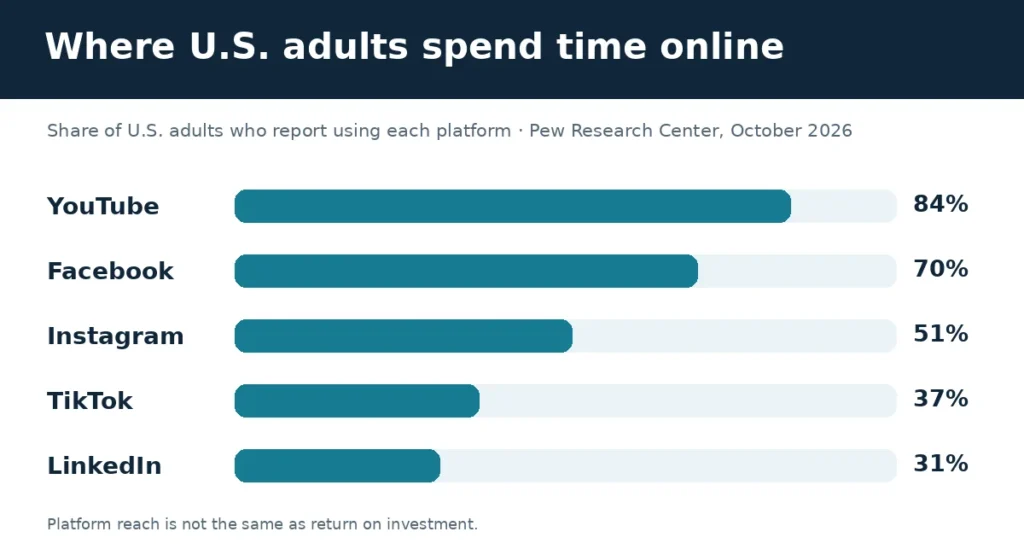
Figure 1. U.S. adult platform usage — source: Pew Research Center (Oct. 19, 2026).
| Business | Platforms to evaluate | Main objective |
| Local restaurant | Instagram, Facebook | Local awareness and visits |
| B2B consultancy | LinkedIn, YouTube | Qualified inquiries |
| Fashion retailer | Instagram, TikTok | Product discovery |
| Home services | Facebook, YouTube | Trust and education |
| Online retail | Instagram, Pinterest | Product interest |
| Coaching | YouTube, LinkedIn | Educational reach |
These are starting recommendations based on platform features, not a measured ranking of sales conversion rates. A short test with your target audience is more reliable than a universal list.
Facebook can help businesses serving local communities share updates, respond to customer questions, and participate in relevant local conversations. A restaurant could publish menu changes and event details; a home service provider might explain how appointments work. Organic reach can vary, so track inquiries rather than just reactions.
Instagram is useful when a product or service can be shown clearly. Restaurants might document food preparation, interior designers can illustrate completed work, and retailers can show product variations. A repeatable mix of photos, short videos, and useful carousels may be more sustainable than elaborate daily production.
LinkedIn is worth testing for organizations selling professional services, software, or specialist expertise to other businesses. Useful content might explain common client problems, document project lessons, or outline decision frameworks. A company page alone is not a complete acquisition strategy; relevant engagement and clear offers matter.
TikTok can suit products that benefit from brief, engaging demonstrations. Before committing to frequent posting, check whether the account reaches relevant customers and whether viewers eventually become visitors, leads, or buyers. Viral views should not be confused with business performance.
YouTube can support businesses that teach, explain, demonstrate, or answer repeated questions. A home services company could share seasonal maintenance advice; a software firm might explain common setup problems. Clear audio, accurate information, and useful structure matter more than expensive production equipment.
Pinterest may be worth testing when customers seek ideas before purchasing, as in home decor, fashion, recipes, crafts, or event planning. Pins should lead to useful and relevant product or editorial pages. Evaluate outcomes over a suitable buying cycle rather than expecting every view to produce an immediate sale.
Define your customer and the problem they want solved. Choose one primary marketing goal: inquiries, bookings, sales, or qualified traffic. Estimate how often you can create quality content. Then test one or two channels and measure actions that connect to the goal. If the channel produces attention but few qualified outcomes, improve the offer or redirect effort rather than adding more platforms.
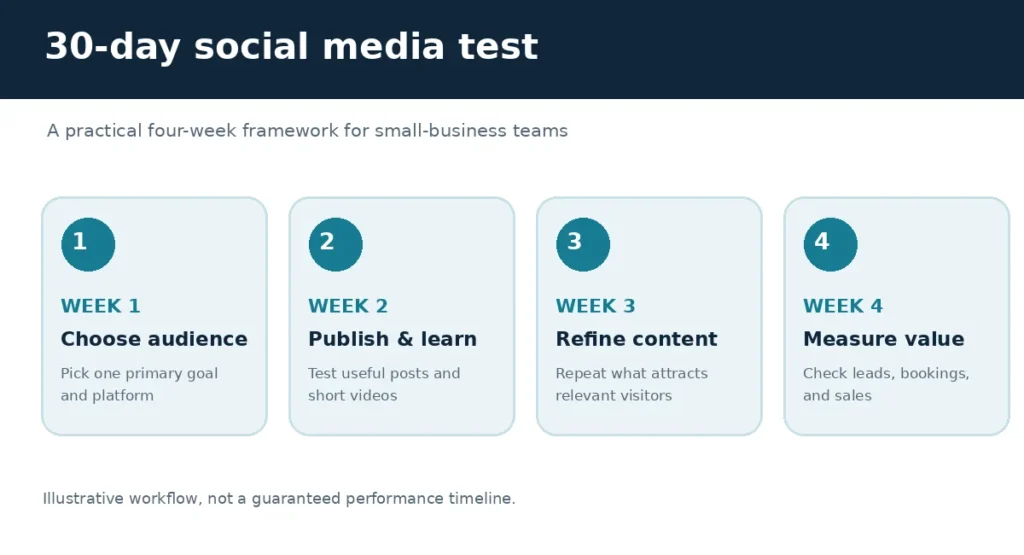
Week one: identify the audience and select a platform. Weeks two and three: publish a manageable series of useful posts in more than one format and observe meaningful responses. Week four: compare relevant traffic, qualified inquiries, bookings, and sales. A service company receiving 12 inquiries and three booked jobs would have an illustrative inquiry-to-booking rate of 25%; that is an example, not a benchmark.
Figure 2. Original 30-day workflow for a small-business social media experiment.
Trying to manage every platform, copying competitors without context, chasing follower counts, and making claims that cannot be substantiated can all waste limited resources. A better approach is to choose a platform aligned with the customer, publish helpful information, and use business outcomes to guide the next investment. If content production becomes difficult, compare outsourcing options before assuming an agency will solve an unclear strategy.
The one where the business already understands its audience and can create useful content regularly.
Facebook may suit community outreach, while Instagram may suit visual discovery; test against customer behavior.
LinkedIn is a practical starting point; YouTube can complement it with demos and explanations.
Yes. One well-managed platform can be more useful than several undermaintained accounts.

Log in to support this story.
New here? Create an account


[…] YouTube is a social media app because users can create profiles, upload content, follow channels, interact with videos, and […]
[…] and stay updated with platform changes. That is why many owners look for a social media marketing agency for small business to handle growth […]