Which is Better: BigCommerce vs Shopify?
0
0


 Key Takeaways
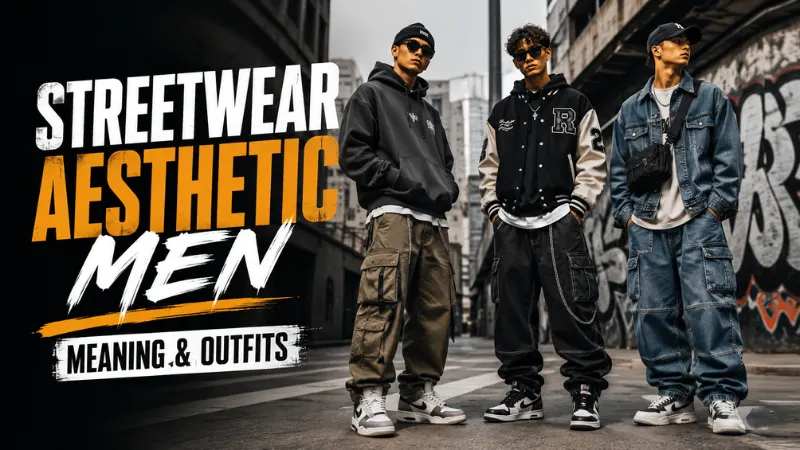
Streetwear aesthetic men describe means explaining a men’s fashion style built around relaxed fits, sneakers, hoodies, graphic tees, cargos, denim, utility details, and cultural attitude. The look comes from skate, hip-hop, sportswear, vintage, and sneaker culture. It is casual, but when done well, it looks intentional rather than lazy.
Streetwear aesthetic men describe is a weird search phrase, but the question behind it is simple: how do you actually explain the men’s streetwear look?
Most guys can recognize streetwear when they see it. Baggy jeans, a boxy tee, clean sneakers, maybe a cap or crossbody bag. But describing it is harder because streetwear is not one outfit. It can be minimal, vintage, skate-inspired, techy, luxury, or loud.
That matters because men’s fashion is becoming more intentional. Grand View Research valued the global men’s wear market at $590.24 billion in 2023 and projected it to reach $923.85 billion by 2030, driven partly by rising fashion awareness among Millennial and Gen Z men (Grand View Research, 2024).
The men’s streetwear aesthetic is casual clothing with cultural attitude. It combines comfort, identity, and subculture through pieces like sneakers, hoodies, graphic tees, loose denim, cargos, workwear jackets, caps, and layered outerwear.
Streetwear started outside traditional fashion spaces. It grew through skateboarding, hip-hop, basketball, surf culture, sneaker collecting, punk, Japanese street fashion, and youth communities. That is why it feels different from basic casualwear. A plain hoodie and jeans can be casual. A boxy hoodie, washed denim, statement sneakers, and the right cap can become streetwear.
Vogue Business has described modern streetwear as less dependent on old-school hype and more connected to authenticity, community, and new-generation brands (Vogue Business, 2024).
A simple way to describe it is this: men’s streetwear is relaxed, expressive clothing shaped by music, sneakers, sport, and the street.
If someone asks you to describe a streetwear outfit, do not just say “urban” or “baggy.” Those words are too broad. Better streetwear language focuses on shape, influence, and mood.
| Style word | What it means |
|---|---|
| Relaxed | Comfortable, easy, not formal or stiff |
| Boxy | Wider T-shirts, hoodies, or jackets with a squared shape |
| Oversized | Larger fit, but still styled with intention |
| Sneaker-led | The shoes set the tone of the outfit |
| Graphic-heavy | Prints, artwork, logos, or text add personality |
| Utility-inspired | Cargos, pockets, vests, workwear, and functional details |
| Vintage | Washed denim, retro sportswear, thrifted jackets, faded graphics |
| Technical | Nylon, shell jackets, trail shoes, black cargos, outdoor details |
| Minimal | Cleaner colors, subtle branding, strong silhouettes |
| Hype-driven | Limited drops, recognizable brands, bold logos |
So instead of saying, “He wears streetwear,” you could say:
“His style is relaxed skate streetwear with baggy denim, graphic tees, and retro sneakers.”
That sounds much more specific and human.
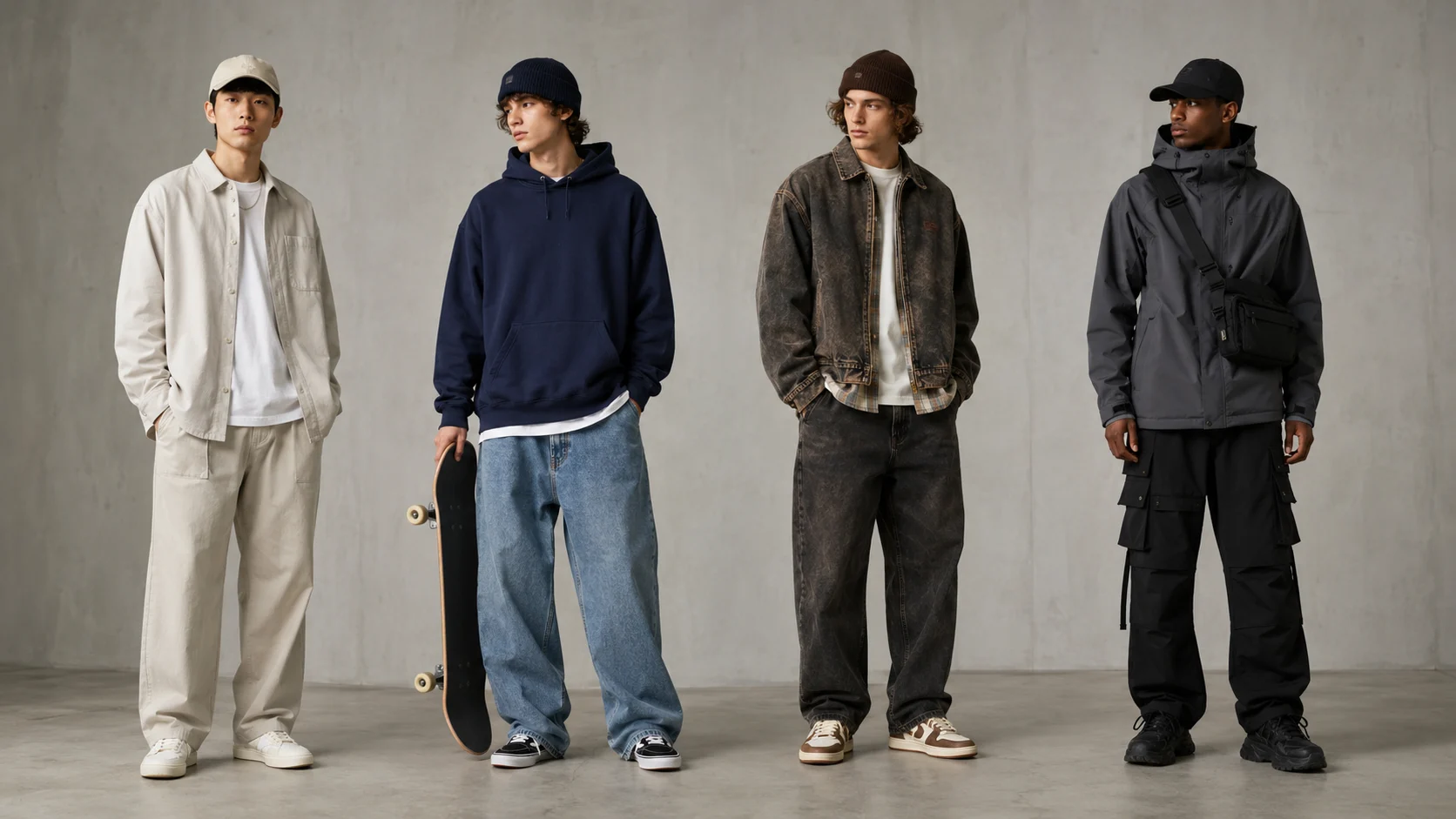
Streetwear is not just a trend from Instagram. It has roots in real communities.
Skate culture gave streetwear its loose pants, graphic tees, hoodies, beanies, and beat-up sneakers. Hip-hop added tracksuits, statement jewelry, caps, oversized silhouettes, and sneaker obsession. Basketball culture made sneakers a status symbol. Japanese street fashion helped turn streetwear into something more experimental, layered, and collectible.
Then luxury fashion stepped in. Brands like Supreme, Off-White, Louis Vuitton, and BAPE helped push streetwear from subculture into the mainstream. But the newest version of streetwear is less about wearing the loudest logo. It is more about mixing references: a thrifted jacket, wide-leg pants, trail sneakers, and a clean tee can say more than a head-to-toe designer outfit.
That shift matters because fashion shoppers are more value-conscious now. The BoF–McKinsey State of Fashion 2025 report said fashion growth was expected to stay in the low single digits, while consumers became more price sensitive and brands had to work harder on value and positioning (BoF–McKinsey, 2025).
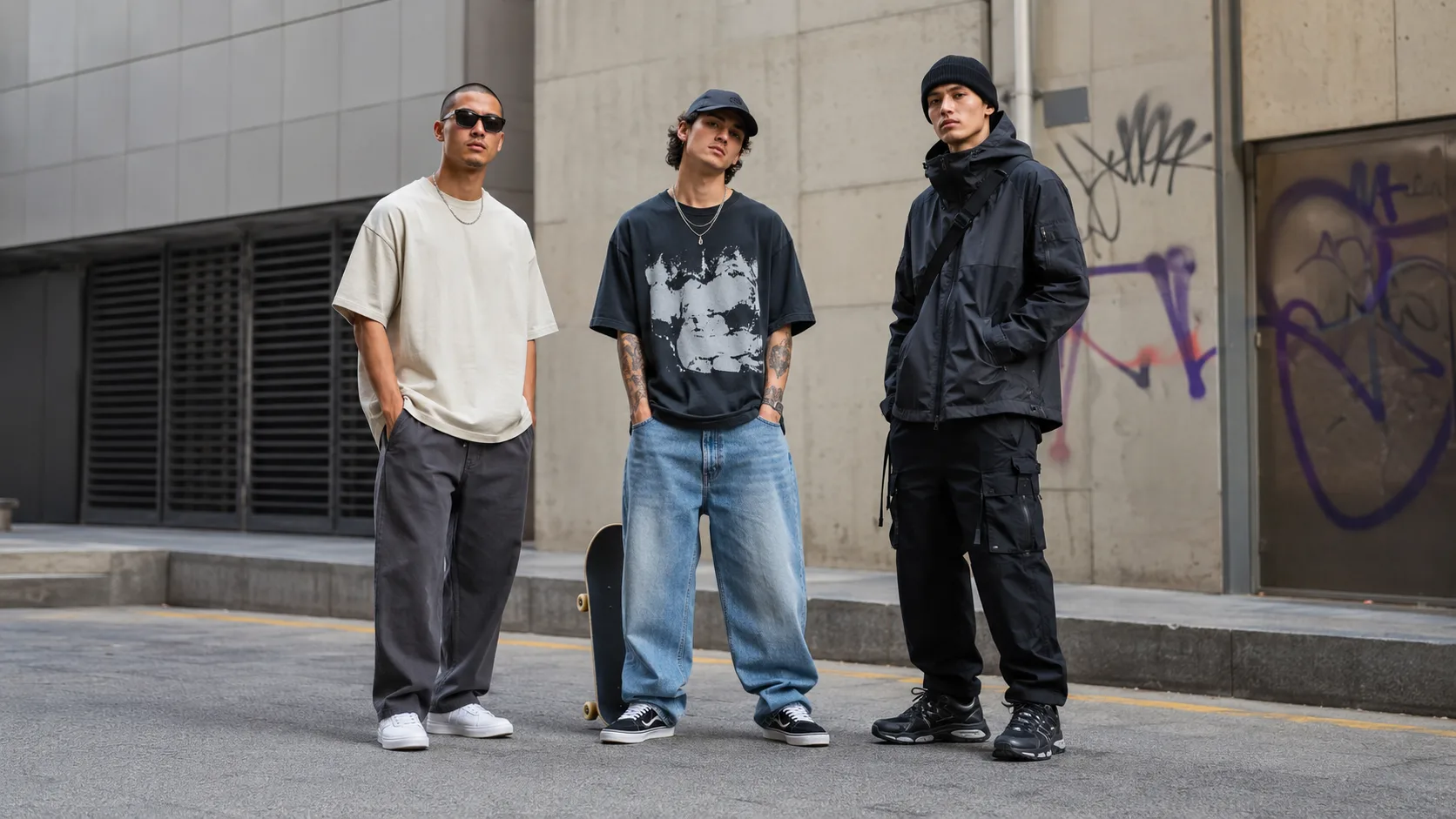
A good streetwear wardrobe does not need 100 items. It needs strong basics with the right shape.
Boxy T-shirts are usually the foundation. They look better than thin, tight tees because they create structure around the shoulders and chest.
Hoodies and sweatshirts bring comfort, but the fit matters. A slightly oversized hoodie looks better when the pants and shoes balance it.
Relaxed denim is one of the easiest ways to make a streetwear outfit feel current. Straight, loose, or baggy jeans usually work better than skinny jeans.
Cargo pants add a utility edge. Olive, black, grey, brown, and washed beige are the easiest colors to style.
Sneakers often decide the outfit’s mood. Retro runners, Jordans, Dunks, New Balance, Sambas, skate shoes, and trail sneakers all create different versions of streetwear.
Outerwear makes the outfit feel complete. Bomber jackets, varsity jackets, coach jackets, denim jackets, leather jackets, puffers, and shell jackets all work.
Accessories add personality. Caps, beanies, chains, rings, sling bags, sunglasses, and watches can finish the look without making it feel overdone.
Vintage and resale pieces are also becoming more important. ThredUp’s 2026 report projected the global secondhand apparel market to reach $393 billion by 2030, growing twice as fast as the overall apparel market (ThredUp, 2026).
Minimal streetwear is clean and controlled. Think neutral colors, boxy tees, straight pants, subtle sneakers, and almost no loud branding.
Skate streetwear is looser and more casual. It uses baggy jeans, graphic tees, hoodies, beanies, flannels, work pants, and skate shoes.
Techwear streetwear looks sharper and more futuristic. It leans on black, grey, nylon, cargos, waterproof jackets, trail sneakers, and utility bags.
Vintage streetwear feels worn-in and personal. It uses thrifted sports jackets, faded tees, old denim, retro sneakers, and pieces that look like they have history.
Luxury streetwear mixes casual shapes with expensive materials or designer details. It is not always loud; sometimes the fit and fabric do the talking.
Gorpcore streetwear borrows from hiking and outdoor gear. Fleece jackets, shell layers, trail shoes, cargos, and functional bags are common.
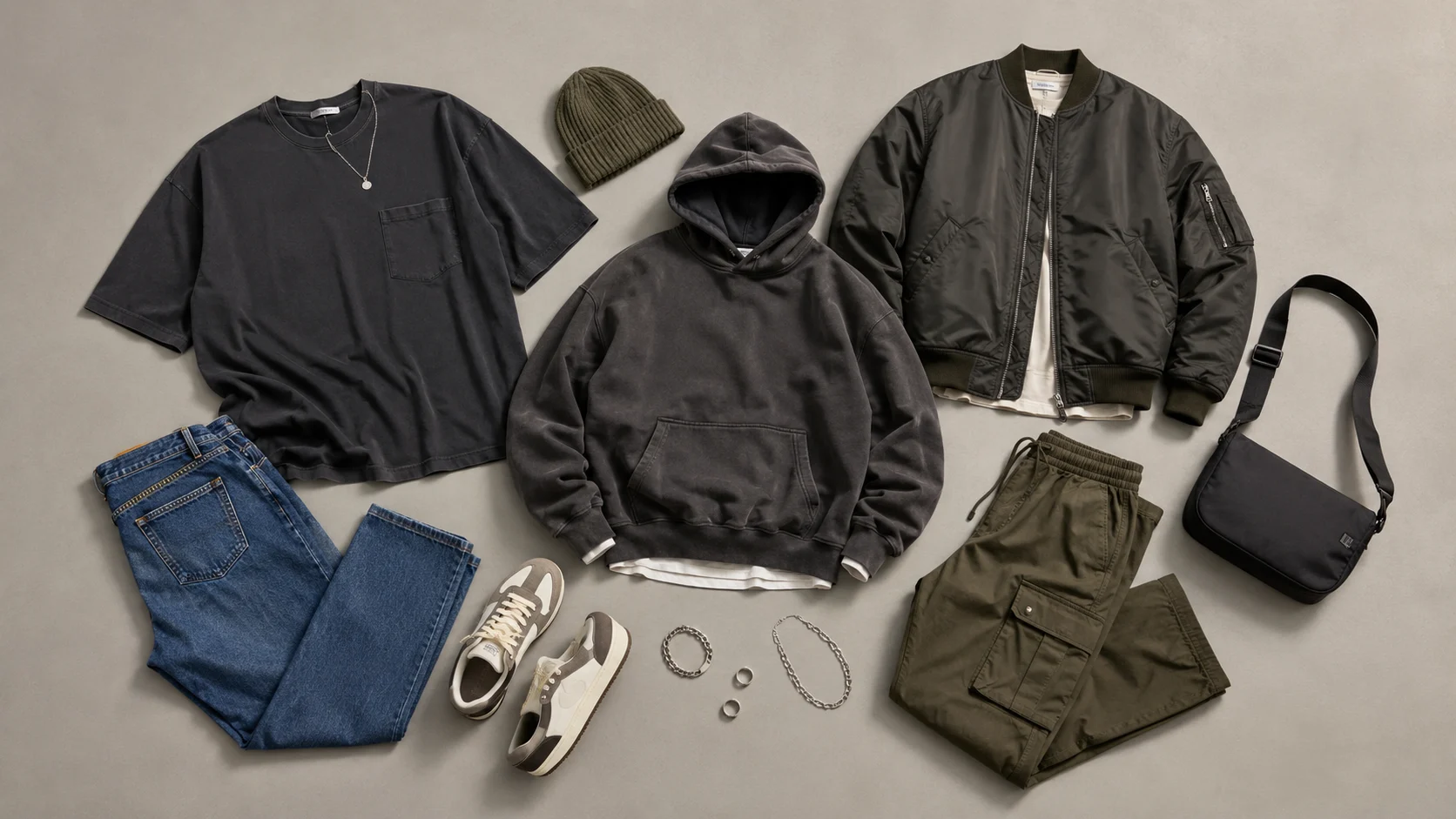
Clean everyday streetwear:
Boxy white tee + relaxed blue jeans + retro sneakers + simple chain.
Skate streetwear:
Graphic tee + baggy denim + beanie + skate shoes.
Cargo streetwear:
Black hoodie + olive cargos + chunky sneakers + crossbody bag.
Vintage streetwear:
Thrifted sports jacket + faded tee + straight jeans + old-school sneakers.
Smart streetwear:
Plain tee + cropped jacket + wide trousers + clean leather sneakers.
Tech streetwear:
Shell jacket + black cargos + trail sneakers + cap.
These formulas work because they start with shape first. Once the silhouette is right, the outfit usually looks more expensive and more natural.
Wearing everything oversized.
Oversized can look good, but if every piece is huge, the outfit loses shape.
Buying logos instead of learning fit.
A famous brand cannot fix bad proportions.
Copying influencers exactly.
Use outfit photos for ideas, not as a full costume.
Ignoring sneaker condition.
Streetwear does not require spotless shoes, but dirty sneakers should look intentional, not neglected.
Mixing too many aesthetics.
A techwear jacket, luxury logo tee, cowboy belt, and skate shoes can work, but only if you really know what you are doing.
Use this formula:
Silhouette + key piece + influence + mood
Examples:
This is the best way to answer streetwear aesthetic men describe without sounding awkward. You are not just naming clothes. You are explaining the shape, influence, and feeling of the outfit.
Yes, but it has changed. Men’s streetwear in 2026 is less about wearing the biggest logo and more about personal styling, fit, comfort, resale finds, smaller brands, and pieces that work in real life.
The old version of streetwear was often built around hype drops. The newer version is more flexible. A man can wear thrifted denim, a blank tee, a shell jacket, and New Balance sneakers and still look current. He can also wear a graphic hoodie, cargos, and Jordans. Both work if the outfit has balance.
ThredUp reported that Gen Z and Millennials are expected to drive more than 70% of secondhand market growth through 2030, which explains why vintage, resale, and archive-inspired pieces now feel so natural inside streetwear (ThredUp, 2026).
Streetwear aesthetic men describe is really about putting words to a style that many people already recognize. Men’s streetwear is relaxed, sneaker-led, culture-driven, and expressive. It can be minimal, vintage, skate-inspired, technical, luxury, or outdoor-influenced.
The easiest way to start is simple: choose one strong piece, balance the fit, keep the colors controlled, and let your sneakers support the outfit. Do not chase every trend. Build a version of streetwear that fits your body, your city, your budget, and your actual life.

Log in to support this story.
New here? Create an account


Discussion · 0 Comments
No comments yet — be the first to share your thoughts.