
Evolution of 5G Network Technology
0
0


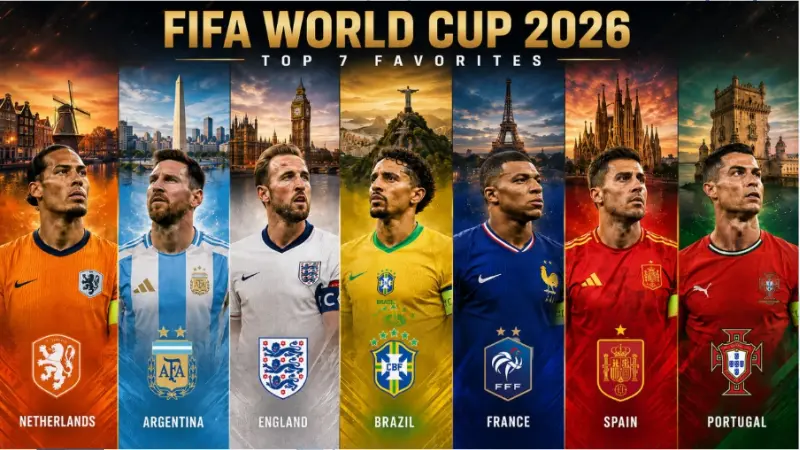
Who are the favorites to win FIFA World Cup 2026?
I am not Paul the Octopus. Neither am I Achilles the Cat. World Cup tends to bring out oddities and its strange theatre when it comes to predictions. Neither am I Gary Neville, the football pundit and nor am I Statman Dave, the football data analyst. I am just a football fan, and one of football’s most irresistible ways to embarrass yourself is predicting who will win the World Cup.
And with the FIFA World Cup 2026 just around the corner, there are plethora of predictions and lists, by pundits, football writers and data analysts alike. Some based on data, some on individual player’s form and some merely based on their gut feeling and ardent following.
I promise, this is not going to be yet another list where I rank teams. And I am aware this will not age well if my predictions don’t come true. And with the new format in for FIFA World Cup 2026, more nations will be part of the tournament meaning more competition and more chances of upsets. However, what I will make sure to do is to rank the teams based on team composition and recent form for context and give you my top 7 teams who have the best chance to lift the trophy come 19th July 2026.
So here we go. My list of Top 7 teams in ascending order of likelihood to win the upcoming 2026 FIFA World Cup.

Led by Ronald Koeman, Oranje are tactically well-balanced heading into this edition. With the backline being their strongest aspect, the team oozes Premier League quality and experience. The nation that gave the world Total Football have time and again beaten the odds and risen to the occasion whenever called upon. The Oranje topped their qualifying group with a positive goal difference of +23 and remained unbeaten.
Koeman, a Netherlands legend, knows what it takes to perform at the highest level and will bring the same meticulous preparation to this edition. Alternating between 4-3-3 and 4-2-3-1, the team has demonstrated fluidity in and out of possession, with the wide forwards playing an important role, especially in transition and counterattacks.
Pros: Netherlands’ biggest strength is their defensive unit, arguably one of the strongest in the tournament. Featuring Brighton shot-stopper Verbruggen between the sticks, he kept 10 clean sheets in the 2025/2026 Premier League season and made 106 saves.
The backline is further reinforced by two explosive full backs in Inter’s Dumfries and Spurs’ Micky van de Ven. Incredible speed, powerful bursts and second-to-none ball-carrying abilities mean their defence can spring forward in a blink of an eye with flair and creativity.
But their biggest advantage lies in the form of their centre-back, who is equally capable in both the boxes. Captain Virgil van Dijk remains the spine of this team, bringing aerial dominance, leadership and set-piece threat. However, Timber’s injury could prove to be a big blow to the squad.
Netherlands have a decent midfield with the return of Frenkie de Jong and Gravenberch, who had a decent season with Liverpool. The City star, Tijjani Reijnders, might occupy the #10 role and could become an integral player to gel the whole team into one cohesive unit. It is not optimum, especially for a nation that saw the rise of the legendary Johan Cruyff, and when other squads are much better packed in the middle of the park. Set pieces could become vital for Netherlands if there is a lack of creativity and decisiveness while going forward.
Cons: The biggest chink in their armour is the lack of an out-and-out striker. A proper #9 who can lead the line. The nation that saw van Basten, Dennis Bergkamp, Ruud van Nistelrooy and Robin van Persie finds it hard to believe that they cannot produce a striker of that calibre. Dutch strikers of the past were not just technically gifted but had swagger and a touch of elegance.
Be it van Persie’s flying header or Bergkamp’s immaculate first touch to control the ball for his stunning and iconic 89th-minute winner against Argentina in the 1998 World Cup, each striker of the past had a highlight-reel fans around the world would watch to this date.
Then to now, with Memphis showboating without end product, Gakpo’s inconsistency and reliance on Wout Weghorst, the erstwhile Burnley striker, it not only reeks of imbalance and lack of depth but also speaks of desperation to fill in.
Players to Watch: Virgil van Dijk & Tijjani Reijnders.
Winning Probability: 5.5%
Elite defence and tournament pedigree give them a chance, but the lack of a reliable No. 9, consistent output from midfield, creativity concerns, Timber’s injury and a difficult knockout ceiling keep them below the top six.
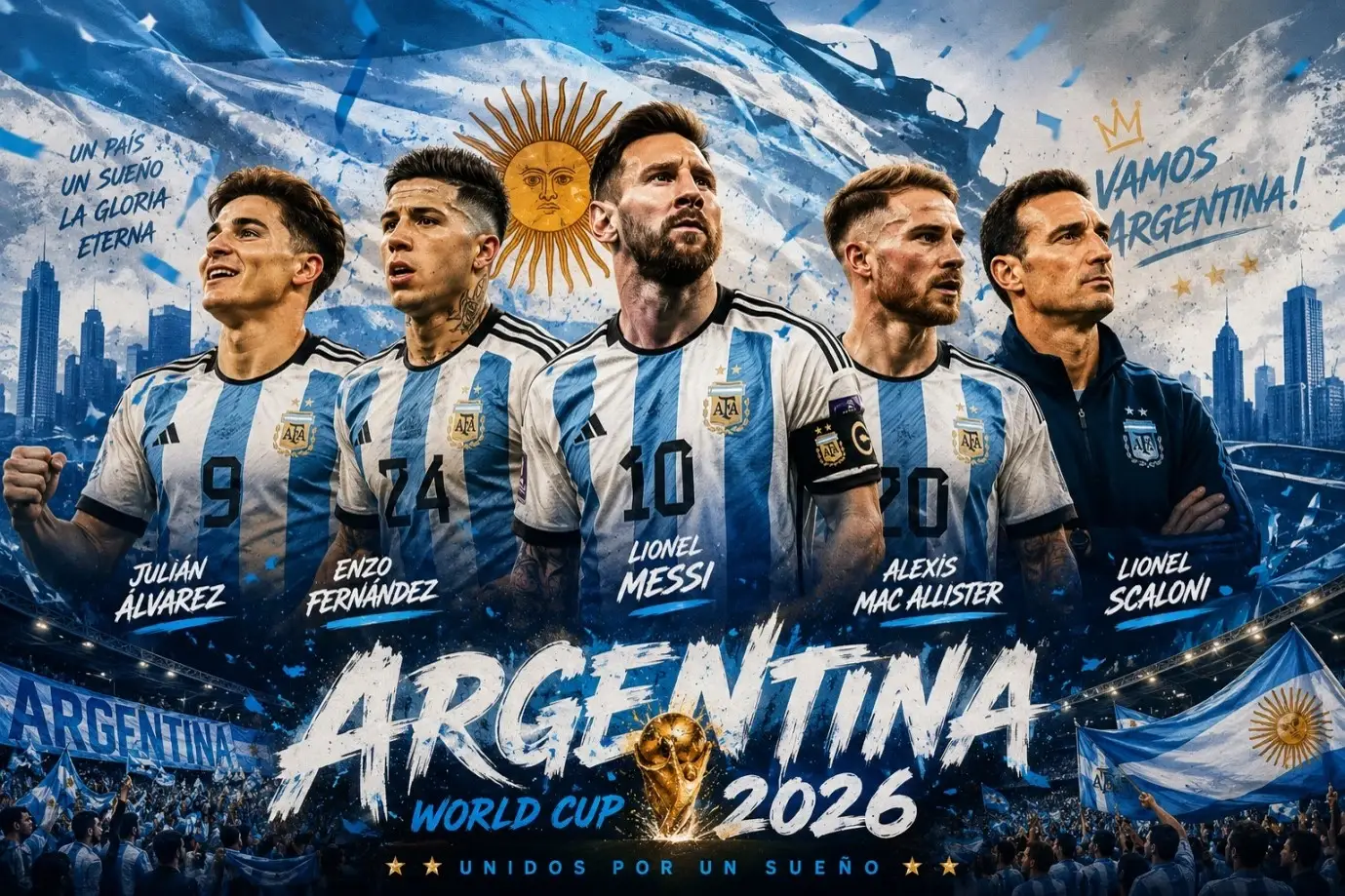
The current world champions, Argentina remain one of the top favourites to lift the cup this year. In what will most likely be the last outing of Lionel Messi, can La Albiceleste follow up their Copa America triumphs and defend the title? The majority of the squad remains the same from their previous success, with head coach Lionel Scaloni knowing exactly what it takes to go deep into the tournament and dethrone some of the top contenders.
Their run of form is solid, and because most of the same squad members have played together for the last four years, the team is well-drilled and plays in tandem with almost telepathic co-ordination. The only major change will be Angel Di Maria no longer making the playing XI after his retirement, making way for youth to come in and add pace to an otherwise experienced squad.
Scaloni will look to stick with his 4-3-3 formation, with Enzo Fernandez at the centre of the park playing a crucial role. Almada and Alvarez will have to do the bulk of the running to cover spaces for Messi, who will be deployed as a False 9. And with Como’s breakout star Nico Paz looking to make his mark on his World Cup debut, there is no shortage of firepower in the squad.
Pros: The presence of Lionel Messi is enough to take down any opposition. But football is a team sport, and the ageing legend will need his team around him to succeed.
With the highest shot conversion ratio, Argentina’s frontline is the biggest threat to every squad. Their recent form is also a testament to the squad’s tournament readiness. While Julian Alvarez will shoulder the goal-scoring burden, Lautaro Martinez’s big tournament pedigree will be a key factor, with the player looking to make his mark this time around. With Atletico attacking winger Almada, along with young guns Nico Paz and Valentin Barco, Argentina will be an attacking menace throughout the tournament.
The squad also boasts a competitive midfield, with Mac Allister and De Paul breaking up the play and providing incisive forward passes. But the single most important player on whom a lot depends on is Enzo Fernandez. It was his stellar performance in the last World Cup that proved why Chelsea bid $106m for the player. This time around, the pressure, responsibility and expectations on him will be double.
Cons: While Emiliano Martinez is a reassuring presence at the back, Argentina have been leaking goals of late. Cristian Romero and Nicolas Tagliafico’s injuries mean their match fitness could be in question, which could prove to be a major blow. Whereas, injury-prone Lisandro Martinez had an on-and-off season at United.
The bigger concern is that Argentina’s defensive security often depends on game control. When they dominate the tempo, they look calm, composed and difficult to break down. But when the game becomes stretched, especially against teams with pace in wide areas, the backline can look exposed. With Messi operating higher up and doing less defensive work off the ball, the midfield will need to cover extra ground, close passing lanes and protect the rest defence with discipline.
There is also the question of legs. This is still a champion side, but it is not a young side across the spine. Tournament football punishes tired decision-making. One late recovery run missed, one second ball lost, one transition did not stop, and the margins can disappear. Di Maria’s absence also takes away a proven big-game outlet, someone who could carry the ball, win fouls, stretch the pitch and produce in finals.
Their attack has experience, intelligence and finishing quality, but the numbers suggest they are not creating at the same relentless level as some of the other elite squads. If Messi is marked out of central zones and Alvarez is forced to run channels rather than attack the box, Argentina may have to rely on moments & individual brilliance rather than sustained pressure.
Players to Watch: Lionel Messi, Julian Alvarez & Nico Paz.
Winning Probability: 7.8%
Despite a strong attacking outfit, Argentina’s xG is 1.68, the lowest in the list. With average squad depth, defensive problems and an ageing core, anything beyond the Round of 16 should be seen as a hard-earned achievement rather than a given. However, with back-to-back international trophies, the team surely knows how to find ways to win and hence are ranked at #6 with a win probability of 7.8%.
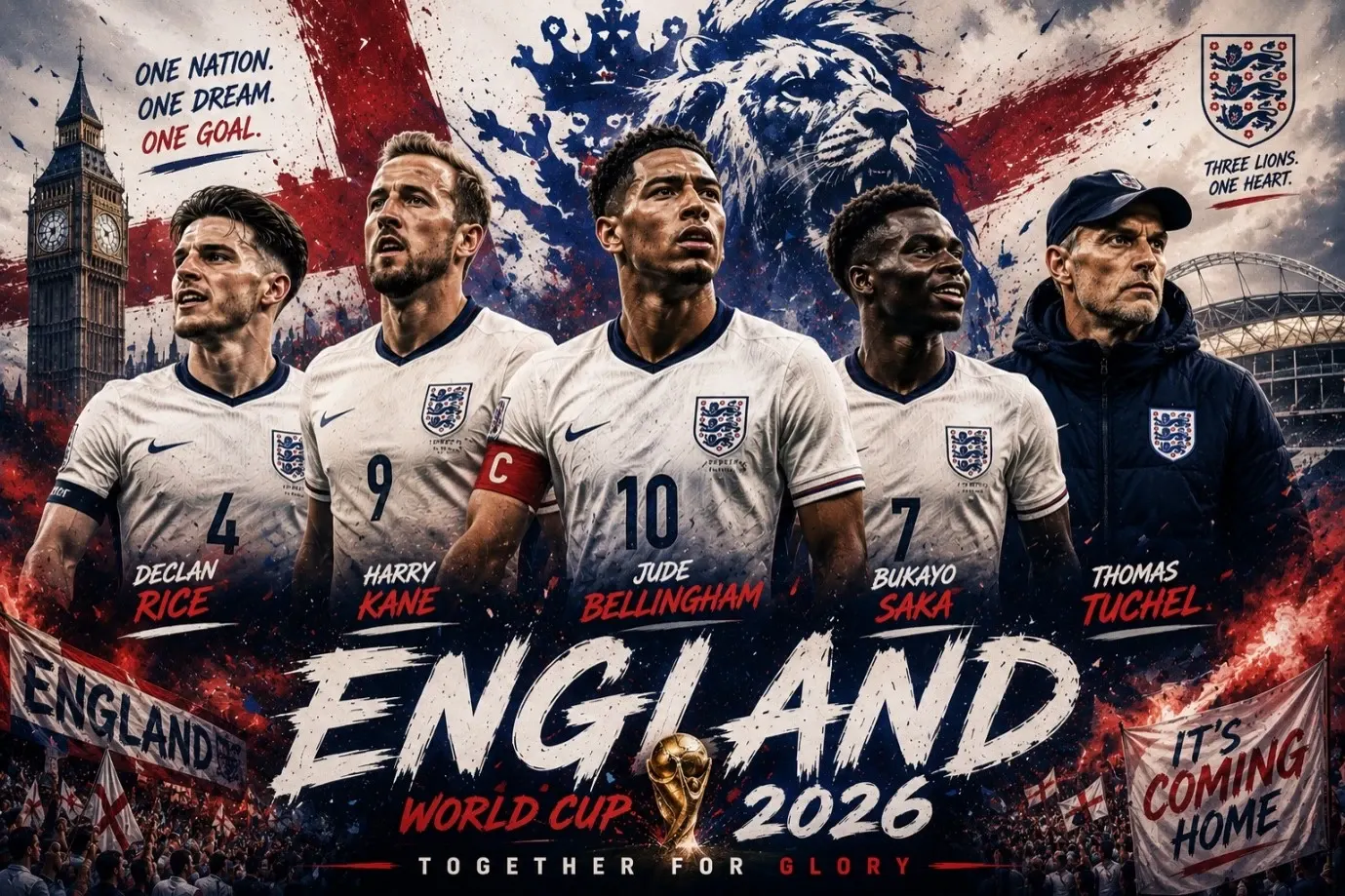
The nation that gave the world this beautiful game and hosts one of the toughest domestic campaigns across the football pyramid has gone 60 years without lifting the trophy, back when Bobby Moore and Bobby Charlton were part of the squad. If you are a betting man, you would never bet on England. Mainly because of their luck or, at times, lacklustre performances. The so-called Golden Generation of Gerrard, Lampard and Scholes probably was the best time for them to lift the trophy, but Brazil was at its peak. So was Italy. Time and time again, England produced squads full of hope and optimism, and every time they failed.
But since Gareth Southgate’s appointment, England have had much-improved outings at World Cups and Euros. Making it to two finals, England were on the verge of breaking their curse and bringing it home, only for their talismans to miss out on penalties.
In comes the German tinkerer, Thomas Tuchel. Probably the hardest thing for the squad to deal with is the English media: relentless and unforgiving. And one of the allegations the media had directed at Southgate was his inability to drop big-name players from the squad. Tuchel immediately did exactly that. For good or worse, we are yet to see. But there have been some outrageous calls since the final squad was announced. Leaving out some of the most in-form players from the league like Gibbs-White, Luke Shaw, Harry Maguire, Phil Foden and Cole Palmer to accommodate ageing players like Jordan Henderson raised a lot of eyebrows. If this does not go as planned, Tuchel will have a lot to answer for.
Tuchel is likely to play his usual 4-2-3-1, with Jude Bellingham occupying the #10 role and Harry Kane leading the attack. Saka’s return from injury proved a crucial turning point for Arsenal’s league-winning season, whereas Kobbie Mainoo’s return to the squad means possession in tight spaces will be better controlled with fewer unforced errors.
Pros: England, on their day, are unbeatable. With Harry Kane leading the line and being one of the leading contenders for the Ballon d’Or, the rate at which he converts half-chances is explosive. He can also drop deep, allowing wingers like Saka and Rashford to exploit the space and make runs behind defenders.
England have a balanced starting XI, with their strongest fit coming in midfield. Declan Rice and Kobbie Mainoo can plug the holes, while Bellingham feeds the frontline and arrives late into dangerous areas. There is some depth to the midfield as well, with Morgan Rogers and Elliot Anderson adding freshness to the squad.
Defensively, Nico O’Reilly has been deemed to be one of the youngsters to watch in the tournament. However, Reece James and Konsa are dubious picks, given the average seasons they had. John Stones and Guehi look decent, but can they stand the relentless barrage of French, Spanish or Portuguese attacks? Only time will tell.
Cons: Heavy reliance on Harry Kane. If Kane is injured, or if Tuchel wants to try or substitute for him, there is no obvious alternative. Ivan Toney is the second striker option, but he has not seen much game time this calendar year.
Also, the lack of creative options and defensive replacements means that Tuchel does not have a clear Plan B. Leaving Foden and Palmer out of the squad means if England want to try something different, especially against low blocks, they do not have ample options. The playing XI must fire, else…
Players to Watch: Harry Kane, Bukayo Saka, Jude Bellingham.
Win Probability: 9.0%
The prediction table gives England one of the strongest expected-stat profiles in the list, with 2.02 xG For/90, 0.70 xG Against/90 and a healthy xG differential of 1.32. They also score well on shots, possession, midfield control, attacking threat and defensive security. On paper, the numbers say England should be a genuine contender.
But the model also penalises them heavily for knockout nerve risk, creative-plan dependency and a difficult ceiling once they run into elite opposition. While the playing XI is decent, and with recent success at international level, England, like always, will go as favourites but not beyond the semis. The lack of creative options, heavy reliance on individuals and Tuchel’s high-press game may backfire gloriously. But if all aligns well, which hardly does in England’s favour, they will have a decent chance to make the last four.
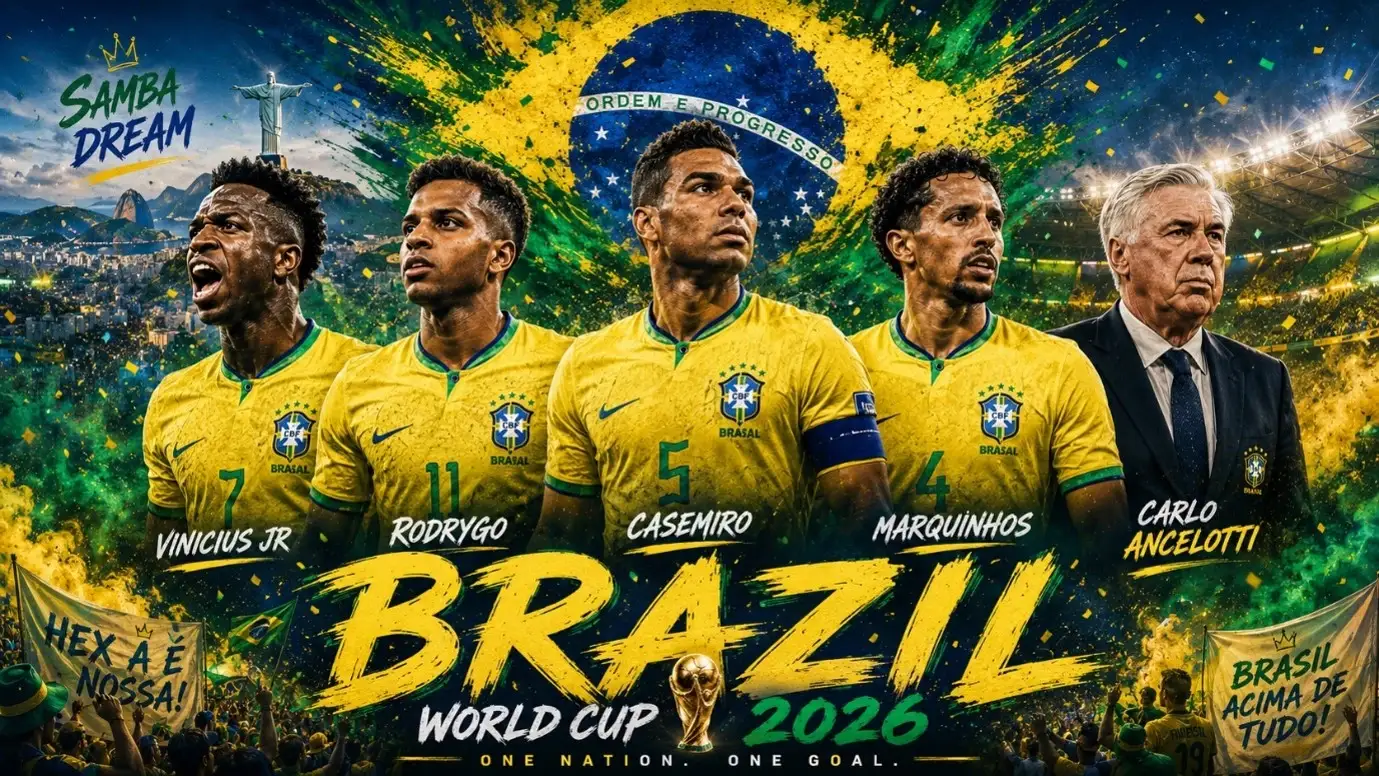
If football has a royal house, Brazil will always sit near the throne. The five-time world champions are not just another contender. They are the country of Pele, Ronaldo, Ronaldinho, Kaka, Romario, Rivaldo, Cafu, Roberto Carlos and countless others who made football feel less like a sport and more like theatre.
The Samba Boys have always carried something different. A certain rhythm. A flair. A kind of footballing arrogance that, when it works, looks untouchable. The yellow shirt still means something. It carries history, beauty, pressure and expectation all at once.
But for all their glorious history, Brazil have not lifted the World Cup since 2002. For a country that treats the tournament almost like a national inheritance, that is a long wait. This time, they arrive with Carlo Ancelotti at the helm, a manager who knows exactly how to manage stars, egos, dressing rooms and knockout chaos. If there is anyone who can make individual brilliance behave like a system, it is Ancelotti.
Brazil will most likely retain their attacking identity, but with a more controlled spine. Casemiro’s redemption season at Manchester United gives them experience and bite in midfield. After looking written off at times, he has found enough rhythm and authority to remind people why he was once the best defensive midfielder in the world. Alongside him, Brazil has enough runners, carriers and creators to tilt games in their favour.
Pros: Brazil’s greatest strength remains their attacking ceiling. Vinicius Junior is a terrifying goal-scoring threat from the left, especially when he gets isolated against full-backs. One sprint, one body feint, one opening, and the game can change. With Raphinha, Rodrygo, Matheus Cunha and other attacking pieces around him, Brazil have the kind of front line that can hurt teams even when they are not playing well.
Marquinhos also gives the team leadership and defensive pedigree. Coming into the tournament after a Champions League-winning run with PSG, his confidence will be high. As Brazil’s captain, he gives them calmness, aerial strength and big-game experience at the back. Along with Gabriel Magalhaes and others, Brazil have defenders who can compete physically and also play out from pressure.
There is also the Ancelotti factor. Brazil have often had the players, but not always the control. Ancelotti’s biggest job will be to reduce the chaos without killing the magic. If he gets that balance right, Brazil can go deep.
Cons: The warm-up defeat to Japan should not be read too deeply. Warm-up games are not tournaments. Managers experiment, players conserve energy, systems are tested and rhythm is not always the priority. But still, it showed a few holes that can be poked in this Brazil team.
Their defensive transitions can look vulnerable. When their full-backs push high and the midfield loses the second ball, Brazil can be attacked quickly through the channels. Against elite teams with pace and vertical runners, that could become a real problem.
The prediction table also reflects this. Brazil’s xG For/90 stands at 1.70, but their xG Against/90 is 1.18, giving them only a +0.52 xG differential. That is good, but not elite compared to France, Spain or Portugal. For a team ranked this high, the defensive data is not as clean as the attacking reputation.
There is also the Neymar question. Whether he starts, comes off the bench or plays a reduced role, Brazil need clarity. Sentiment cannot become strategy. The team must be built around current output, not nostalgia.
Players to Watch: Vinicius Junior, Casemiro & Marquinhos.
Win Probability: 9.3%
Brazil’s model score is carried by squad pedigree, attacking threat, individual player form and tournament history. But their xG profile, defensive exposure and pathway difficulty keep them below the top three. They have the ceiling to win the whole thing, but they also have enough structural fragility to fall earlier than expected. Ranked at #4 with a win probability of 9.3%.
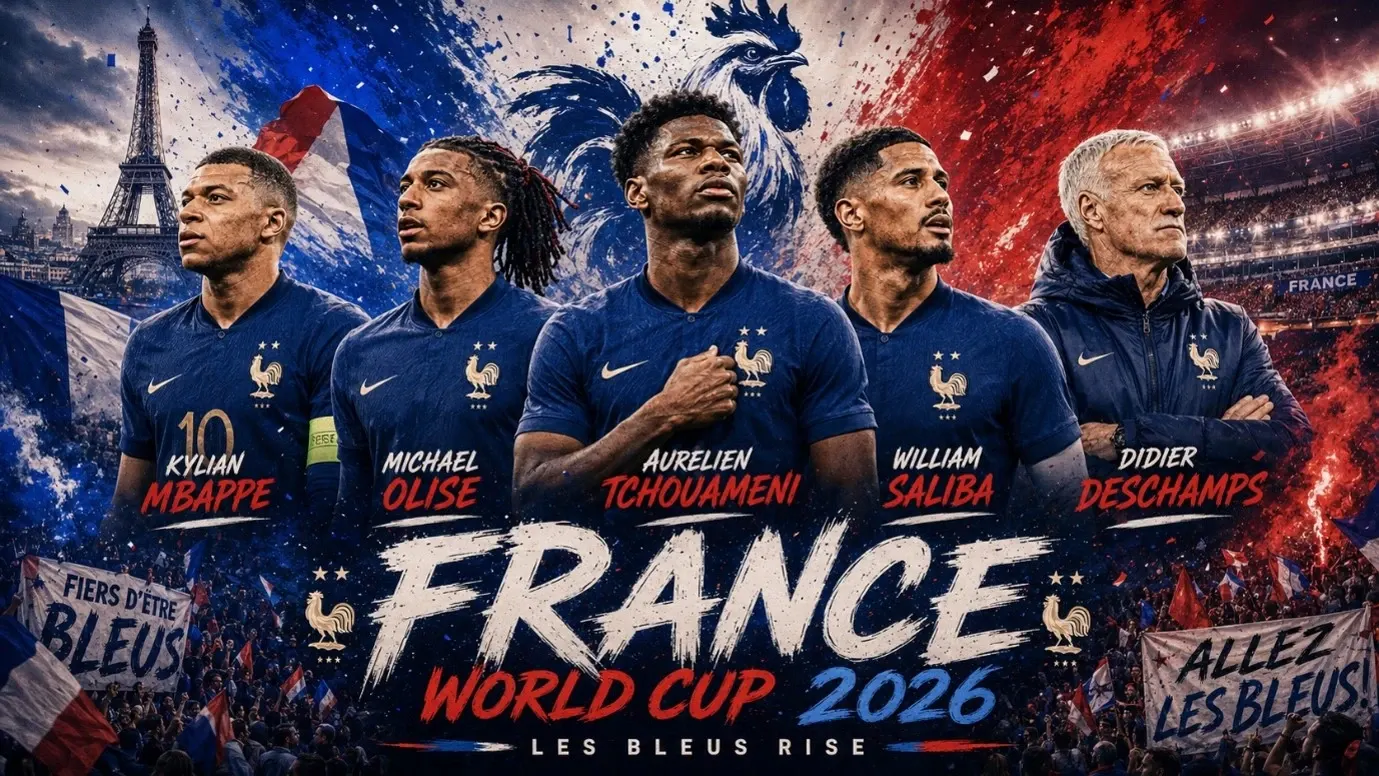
France does not come into tournaments anymore as hopefuls. They come as a machine. Winners in 2018, finalists in 2022, and still one of the deepest squads in world football, Les Bleus remain one of the most frightening teams in the tournament.
Didier Deschamps has built a side that understands tournament football better than most. France does not always need to dominate the ball. They do not always need to look beautiful. They can suffer, absorb, break, punish and kill games in moments. That is what makes them dangerous.
At the centre of it all is Kylian Mbappe. Already a World Cup winner, already a Golden Boot winner, and already one of the greatest World Cup players of his generation, he enters this tournament with history in front of him. With 12 World Cup goals already, Mbappe could easily break Miroslav Klose’s all-time record if France go deep again.
France will likely operate with their usual athletic power, direct transitions and devastating wide threat. Mbappe remains the headline act, but the beauty of this squad is that France is no longer just about one man. The supporting cast is frightening.
Pros: Mbappe is the obvious difference-maker. His pace changes the geometry of a football pitch. Teams defend deeper because of him. Full backs hesitate because of him. Centre-backs drop five yards before he even receives the ball. That alone gives France a psychological advantage.
But the player to watch closely is Michael Olise. He brings something France sometimes lack when games become narrow: pause, disguise and invention. Olise can drift between the lines, receive under pressure, open his body and find the pass that breaks a low block. With Bayern form behind him, he could become one of the breakout stars of the tournament.
France also has squad depth across almost every zone. Their athletic profile is monstrous. They can win duels, defend space, press in bursts and attack quickly. Their xG for/90 is 2.23, while their xG Against/90 is 0.75, giving them a strong +1.48 xG differential. That is elite tournament-contender territory.
Cons: The biggest question with France is not quality. It is control. At times, they can become too dependent on moments rather than sustained pressure. Against teams that can keep the ball, drag them around and force them to defend for long spells, France can look passive.
There is also the Deschamps question. His caution has worked before, but with this much attacking talent, there will always be the debate: does France maximise its firepower, or does it manage games too safely? In a one-off knockout match, that balance can decide everything.
Their group and pathway are not easy either. Senegal, Iraq and Norway give them different types of tests, especially physically and tactically. And if the knockout path opens badly, France may have to beat multiple elite teams before reaching the final.
Players to Watch: Kylian Mbappe, Michael Olise & Ousmane Dembele.
Win Probability: 13.2%
The prediction table rates France highly across team composition, individual player form, attacking threat, squad depth and defensive security. Their xG profile is strong, with a +1.48 xG differential and one of the best overall strength scores in the model. However, pathway difficulty and tactical conservatism keep them behind Spain and Portugal. France are not just contenders. They are one of the teams nobody wants to meet after the group stage. Ranked at #3 with a win probability of 13.2%.
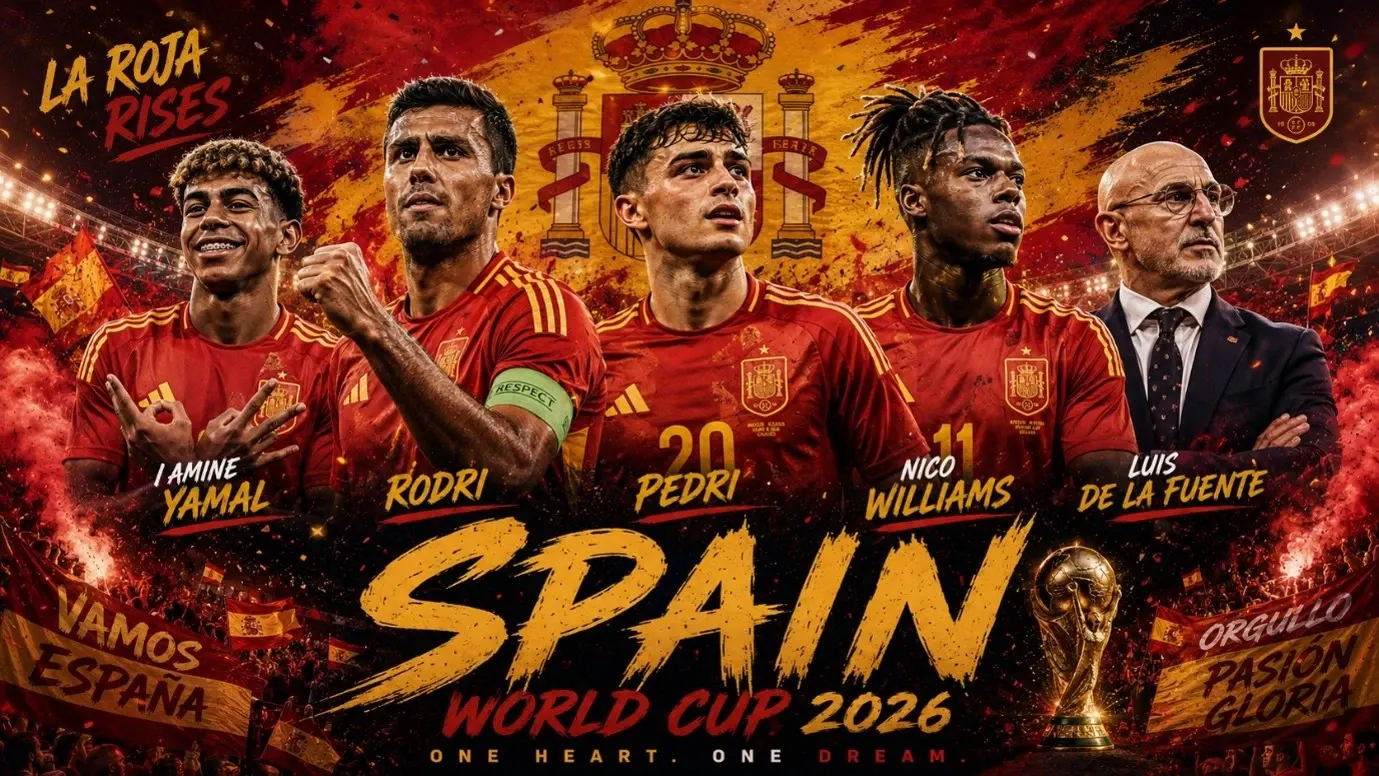
Spain arrives at the World Cup with the look of a team that has found its next great cycle. After years of searching for the right balance between control and penetration, La Roja now look dangerous again. Not just technically secure, but sharp, young, aggressive and modern.
This is not the Spain of endless passing without end product. This version has width, verticality and final-third threat. They can still dominate the ball, but they now have players who can hurt teams quickly. That makes them a very different proposition.
At the heart of it is Rodri. He gives Spain control, security and rhythm. Around him, Pedri provides imagination, Lamine Yamal brings fearlessness, Nico Williams offers direct running, and the rest of the squad gives Spain a blend of youth and tournament maturity.
Pros: Spain’s biggest strength is midfield control. Rodri, Pedri and the supporting cast can suffocate teams. They can slow games down, speed them up, pull opponents out of shape and then attack the gaps. When Spain controls the middle of the park, opponents spend more time reacting than playing.
Their wide threat is also elite. Lamine Yamal and Nico Williams give Spain something their older sides sometimes lacked: unpredictability in one-v-one situations. They can stretch the pitch, isolate defenders and create chances without needing 25 passes to get there.
The prediction table loves Spain. They have the strongest xG profile in the model, with 2.36 xG For/90, 0.64 xG Against/90 and a +1.72 xG differential. That is the best expected-stat profile among the top seven. Their possession, shot volume, midfield control and defensive security also rank extremely high.
Cons: Spain’s concern is not style. It is tournament violence. Knockout football is rarely clean. There will be games where the pitch is heavy, the referee allows contact, the opponent sits deep, and one set piece changes everything. Spain have the technical level to beat anyone, but they must prove they can win ugly when the game refuses to become a technical exhibition.
There is also the question of youth. Yamal is extraordinary, but tournaments can become mentally exhausting. The attention, the physical treatment from defenders and the expectation can build over seven games. Spain will need to manage that carefully.
Their group is also not as soft as it looks. Uruguay will test their physical and emotional control. Saudi Arabia and Cabo Verde are games they should win, but World Cups rarely reward arrogance.
Players to Watch: Rodri, Lamine Yamal & Nico Williams.
Win Probability: 16.3%
Spain’s model profile is the cleanest in the list. They lead the top seven in xG differential, expected-stat score, midfield control and overall objective strength. The only reason they sit below Portugal is the authored ranking anchor and Portugal’s broader attacking ceiling. If the model were purely statistical, Spain would be the strongest pick. Ranked at #2 with a win probability of 16.3%.
 Portugal have often been blessed with talented players, but this squad feels different. This is not a team carried only by Cristiano Ronaldo’s aura. This is a squad packed with elite players across every zone of the pitch. Attack, midfield, full-back areas, creative depth, defensive experience, Portugal have answers almost everywhere.
And yet, the story still begins with Ronaldo. Set for another World Cup, possibly his last, he remains the emotional centre of the side. The question is no longer whether Portugal have talent around him. They do. The question is whether Roberto Martinez can create the right balance between legacy and current performance.
Portugal can play through midfield, attack through wide areas, combine between the lines and overwhelm teams with depth. Bruno Fernandes gives them chance creation and final-third aggression. Bernardo Silva gives them control and pause. Vitinha gives them rhythm. Rafael Leao gives them explosiveness. Joao Felix, Goncalo Ramos, Diogo Jota and others give Martinez multiple attacking profiles.
Pros: Portugal’s greatest strength is squad completeness. They do not have to win in only one way. They can dominate possession, counterattack, press high, overload wide areas or rely on individual quality. That flexibility is rare.
Their attacking ceiling is one of the highest in the tournament. Ronaldo remains a penalty-box threat. Leao can destroy space. Bruno can produce from nothing. Bernardo can slow the game and turn it into a technical puzzle. Few teams have that many different routes to goal.
The prediction table reflects this attacking power. Portugal have 2.28 xG For/90, 1.03 xG Against/90 and a +1.25 xG differential. While Spain has the cleaner data profile, Portugal score higher in team composition, individual player form, midfield control, attacking threat and squad depth.
Cons: The concern is balance. Portugal have so many attacking options that selection itself becomes a tactical problem. Too many creators can sometimes reduce structure. Too many stars can make pressing coordination difficult. Martinez will need to decide who this team truly belongs to tactically.
There is also the Ronaldo question. His presence can lift the squad, but it can also shape the game plan. Portugal must avoid becoming predictable by forcing everything into the box too early. If they use him as a weapon rather than a gravitational obligation, they become far more dangerous.
Defensively, Portugal is strong but not flawless. Their xG Against/90 of 1.03 is higher than Spain, France and England. Against elite transition teams, that could matter. Their pathway difficulty is also high, meaning they may need to survive one or two brutal knockout games before the final.
Players to Watch: Cristiano Ronaldo, Bruno Fernandes & Rafael Leao.
Win Probability: 16.8%
Portugal sit at #1 in the authored model because of their squad ceiling, attacking options, midfield strength and overall completeness. Their xG profile is strong, though not as clean as Spain’s. The model gives them a slight edge because of depth, player quality and ranking anchor. If Martinez gets the balance right, Portugal has enough talent to win the whole thing. Ranked at #1 with a win probability of 16.8%.
*Win Probability is calculated using a weighted scoring model that factors in team composition, recent form, individual player form, manager/tactical setup, defensive security, midfield control, attacking threat, squad depth, set-piece edge, tournament pedigree, group difficulty, knockout path difficulty, fixture congestion, travel/climate fit, and key risk factors such as striker/finishing gap, injury/availability risk, creativity gap, tactical imbalance, age/transition risk, and knockout nerve risk.
The model also includes expected-performance data points such as xG For/90, xG Against/90, xG Differential/90, Non-Penalty xG/90, Big Chances/90, Shots on Target/90, Final Third/xThreat score, Pressing/High Turnover score, Set-Piece xG/90, Keeper PSxG +/−/90, goals for/against, clean-sheet rate, total shots, possession, conversion rate, and data confidence. Final probabilities are calibrated against the author’s ranking order and adjusted against a “Rest of Field” benchmark to avoid overstating the chances of the top seven teams alone.*

Log in to support this story.
New here? Create an account


Discussion · 0 Comments
No comments yet — be the first to share your thoughts.