
Let’s get one thing straight: “free” in ecommerce is like a Costco free sample. You walk in for a bite of cheese; you walk out having spent $300 on cheese and a kayak you didn’t plan for. Most platforms that advertise as free will charge you somewhere. It might be through transaction fees, listing limits, or premium “must-have” plugins you basically cannot function without. No cap, it’s a whole setup (Or a Trap).
That said, there are genuinely viable free and near-free ecommerce platforms for dropshipping in 2026. You just need to know what you’re actually signing up for. This is not another listicle that copies a marketing page and calls it research. We’re going deep on what each platform costs you in real terms, which ones actually support dropshipping workflows, and who is actually the winner for value. Since you are high on screen time anyway, grab a coffee.
First: A Quick Reality Check on Dropshipping Platforms in 2026
No major ecommerce platform ships with dropshipping built in. That would be too easy. You will always need a third-party app like DSers, Spocket, Printful, or AutoDS to connect to suppliers and automate order fulfillment. What separates the platforms is how well their ecosystems support those integrations, how much they charge you for the privilege, and how fast you can get operational without hiring a developer (a whole other bill, by the way, big yikes).
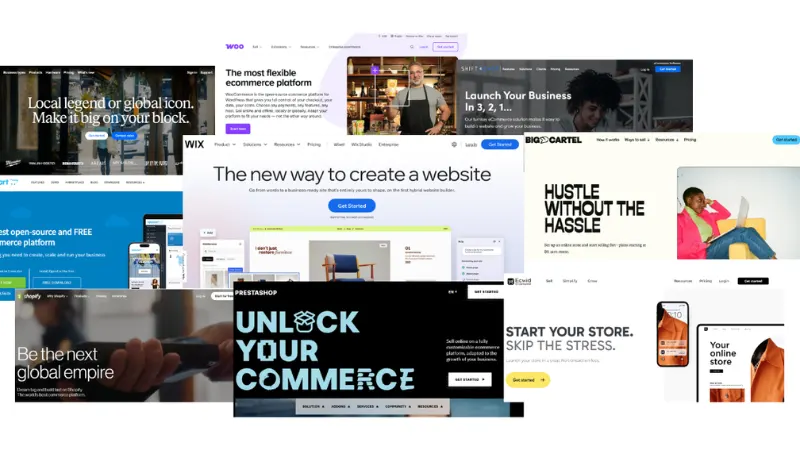
The Platforms at a Glance
| Platform | Free Plan Type | Best For | Transaction Fee | Dropshipping App Support |
| Square Online | Truly free (unlimited products) | Beginners testing the model | 2.9% + 30¢ per sale | Basic via integrations |
| WooCommerce | Free plugin (hosting costs money) | WordPress users, full control | None (self-managed) | Excellent |
| Shift4Shop | Free if you use Shift4 Payments | US sellers wanting enterprise energy | None on Shift4 | Good |
| Big Cartel | Free up to 5 products | Creators, niche sellers | None | Limited |
| Ecwid | Free widget tier (limited) | Sellers with an existing site | None from Ecwid | Moderate |
| PrestaShop | Free to download | Ambitious builders/Total control | None (self-managed) | Good via modules |
| OpenCart | Free to download | Tech-savvy, multi-store setups | None (self-managed) | Good via extensions |
| Wix | Free website, paid ecommerce | Design-first beginners | None | Moderate (Modalyst) |
| Shopify | Free trial only | Serious dropshippers ready to invest | None with Shopify Payments | Best in class |
1. Square Online: The Most Genuinely Free Option

If you want a real store with zero monthly fees and no time limit, Square Online is the most honest free option on this list. You get unlimited product listings, mobile-optimized checkout, SSL hosting, and basic inventory tools for absolutely nothing. You only pay when you make a sale. Usually, that is around 2.9% + 30 cents per transaction. It’s giving “low risk, high reward” energy.
What’s the catch? The store has Square branding unless you upgrade to a paid plan ($29/month), and the design freedom is a bit mid. For dropshipping specifically, the integrations are thin compared to WooCommerce or Shopify. You are not getting native automation out of the box, so you’ll be doing some manual workarounds or using Zapier-style bridge tools to connect to your suppliers (Elegant? No. Functional? Yes.)
Who it’s actually for: Someone who wants to validate that their product hits before investing anything. A pet accessory seller testing a niche. An Etsy seller expanding to their own storefront. If your goal is to see if a product concept makes money before you spend 500 dollars on a setup, Square Online is a smart starting point.
- The Reality: It’s great for testing, but it doesn’t play nice with the “lazy” dropshipping apps that automate everything. You’ll be doing more manual clicking.
- Best For: Proving your product isn’t a flop before spending real money.
2. WooCommerce: The Free Plugin That Isn’t Really Free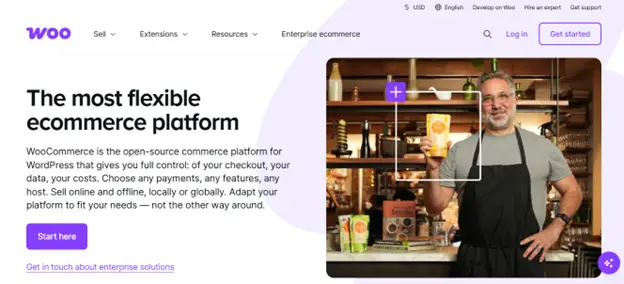
WooCommerce is the G.O.A.T. (Greatest of All Time) of ecommerce solutions. It’s a WordPress plugin, it’s open source, and the core software costs exactly $0. It also powers around 28% of all online stores globally. That’s not an accident.
Here’s the honest math, though. You need WordPress hosting ($20-50/month for something decent), a domain (~$12/year), an SSL certificate, and likely a premium theme and 2-4 paid plugins. Realistic WooCommerce costs can hit around $122/month in software subscriptions alone once you add everything needed for a production-ready store. Free, technically. Cheap, not exactly.
None of that makes WooCommerce a bad choice. It makes it a different kind of choice: one where you own the infrastructure, pay no platform percentage on your revenue, and have virtually unlimited flexibility. For dropshipping, AliDropship and WooDropship are purpose-built plugins that work seamlessly here.
Who it’s actually for: People who already have a WordPress site, people with some technical rizz, and anyone building a content-heavy brand. If you want to rank on Google for your product niche and build a long-term brand, the WooCommerce + WordPress combination slaps.
- The Reality: It’s like being gifted a puppy. The puppy is free, but the food, vet bills, and chewed-up shoes are on you. You own everything, but you also have to fix everything when it breaks.
- Best For: People who want to own their brand and hate paying a “platform tax.”
3. Shift4Shop: The Sleeper Pick for US Sellers
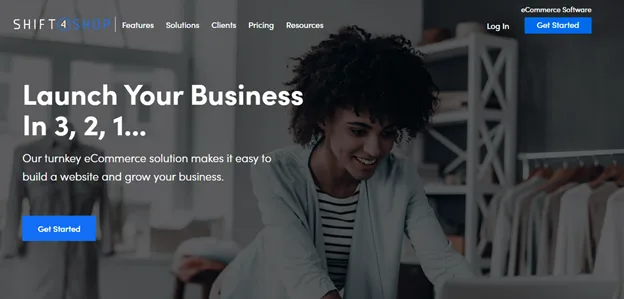
Shift4Shop has what might be the most underrated deal in ecommerce right now. They offer a fully featured store for $0/month if you use Shift4 Payments. We’re talking unlimited products, built-in CRM, abandoned cart recovery, SEO tools, and 24/7 support; features that other platforms charge $200+/month to access.
The conditions are real and worth understanding. It’s US-only, it requires Shift4 as your primary payment gateway, and you need to process at least $500/month to stay on the free tier.
If you don’t hit that $500 mark? Sus.
Then you are charged a fee (often around $29/month).
What’s the catch beyond the conditions? The interface is noticeably dated compared to Shopify or even Wix. Customer support reviews have been mixed since the 2020 acquisition. The app ecosystem is smaller; there’s nothing like Shopify’s 8,000-app marketplace here. It looks like 2014 had a baby and gave it enterprise features (which is a strange baby, but it works).
- The Reality: The backend looks like it hasn’t been updated since 2014. It’s ugly, but it’s a tank.
- Best For: US sellers who want “Enterprise” power on a $0 budget.
4. Big Cartel: The Honest Platform for Small Creators

Big Cartel is built for artists, makers, and independent creators with small, curated product lines. The free Gold plan gets you 5 product listings, basic analytics, discount codes, and shipment tracking. No platform transaction fees.
That said, you can’t use a custom domain on the free plan: your store lives at yourname.bigcartel.com, which looks about as professional as a Hotmail address in 2026 (no offense to Hotmail users, but also, some offense). Design customization is limited, and paid plans aren’t dramatically more powerful.
For dropshipping specifically, Big Cartel’s support is minimal. It’s not built for catalog management of hundreds of products or automated supplier syncing. Paid plans go up to 500 products at $29.99/month, which is fine if you’re running a tight, intentional product line.
Who it’s actually for: Print-on-demand sellers, artists selling limited-edition pieces, or creators who want a simple home for 3-5 products without the overhead of a full ecommerce setup. If you’re testing one product with Printful, Big Cartel is a clean, low-friction way to do it. It’s easy to use.
- The Reality: You can’t use a “real” website address (like yourbrand.com) for free. You’ll be stuck with yourbrand.bigcartel.com, which looks a bit like you’re selling out of a garage.
- Best For: Testing one “hero” product to see if people want it.
5. Ecwid by Lightspeed: The Add-On Champion
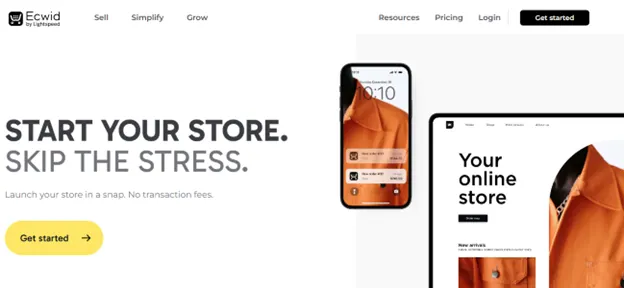
Ecwid’s core value proposition is different from every other platform on this list: it’s designed to bolt on to a website you already have. If you run a Squarespace portfolio, a WordPress blog, or a Wix landing page, Ecwid can add a functioning store to it without rebuilding anything. It’s the ecommerce equivalent of adding a drive-through window to a restaurant that’s already open.
The free tier exists but is limited: you get basic store functionality with no advanced dropshipping integrations on the free plan. For actual dropshipping workflows, you’ll want the Venture plan ($19/month), which unlocks supplier integrations and more catalog depth.
What Ecwid does well: multichannel selling is clean, the widget embeds seamlessly into existing sites, and there are no platform transaction fees on any plan. It also syncs with Facebook, Instagram, Google Shopping, and TikTok Shop natively on higher plans (don’t want to build a whole new website? Ecwid just “plugs into” your existing blog or Instagram.)
Who it’s actually for: Someone who already has an audience or a content platform and wants to add ecommerce without rebuilding their entire web presence. A YouTube creator or blogger who wants to monetize with dropshipped merchandise without migrating to Shopify.
- The Reality: The free version is just a teaser. To actually connect to suppliers and automate orders, you have to upgrade.
- Best For: People who already have a website and just want to add a “Buy” button.
6. PrestaShop: For Builders Who Want Total Ownership
PrestaShop is a free, open-source platform that powers stores in 200+ countries. The software is free to download, the code is yours, and there are no platform fees. You own the code. You own the store.
What you’re paying for instead is infrastructure: hosting, a domain, and likely several premium modules. PrestaShop modules can run anywhere from free to 999 euros each (999 euros for a plugin: bold pricing, respect, but also… why?), and building a fully operational dropshipping store typically requires 3-5 paid additions. For dropshipping specifically, suppliers like Spocket integrate with PrestaShop, and there are dedicated modules for AliExpress importing.
The platform’s analytics are strong, its SEO controls are granular, and because you own the codebase, there’s no vendor lock-in. You can hire a developer to build anything.
Who it’s actually for: Someone building a long-term brand in a specific niche, comfortable with some technical complexity, and interested in owning their platform entirely. PrestaShop is popular in Europe and works well for sellers targeting EU markets, where compliance requirements are easier to manage with a fully customizable platform.
- The Reality: It’s built for people who like to take things apart. If you don’t know your way around a computer, one wrong setting will turn your store into an expensive digital brick.
- Best For: Tech-savvy builders who want to customize every single pixel.
7. OpenCart: The Lightweight Multi-Store Option
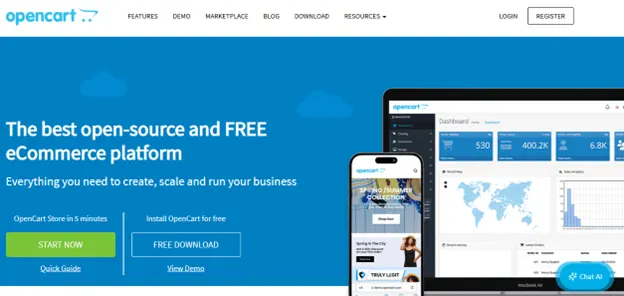
OpenCart is another open-source, free-to-download platform that runs well even on shared hosting, which keeps infrastructure costs lower than WordPress/WooCommerce typically demands. It powers over 300,000 live stores worldwide and has a marketplace of 13,000+ extensions, many of them free.
For dropshipping, OpenCart’s AliExpress Dropship Management Module handles product importing, order automation, and real-time inventory updates. It’s functional rather than elegant: the kind of tool that gets the job done and doesn’t ask to be thanked about it. NPC energy, but it works.
OpenCart’s standout feature is multi-store management from a single admin panel. If you want to run multiple niche stores all from one backend, OpenCart handles this cleanly without paying per-store fees.
Who it’s actually for: Tech-comfortable sellers running multiple store properties who want a lightweight, low-cost infrastructure. OpenCart is particularly popular in Asia-Pacific markets and works well for sellers building regional storefronts. Manage ten different niche stores from one single login.
- The Reality: It has “NPC” energy. It’s functional, but it has zero soul. It’s a tool for people who treat dropshipping like a math equation rather than a brand.
- Best For: People running a whole fleet of small, boring-but-profitable sites.
8. Wix: The Beautiful Beginner Trap (With Caveats)
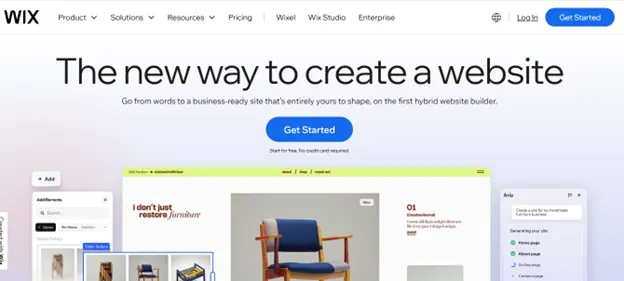
Wix is excellent at one thing: making a store look good fast. Its AI-assisted store setup, drag-and-drop editor, and 900+ templates mean you can have something visually professional live in a few hours. For dropshipping, Wix integrates natively with Modalyst directly from the ecommerce dashboard, which reduces setup friction for beginners.
“The easiest builder on this list. It looks like a professional agency designed it in about twenty minutes.”
The problems are real, though. The free Wix plan doesn’t include ecommerce features at all; you need a paid plan minimum to sell anything. Dropshipping features like multi-currency support are gated behind higher tiers. And if you want to migrate away from Wix later, it’s notably harder than switching between most other platforms. Wix doesn’t allow store exports; once you build there, you are basically stuck for life.
Over 55% of Wix users are small businesses or solo operators without a developer, which tells you exactly who the platform is designed for. That’s not a criticism: it’s a useful signal about where Wix fits.
Who it’s actually for: A beginner who wants to launch something that looks polished quickly and doesn’t anticipate scaling to thousands of SKUs. The moment you hit serious volume or want advanced automation, you’ll feel the ceiling: and it’s a lower ceiling than the pretty templates suggest.
- The Reality: Once you build on Wix, you are stuck for life. You cannot move your store to another platform later. It’s a beautiful prison with a monthly fee.
- Best For: Beginners who care about looking “premium” immediately.
9. Shopify: Not Free, But Worth Mentioning Honestly

Including Shopify on a “free” list is technically wrong. The free trial lasts 3 days (three days, truly not enough time to do anything except panic and pick a theme). After that, the Basic plan runs around $39/month.
The reason it’s here: Shopify powers over 4.4 million stores globally and has the widest dropshipping app ecosystem by a significant margin: 8,000+ total apps. Its checkout converts 15% better than industry averages, which matters when you’re paying for ads.
If you’re serious about dropshipping as a business rather than a side experiment, the math often works out in Shopify’s favor once you factor in what you’re losing on lower-converting checkouts or thinner automation on “free” platforms. It ate and left no crumbs.
The honest use case: Start free on Square Online or Wix to validate product-market fit. Graduate to Shopify when you’re doing $2,000+/month in revenue and can justify the subscription against what better automation saves you in time.
- The Reality: It will eat your profit if you aren’t selling. Don’t start here unless you have a marketing plan.
- Best For: Serious sellers ready to treat this like a 9-to-5, not a hobby.
Conclusion
In 2026, the “perfect” platform matters less than the product you’re selling. No platform will save a bad product, but a great product can sell on even the most basic “mid” website.
If you are paralyzed by choice, follow this 30-second rule:
- Testing a concept with $0? Square Online. Free, unlimited products, no time limit.
- Have WordPress experience, Want to build a long-term SEO brand? WooCommerce. Accept the real hosting cost.
- US-based, already generating some revenue, and want free power? Shift4Shop. It’s genuinely underrated.
- Small product line, creator or artist: Big Cartel. Clean, honest about its limits.
- Already have a website, want to add selling: Ecwid. It embeds cleanly.
- Technical, want full ownership, EU market: PrestaShop or OpenCart.
- Design matters most, beginner budget: Wix (with $29/month reality check).
- Ready to invest, building a serious operation: Use Shopify.
The worst move you can make is spending two weeks comparing features instead of listing a product. Pick the one that fits your current budget, most of these will let you get live in 48 hours, and let the market tell you if your idea works. You can always migrate once the money starts coming in.