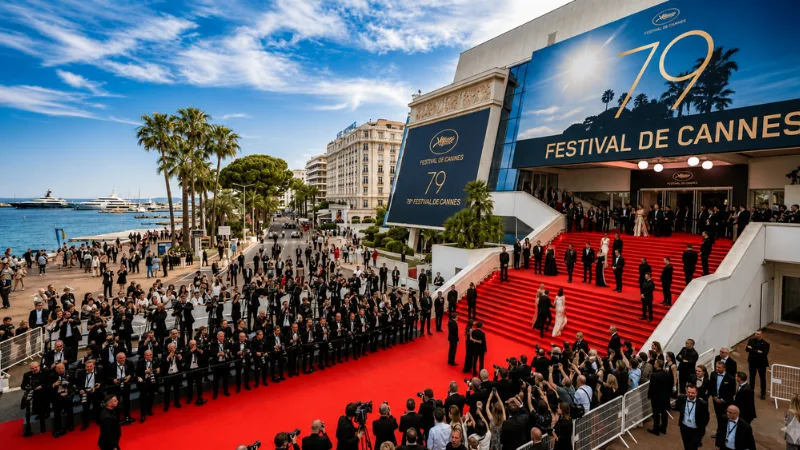
The unofficial dress code at Cannes 2026 wasn’t black tie. It was brand visibility.
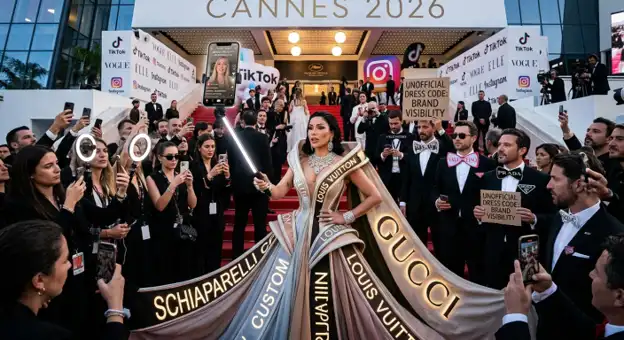
If you have spent the last two weeks doom-scrolling, you have noticed the shift. Your Instagram explore page is suddenly 70% floor-length gowns, 20% yachts that cost more than your rent, and 10% “I am just here for the art” captions written by people who haven’t watched a Hollywood blockbuster since Ratatouille.
Welcome to Cannes 2026. Or, as I like to call it, the world’s most expensive background for a sponsored TikTok transition.
The Great Vibe Shift
Let’s be real. The movies were there, sure, doing their absolute best to be high-art, serious, and cinematic. But they were constantly being elbowed out of the spotlight by ten-foot trains, architectural bodices that defied the laws of physics, and enough diamonds to light up a small solar system.
And here is the funny part: most of us could probably identify who wore Schiaparelli, Gucci, Valentino, or Louis Vuitton at Cannes faster than we could name a single Cannes Film Festival 2026 winner.
We know the gowns. The jewelry is just as recognizable. And at this point, we can even recall which celebrity had the internet collectively zooming into fabric details at 2 a.m.
But the actual award winners?
For many people, that information is currently sitting in the same mental storage folder as high school trigonometry and forgotten streaming passwords. The fashion moments became group-chat material.
The films, despite being the reason Cannes exists in the first place, often felt like the opening act for the world’s most glamorous game of “Who Are You Wearing?” In 2026, the red carpet wasn’t just part of the festival. For a huge chunk of the internet, it was the festival.
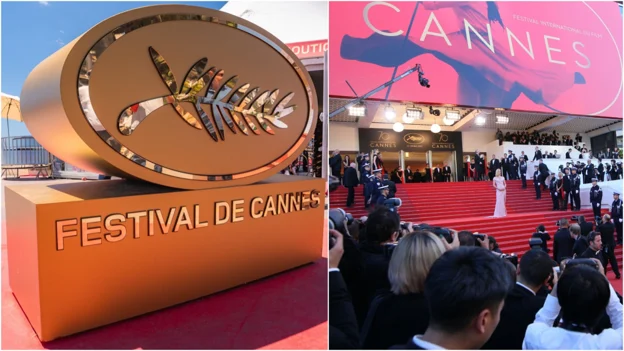
Forget the film snobs. This year, the real show was not happening in the dark, velvet-seated theaters of the Palais des Festivals. It was happening on the stairs. We hit a point where a “Who Wore What” list got way more clicks than some pretentious review about cinematic tension. It felt like every big fashion house in Paris was playing a high-stakes game of capture the flag with our collective attention spans. And honestly? They were winning.
Cannes stopped feeling like the legendary, high-brow festival we all grew up hearing about. It stopped being a place where cinema was the main event with a little sparkle on the side. Instead, it transformed into the Met Gala’s posh, European cousin. It is the one who drinks exclusively sparkling water, never raises its voice, and definitely judges your shoes the second you look away.
The Cannes Paradox: Two Parties, One Staircase
One of the most fascinating things about Cannes 2026 was that two completely different events seemed to be happening simultaneously.
Inside Cannes
Conversations centered around:
- Film premieres
- Awards contention
- Directorial achievements
- Industry deals
- Critical reception
- Standing ovations
Outside Cannes
The conversation looked very different:
- Who wore what?
- Which designer won the night?
- What look went viral?
- Which celebrity dominated social media?
- Which fashion house generated the most buzz?
Every major event now has a body double: the event itself and the internet’s version of it. And in 2026, the second version almost always wins.
The Rise of the “Custom By” Economy
“Custom by” became the unofficial heartbeat of the festival. It is more than a fashion credit; it is a flex. When a celebrity shows up in a garment made specifically for their body, something that never graced a retail rack and never will, they are not just getting dressed. They are launching a strategic marketing campaign.
Brands have realized that a movie’s theatrical run might be short, but a legendary fashion moment lives in the saved folder of a million Pinterest boards for the next decade. It is a perfect symbiotic relationship:
- The Celebrity: Gains fashion credibility and massive engagement.
- The Fashion House: Gains “Earned Media Value” that money could not buy in traditional ads.
- The Audience: Gains the drama, the memes, and the audacity of looking at people who can wear a piece of art that costs more than a house.
Don’t believe me? The 2026 festival cemented this shift for good. From Bella Hadid’s viral Schiaparelli look to Demi Moore’s sculptural custom-made gown by Demna at Gucci, the red carpet was basically our new favorite runway. Check the receipts:
- The Viral Moment: Pure, unadulterated “Custom By” energy. As the legend herself noted in The Devil Wears Prada, “A million girls would kill for that job,” but at Cannes 2026, it felt like a million creators would kill just to be the one answering that “Custom By” question for a viral video.
- Vogue’s Cannes 2026 Fashion Edit: A breakdown featuring Renate Reinsve’s daring custom Louis Vuitton cape and Cate Blanchett’s fringed Givenchy gown.
- Elle’s 2026 Lookbook: Every celebrity arrival, curated, including Chloé Zhao’s crystal-spiked Schiaparelli ensemble and Colman Domingo’s theatrical purple Valentino cape.
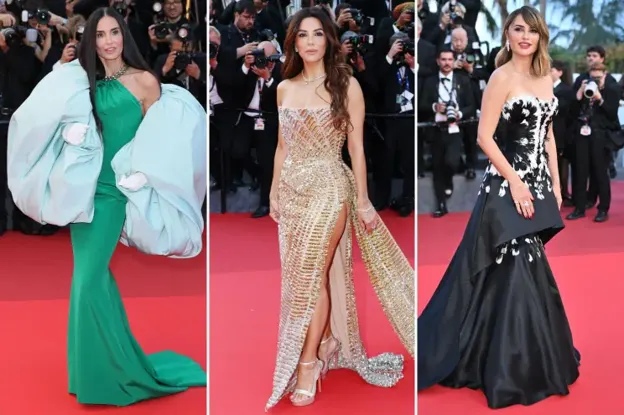
We do not view this as advertising. We view it as culture. The gown does not interrupt the show. The gown is the show.
From Actors to Everyone
The guest list also got a major glow-up. It is not just Hollywood royalty anymore. Now, you have digital creators and entrepreneurs rubbing elbows with directors who have not touched a smartphone since 2005.
It seems chaotic, but there is a method to the madness: Attention.
Luxury brands know that an influencer with ten million loyal followers can move the needle faster than a classic movie star. They know that a premiere is a moment, but a viral “#GRWM” (Get Ready With Me) video from a balcony in Cannes is a movement. In the attention economy, reach is reach.
Why We Can Not Look Away
At the end of the day, Cannes 2026 taught us that the most valuable asset is not necessarily a golden trophy. It is our time.
We love the spectacle because it is the ultimate escapism. In a world of spreadsheets, laundry, and daily errands, watching someone walk a red carpet in a dress woven from starlight is pure magic. We want the “Custom By” credits, the drama, and the audacity. It is a “main-character moment” we all share. We might be watching from our couches in our oldest sweatpants, but for those few minutes, we are all invited to the show.
The Algorithm Was the Real Winner
And maybe that’s the real Cannes algorithm no one wants to admit out loud. It is not just a film festival anymore. It is a global attention marketplace disguised as a cultural institution. Every staircase moment, every flashbulb snap, every “Custom By” tag is quietly feeding the same machine: relevance. Films compete for legacy. Fashion competes for virality. And virality is currently winning on speed, scale, and screenshotability.
What used to be a 12-day celebration of cinema now feels like a live experiment in what captures collective attention in real time. Not in theory. Not in press releases. In actual, messy, algorithm-driven practice. And honestly, it is kind of fascinating to watch unfold. A little chaotic, a little excessive, but undeniably effective.
Because whether we admit it or not, Cannes has stopped being just about who wins on stage. It has become about who wins the feed.
Cannes has not lost its way. It just grew up and realized that in 2026, the biggest red carpet in the world is not made of fabric. It is made of clicks. The movies still matter, but they have learned they have to share the room with the clothes.
So, I have to know: when you look back at Cannes 2026, will you remember the Palme d’Or winner, or are you still mentally pinning that architectural bodice to your mood board?