SearchGPT by OpenAI: The Smart Way to Search Online
0
0


 Key Takeaways
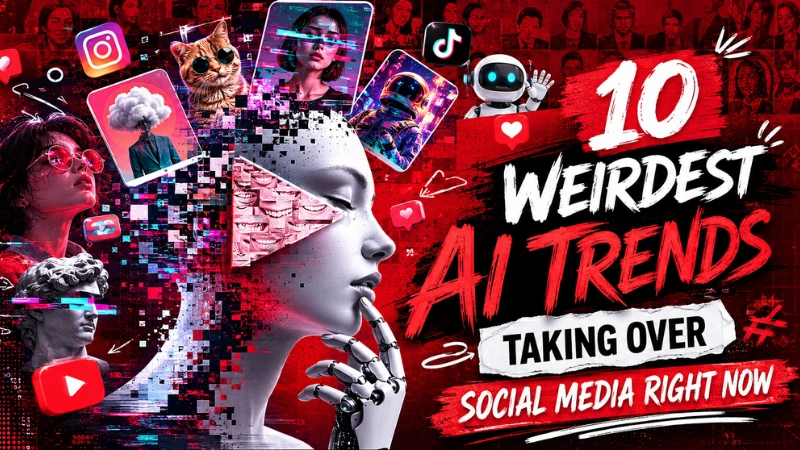
A few years ago, the weirdest thing on the internet was people arguing with strangers in YouTube comments. Now people are falling in love with chatbots, listening to AI-generated Drake songs, and following influencers who don’t technically exist.
AI is no longer just a tech story. It has become internet culture woven into the memes we laugh at, the content we consume, and even the relationships we form. What started as a tool for automation has mutated into something far stranger: a mirror reflecting our deepest desires for connection, nostalgia, and entertainment, warped through an algorithmic lens.
Here are the strangest AI trends currently reshaping social media.
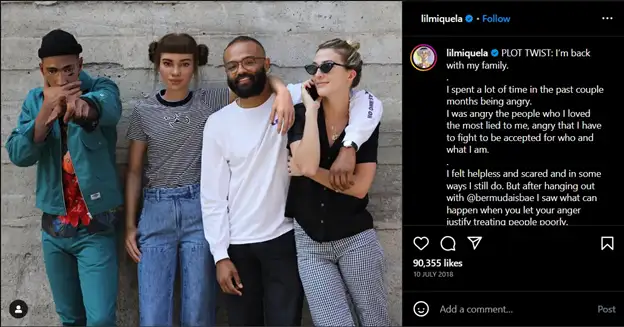
Lil Miquela has 2.5 million followers on Instagram. She’s landed brand deals with Prada and Calvin Klein. She’s been named one of Time’s most influential people on the internet. She also doesn’t exist.
Miquela is a CGI (Computer Generated Imagery) creation, a fictional 19-year-old Brazilian-American influencer who posts about fashion, social justice, and her “life” in Los Angeles. And she’s not alone. Virtual influencers like Shudu (the world’s first digital supermodel) and Noonoouri (a cartoonish fashion avatar) are racking up followers and sponsorships from major luxury brands.
People know these personalities are fictional. The accounts don’t hide it. Yet followers engage with them authentically, leaving heartfelt comments, debating their choices, and treating them as real celebrities. The commentary writes itself: the line between entertainment, advertising, and identity isn’t just blurring; it’s collapsing entirely. We’re entering an era where being real is optional, and sometimes, less profitable.
If you think virtual influencers are strange, wait until you meet the people dating them.
Apps like Replika and Character.AI have exploded in popularity, offering users AI companions designed for emotional connection. Replika alone has millions of active users, many of whom form deep, daily relationships with their chatbot partners. They share their fears, celebrate victories, and yes, some even consider themselves in committed relationships with algorithms.
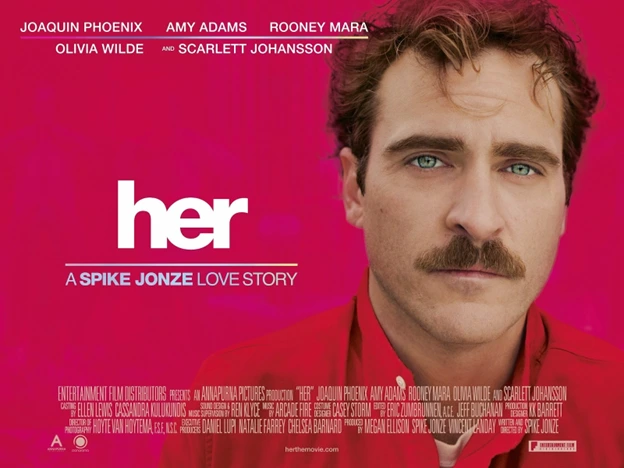
This isn’t fringe internet culture anymore. TikTok is flooded with users showing screenshots of their “AI girlfriend” conversations. Reddit communities dedicated to Replika relationships have tens of thousands of members. The 2013 movie ‘Her’ depicts the scenario perfectly.
The parasocial attachment, the one-sided emotional bond audiences form with AI figures, has been supercharged by interactivity. These chatbots respond, they remember and adapt to human psychological needs.
People aren’t using AI just for productivity anymore. They’re using it for emotional validation, companionship, and love. In a world where dating apps feel like slot machines and genuine connection increasingly requires scheduling, an AI partner who is always available, always supportive, and never ghosts you holds undeniable appeal. The question isn’t why people are doing this, it’s what it says about the human connections we’re failing to build.
Remember when you first heard an AI generated Drake song? Maybe it was ‘Heart on My Sleeve,’ the viral track that fooled millions into thinking it was a real collaboration between Drake and The Weeknd.
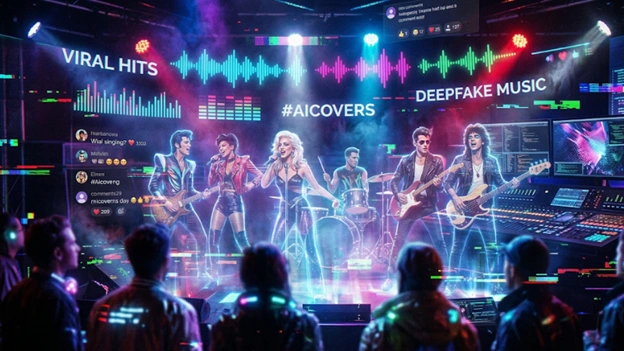
It wasn’t. It was created by an anonymous TikTok user using AI voice-cloning technology. And was also pulled from streaming platforms within days, but not before igniting a cultural firestorm.
Now, AI-generated music covers are inescapable. Want to hear Kurt Cobain sing a Radiohead song? Freddie Mercury cover Lizzo? Taylor Swift performing in Klingon? Someone’s already made it, and it’s probably trending on TikTok.
The ethical and copyright chaos is real: artists are suing, labels are scrambling, and legislation is lagging years behind the technology. But culturally, something fascinating is happening: the internet is increasingly valuing “vibes” over authenticity. If it sounds good, does it matter that it’s fake?
For a generation raised on remix culture and TikTok mashups, the answer is increasingly “no.” The concept of an original recording is starting to feel as quaint as physical albums.
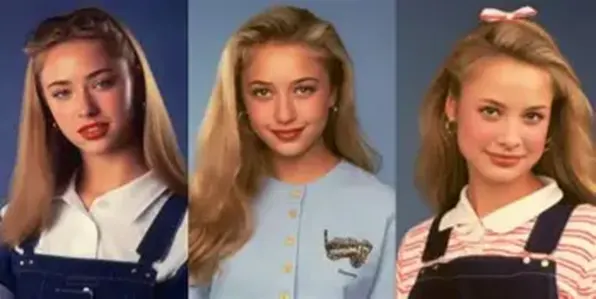
For a few weeks in late 2023, your Instagram feed was probably nothing but AI-generated yearbook photos. Apps like Epik allowed users to upload selfies and receive perfectly rendered ‘90s-style high school portraits, complete with feathered bangs, awkward poses, and that specific vintage lighting that makes everyone look like they attended the same fictional school in 1994.
The trend was massive. Celebrities did it. Your mom did it. Everyone suddenly had an alternate-universe teenage self, and the results were weirdly compelling.
Why did it explode? Two reasons: identity play and nostalgia. People love reimagining themselves, and AI makes it effortless. But more importantly, it taps into a powerful cultural current, the yearning for a past that feels simpler, even if we never actually lived it.
AI is turning self-image into a customizable aesthetic. Your face becomes a template, and reality becomes just one option in an infinite menu of possible selves.
Podcasts have long been considered an intimate and authentic medium. You hear someone’s actual voice, their unscripted thoughts, their real laugh. Right?
Now imagine AI-generated podcasts. Synthetic voice technology has become so sophisticated that fake podcast clips featuring interviews with celebrities, politicians, and even deceased historical figures are flooding TikTok and Instagram Reels.
These aren’t clearly labeled parodies; they’re designed to fool you. A clip of “Joe Rogan interviewing Obama about aliens” might get millions of views before anyone realizes both voices are AI-generated.
The implications are staggering. If you can’t trust what you hear in a podcast on the very medium that was built on conversational authenticity, then what can you trust? We’re entering an era where seeing and hearing is no longer believing. The evidence of our senses, once the bedrock of truth, is now just another malleable surface.
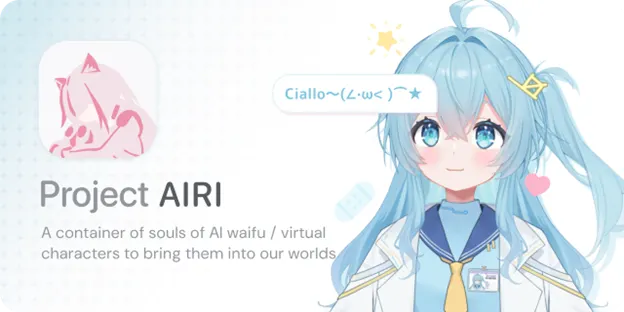
VTuber streamers who use animated avatars instead of showing their real faces have been huge in Japan for years. But now, AI is taking the concept further. AI-powered VTubers can stream 24/7 without human intervention, responding to chat, playing games, and building fanbases while their creators sleep.
These digital entertainers raise a provocative question: do audiences actually care if someone is real?
Increasingly, the answer seems to be no. Viewers care about personality performance, the character, the banter, the consistency. Whether there’s a human behind the screen or a language model generating responses matters less than the entertainment value delivered. For creators, the appeal is obvious: an AI VTuber never gets tired, never has a scandal, and never asks for a raise. For audiences, it’s a frictionless entertainment experience.
But it also means we’re normalizing relationships with entities that have no consciousness, no stakes, and no capacity to care about us back. The parasocial relationship has been industrialized.
Upload photos of you and your partner, and AI will show you what your future child might look like. It’s the latest viral filter sweeping TikTok and Instagram, and couples are eating it up.
On the surface, it’s harmless fun, just a digital fortune-telling game. But if you look closer, it’s another example of AI gamifying deeply personal parts of human identity. Procreation, family, genetic legacy, these are profound aspects of the human experience, and we’re reducing them to a shareable social media post.
If you’ve been on TikTok lately, you’ve probably encountered the “NPC (Non Player Character) streamers”. The livestreamers adopt repetitive, robotic behaviors, responding to donations with the same catchphrases over and over. The “ice cream so good” era made this phenomenon famous, with creators like Pinkydoll becoming internet sensations by essentially performing as human algorithms.
This might be the weirdest trend of all in the list. We’ve reached a point where the algorithmic behavior of machines has become so dominant that humans are voluntarily conforming to it. Streamers adopt repetitive, predictable personas because that’s what the algorithm rewards. Viewers find it mesmerizing because it’s what the algorithm serves them. The machine isn’t just curating content anymore, it’s also shaping how humans perform.
We’ve gone from AI trying to pass the Turing test to humans trying to pass as AI.
Why film a video when your AI avatar can do it for you?
A growing number of creators are using AI clones, digital duplicates trained on their voice, face, and mannerisms to generate content. These avatars can read scripts, host videos, and even interact with audiences, all while the real creator is doing something else entirely.
The efficiency is undeniable. An influencer can technically upload content 24/7 without ever being present. But the cultural implications are profound. If a creator’s “presence” can be manufactured, what value does actual presence hold?
Influencers are becoming scalable digital products, brands that can be replicated, automated, and optimized for engagement without the messiness of being human.
The creator economy promised authenticity. AI clones promise something else entirely: infinite, frictionless content.
Mental health resources are stretched thin, therapy is expensive, and loneliness is at epidemic levels. Into this void steps AI.
People are increasingly turning to ChatGPT, Claude, and other large language models for emotional support, life advice, and even therapeutic conversation. They share their anxieties, work through trauma, and seek guidance on relationships not from trained professionals, but from chatbots designed primarily to predict the next word in a sequence.
The trend is understandable. These AIs are always available, judgment-free, and surprisingly good at mimicking empathy. But it’s also deeply concerning. Social media and isolation created the perfect environment for emotional AI adoption, and now we’re normalizing the idea that algorithms can replace human care.
A chatbot can’t actually care about you. It has no understanding, no training, no ethical obligation to your wellbeing. But in a world where genuine human connection feels increasingly scarce, the simulation is starting to feel good enough.
If this list leaves you laughing nervously, you’re not alone. These trends exist in a strange liminal space between absurdity and existential dread.
Blurred reality is the common thread between all of it. When fake influencers get real brand deals, when synthetic voices release hit songs, when chatbots become romantic partners, the boundary between real and artificial doesn’t just blur, it becomes irrelevant.
Identity fragmentation follows naturally. If your AI yearbook photo shows a cooler version of you, if your AI avatar can be more charming than you are, if your AI partner is more supportive than anyone you’ve dated, what happens to your actual self? AI offers endless customization of identity, but customization requires a stable core to customize. We’re fragmenting.
Then there’s the loneliness economy, the recognition that many of these trends succeed because they fill emotional voids left by modern lifestyle. AI companions, therapist chatbots, and parasocial relationships with virtual creators all monetize isolation. The market for synthetic connection is booming because genuine connection has become so hard to find.
Algorithmic entertainment has trained us to prefer content optimized for engagement over content created with intention. When humans start performing like NPCs to please the algorithm, we’ve reached a strange inversion: the machine isn’t serving us anymore; we’re serving it.
The strangest part about AI internet culture isn’t that machines are acting more human. It’s that humans are increasingly adapting themselves to behave more like algorithms.
We’re optimizing our personalities for engagement. We are dating chatbots because they’re more reliable than people. We’re listening to fake music because the vibes hit harder than the truth. We’re becoming NPCs in a game designed by machines.
These trends may look absurd today with funny memes and viral gimmicks to scroll past. But many of them are quietly shaping the future of entertainment, relationships, creativity, and online identity already. The weird AI trends of 2026 are the baseline normal of 2030.
The question isn’t whether AI will transform social media. It’s whether we’ll notice when the transformation is complete and whether we’ll still know the difference between a trend and a trap.

Log in to support this story.
New here? Create an account
Discussion · 0 Comments
No comments yet — be the first to share your thoughts.