What’s the Best Sport for All-Age Fitness?
0
0


All Things Marketing FT. FIFA
FIFA World Cup 2026 is starting to look very different from the World Cups we grew up watching.
Of course, football is still the main product. That will never change. But around football, FIFA is building something much bigger.
This World Cup is being marketed like a global entertainment festival with a creator economy event, a premium ticketing product, a gaming launchpad, a sponsorship machine, and honestly, sometimes even a tech experiment.
Some of it is smart. Some of it is bold.
And some of it is just plain weird.
That is what makes World Cup 2026 such an interesting sports marketing case study. FIFA is not only trying to sell matches. It is trying to own the entire fan experience before, during, and after the 90 minutes.
Let’s look at the weirdest marketing moves FIFA has made for World Cup 2026, and what they actually tell us about the future of sports marketing.
Before we get into the weird stuff, we need to understand one thing. This World Cup 2026 is not a normal World Cup. The tournament returns to North America for the first time since 1994, after a 32-year gap, marking a major moment for football in the region.
It is the first World Cup with 48 teams. It is being hosted across the United States, Canada, and Mexico. It has more matches, more cities, more sponsors, more digital content, and more commercial opportunities than any previous edition.
That alone changes the marketing game.
But the bigger shift is this: FIFA is treating the World Cup less like a football tournament and more like a global sports-entertainment platform.
That means FIFA is thinking beyond stadiums and TV rights.
It is thinking about:
In simple words, FIFA wants the World Cup to live everywhere. Not just in the stadium. But inside your phone and even your shopping behavior.
That is where things start getting interesting.
And weird. So Let’s dive in,
Let’s start with the most obvious one. FIFA is giving the 2026 World Cup final a proper halftime show.
That may be normal for the Super Bowl, but in football.
Football has always had a different rhythm. The halftime break is usually for team talks, quick analysis, a bathroom break, maybe a snack, and then back to the match. It is not usually treated as a full entertainment event.
But FIFA is changing that.
The 2026 final at MetLife Stadium is set to include the first-ever World Cup final halftime show in collaboration with Global Citizen.
From a marketing point of view, it makes sense. A halftime show gives FIFA:
But from a football point of view, it feels strange.
World Cup finals are already emotional enough. You do not need to add a pop concert to make them important.
That is why this move has divided people.
Some fans see it as modern and exciting. Others see it as the “Americanization” of football.
And honestly, both sides have a point.
From FIFA’s perspective, this is not just about music. It is about turning the final into a full cultural event.
But the risk is clear. If the entertainment starts to feel bigger than the football, traditional fans will push back.
Another unusual talking point around the tournament is the use of mandatory hydration breaks.
FIFA President Gianni Infantino has defended the breaks as a sporting and player-welfare decision, not a commercial one. Reuters reported that the breaks are being used in the 22nd and 67th minutes of matches to help players manage high temperatures in North America.
On paper, that makes sense.
The tournament is being played across large parts of North America, where heat can be a real issue. Player safety matters, and hydration breaks can help protect performance and health.
But the marketing debate comes from how these breaks look to fans.
Football is known for its continuous rhythm. It does not usually stop in the way American football, basketball, or cricket does. So when fixed breaks appear during matches, some people naturally read them as broadcast-friendly pauses.
That is why the reaction has been mixed. Supporters see the breaks as necessary for player welfare. Critics argue they interrupt the flow of football and make the match feel more segmented.
From a sports marketing angle, this is a good example of how one decision can carry two meanings at the same time.
FIFA has very strict brand protection rules around its tournaments.
FIFA’s own brand protection page explains that protecting intellectual property and stopping ambush marketing are central to protecting its commercial programme. This becomes especially interesting in the United States, where stadium naming rights are a major part of sports culture.
Many American stadiums are known by corporate names. But during FIFA events, venues are often referred to by neutral tournament names rather than sponsor-linked names. That creates a strange effect: stadiums with strong local identities suddenly appear under generic names.
From FIFA’s side, this is logical. It protects official sponsors and prevents non-sponsor brands from getting free global exposure.
From a fan side, it can feel odd. Fans know these venues by their real names. Local teams know them by their real names. Cities know them by their real names. But during the World Cup, FIFA’s sponsor rules take priority.
This is where the marketing tension appears.
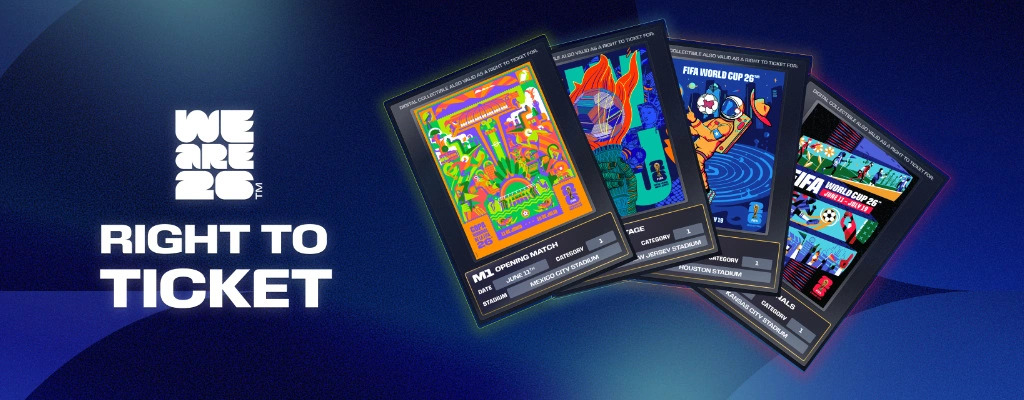
FIFA Collect is one of the clearest signs that FIFA is experimenting with digital products around the World Cup.
The most important part is the Right-to-Ticket collectible. FIFA Collect explains that a Right-to-Ticket collectible gives the holder the right to claim an official FIFA World Cup 2026 ticket for a specific match and category. FIFA Collect also says these Right-to-Ticket collectibles are tradable on the FIFA Collect Marketplace with a 15% resale fee. (FIFA Collect)
That is not a normal ticket-buying experience.
Instead of simply buying a ticket, fans may interact with a digital asset that sits between collectible culture, ticket access, marketplace trading, and fan engagement.
From FIFA’s perspective, this creates more than one opportunity. It creates a new digital product, a new engagement path, more marketplace activity, and a different way to package scarcity.
From a fan perspective, it can feel complicated.
Many fans just want to buy a ticket and go to a match. They may not want to understand collectible mechanics, resale fees and other hassles. That is why this move is both smart and risky.
One of FIFA’s smartest moves is bringing major digital platforms deeper into the World Cup ecosystem.
FIFA officially announced YouTube as a Preferred Platform for FIFA World Cup 2026. The agreement allows media partners to publish extended highlights, behind-the-scenes footage, Shorts, and video-on-demand content. FIFA also said media partners would have the option to stream the first 10 minutes of every match on YouTube, along with selected full matches on their channels.
This is a major change in how the World Cup is distributed removing the traditional streaming.
Older fans may still think of the World Cup as a TV-first event. Younger fans often experience football through clips, highlights, reactions, creator breakdowns, tactical threads, and behind-the-scenes content.
That is why creator access is becoming part of the strategy. FIFA’s YouTube announcement specifically mentions a global cohort of YouTube creators who will get access to tell stories, create tactical breakdowns, and share behind-the-scenes perspectives.
TikTok has also been reported as a preferred platform for World Cup video content, with coverage focused on clips, creator content, and younger audience engagement.
This is not FIFA becoming loose with rights. FIFA is still protecting its intellectual property. But it is becoming more practical. It understands that if the World Cup does not live inside social feeds, it loses cultural momentum with younger audiences.
Football sponsorship used to feel more predictable.
Sportswear, drinks, cars, airlines, banks, and technology brands were the obvious categories. But World Cup 2026 shows that the category mix is getting wider.
Vogue Business reported that, for the first time in World Cup history, the tournament has official skincare and haircare sponsors through Paula’s Choice and Clear Men. The report also noted that other beauty and grooming brands are using footballers, ambassadors, social content, and limited-edition products to connect with fans.
This is a big cultural shift. Football is no longer only a matchday product. It is a lifestyle product. For FIFA, this is valuable because it opens more commercial categories.
For brands, it is valuable because the World Cup delivers massive reach across age groups, cultures, and regions.
The risk is authenticity. Fans can tell when a brand is genuinely connected to football culture and when it is simply trying to attach itself to the hype.
FIFA is also linking the tournament with social-impact messaging.
The FIFA Global Citizen Education Fund is one example. FIFA said the fund aims to raise USD 100 million and support access to quality education and football development for children. FIFA also said it would donate USD 1 per ticket sold from the FIFA Club World Cup 2025 and do the same for the FIFA World Cup 2026.
This gives the World Cup a purpose-led layer. This is very common in modern mega-event marketing.
Big events do not want to look purely commercial. They want to show cultural and social value too.
It gives brands a more meaningful reason to be part of the event. Instead of only saying, “We paid for visibility,” they can say, “We are part of a global movement.”
But there is a fine line.
If the cause feels genuine, it strengthens the event.
If it feels like a layer of purpose added on top of aggressive commercialization, fans may see it as reputation management.
That is the challenge for FIFA.
When ticket prices are high, sponsor control is strict, and commercial packaging is everywhere, purpose-led messaging has to feel real.
So the idea is strong, but execution matters.
The weirdest move is not just the halftime show or FIFA Collect.
The weirdest move is FIFA trying to control every commercial surface while the modern internet keeps creating new meanings around that control.
FIFA can control official branding. It can control clean zones. It can control sponsor categories. It can control how its IP is used.
But it cannot fully control how fans, creators, media outlets, and brands react online.
That is the big lesson.
Modern sports marketing is no longer just about what happens inside the stadium. It is also about what happens around the stadium, on social media, in apps, in games, in resale markets, and in fan conversations.
World Cup 2026 is showing that clearly.
There are strong lessons here for brands, agencies, creators, and marketers.
First, attention is no longer in one place. FIFA is building for TV, stadiums, creators, apps, games, and social platforms at the same time.
Second, scarcity works, but only up to a point. Premium pricing and limited access can drive revenue, but they can also create backlash.
Third, sponsor protection matters, but over-control can become part of the story.
Fourth, entertainment can expand the audience. But it should not make the core product feel secondary.
Fifth, creators are now part of sports distribution. They are not just reacting to the event after it happens. They are becoming part of how people experience the event in real time.
And finally, fans still need to feel respected. That is the big one.
Football is emotional. It is not just inventory, content, data, or sponsorship exposure. It belongs to people.
FIFA World Cup 2026 may become one of the most important sports marketing case studies of the decade.
Not just because it is bigger, but because it is different.
This World Cup is showing what happens when football meets American sports entertainment, creator culture, premium ticketing, digital collectibles, lifestyle sponsorships, and strict brand control.
Some of FIFA’s moves are clever.
Some are controversial.
Some are genuinely unusual.
But together, they show where global sports marketing is heading.
The World Cup is no longer only about what happens on the pitch. It is about the entire ecosystem around the pitch.
Why is FIFA World Cup 2026 marketing so different?
Because FIFA is building the tournament across more layers than before: streaming, short-form content, creators, ticketing, hospitality, digital collectibles, gaming, entertainment, sponsor categories, and fan data.
Is the World Cup final really getting a halftime show?
Yes. FIFA has confirmed that Global Citizen will put on the first-ever World Cup final halftime show at the 2026 final.
Is FIFA using dynamic ticket pricing?
Yes, dynamic pricing has been used and that it became an internal and public controversy. FIFA has also confirmed official ticket phases, hospitality packages, and an official resale platform.
Is FIFA Collect linked to actual World Cup tickets?
Yes. FIFA Collect’s Right-to-Ticket page says a Right-to-Ticket collectible gives the holder the right to claim an official FIFA World Cup 2026 ticket for a specific match and category.
Why are beauty and grooming brands entering World Cup marketing?
Because football now reaches lifestyle, fashion, wellness, grooming, Gen Z, and social-media audiences. Reports say that Paula’s Choice and Clear Men became official skincare and haircare sponsors for the tournament.

Log in to support this story.
New here? Create an account

Discussion · 0 Comments
No comments yet — be the first to share your thoughts.