
AI, Artemis, and the Next Chapter of Human Space Exploration
0
0


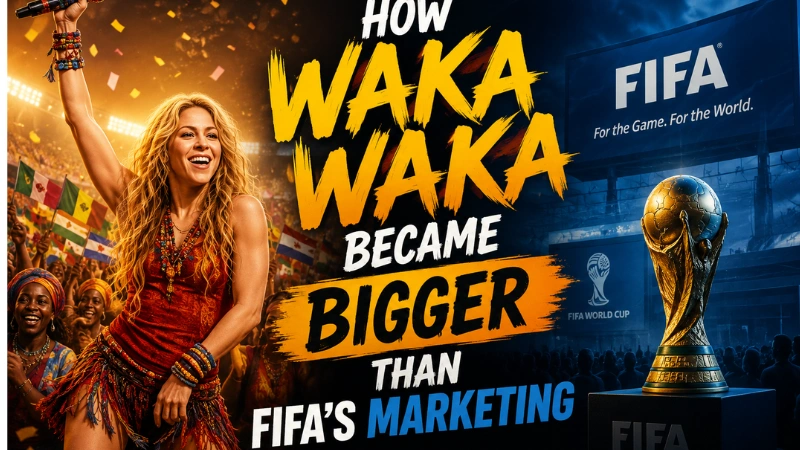
Some World Cup songs become popular for a few weeks, then the tournament ends, the trophy is lifted, the sponsors move on, and the song slowly disappears from public memory.
Waka Waka (This Time for Africa) did not disappear.
Shakira’s 2010 World Cup song became something much bigger than a normal tournament anthem. It became the sound people connect with South Africa 2010. Even people who do not remember every match still remember the feeling of that World Cup when the song starts playing.
That is what makes Waka Waka special. It was not just a song made for a football event. It became a memory machine.
People remember Spain winning the trophy. They remember Andrés Iniesta’s goal in the final. They remember the vuvuzelas, Paul the Octopus, Ghana’s painful exit, and the bright colors of the South African stadiums. But somewhere behind all those memories, Waka Waka is playing like background music in the brain.
That is unusual for a marketing song. Most official songs feel like they were made in a meeting room. Waka Waka felt like it had lived many lives before FIFA touched it.
The most interesting thing about Waka Waka is that its famous chant did not begin with Shakira.
The chant comes from Zangalewa, a 1986 song by the Cameroonian group Golden Sounds. This detail changes the whole story. Waka Waka was not created from nothing in a studio. It was built on an older African song that already had its own history, rhythm, humor, and cultural meaning.
A deeper breakdown by Afropop Worldwide explains why Zangalewa is not just a random old song. It had military roots, comic energy, and a strong Cameroonian identity. It sounded like a march, a joke, and a dance track at the same time.
Golden Sounds were not just a regular pop group. The group had links to Cameroon’s military world, and Zangalewa carried the feeling of a chant that had already moved through public life before it became part of a global hit.
That is why the chant works so well. You do not need to understand every word to feel it. It has the kind of rhythm that makes people join in before they even know what they are singing.
This is one reason Waka Waka felt old and new at the same time. Shakira gave it a global pop shape, but the heart of the song came from a chant that had already traveled across places and generations.
By the time FIFA used it for the 2010 World Cup, the chant already had cultural weight. FIFA gave it a huge stage, but the song’s power came from a much deeper place.
There was also a real debate when Waka Waka was chosen.
The 2010 World Cup was the first men’s FIFA World Cup held in Africa. Because of that, many people felt the official song should have been led by an African artist. When FIFA chose Shakira, a Colombian superstar, some fans and critics were not happy.
Their question was fair. If the World Cup was finally coming to Africa, why was the main voice not African?
This is where Freshlyground became important.
Freshlyground is a South African band, and their role gave the song a local connection. Their sound brought warmth, guitar, rhythm, and a strong South African flavor. They helped the song feel less like a foreign pop star singing about Africa and more like a collaboration with African musicians inside it.
The controversy is part of the reason the song is still interesting. A PBS NewsHour piece from 2010 covered the criticism around the song and the debate over African representation. That debate did not make the song weaker. It made the story around the song more complex.
Waka Waka is joyful, but it also opens a bigger question about global pop. Who gets to represent a culture? Who gets the credit when older sounds become new hits? What happens when a local song becomes part of a worldwide brand?
Those questions make the song more than just catchy. They make it a case study.
Most World Cup songs try very hard to sound important. They use big words about unity, dreams, glory, and destiny. The problem is that many of them end up sounding like a sponsor speech with drums behind it.
Waka Waka was different because it did not feel heavy. It felt alive.
The chorus was simple. The rhythm was easy to follow. The dance was easy to copy. The song had movement built into it. You could play it in a stadium, at school, in a car, at a party, or over a football highlights video, and it would still work.
That is the real test of a football song. People do not listen to football songs the way they listen to sad album tracks in headphones. Football songs are shouted, danced to, replayed, remixed, and half-sung by people who may not know all the words.
Waka Waka understood that better than almost every other official anthem.
It had a chant instead of only a chorus. That matters because chants belong to crowds. A normal chorus can make people sing along, but a chant makes people feel like they are part of something bigger.
That is perfect for football, because football is already built around crowds, noise, rhythm, and shared emotion.
The song did not only survive in memory. It also survived in numbers.
According to Guinness World Records, Waka Waka became the most streamed FIFA World Cup song on Spotify. That matters because streaming numbers show that the song did not only belong to 2010. People kept returning to it years later.
Its official video also became one of the most watched music videos connected to football culture. That is not normal for a tournament song. Most event songs peak during the event and then become old content. Waka Waka kept finding new audiences.
Some of those listeners were children in 2010 who later returned to it as nostalgia. Some were younger fans who discovered it through football edits, school performances, TikTok clips, YouTube playlists, and old World Cup compilations.
That is how a song becomes bigger than its release date.
The song also arrived at the right time on the internet.
In 2010, YouTube was already powerful, but culture had not become as divided as it feels now. A song could still become global in a very shared way. People from different countries could watch the same video, hear the same chorus, and connect it to the same tournament.
Today, music spreads through smaller feeds and personal algorithms. A song can be huge, but people may still experience it in separate bubbles.
Waka Waka felt like everyone heard it together.
That helped the song become part of the World Cup’s public memory. It was played on television, in schools, in malls, at football events, and in endless online videos. It became more than a hit. It became a sound attached to a specific summer, a specific tournament, and a specific kind of football nostalgia.
The song became a shortcut to remembering South Africa 2010.
The music video also helped the song last.
The official video has Shakira dancing, Freshlyground performing, children smiling, flags waving, and clips from older World Cup moments. It feels bright, busy, and emotional. It also has a strong football scrapbook feeling.
When people watch it now, they are not only watching a music video. They are watching a time capsule of football before social media became as sharp and divided as it is today.
The video reminds people of an era when Lionel Messi and Cristiano Ronaldo were still building their World Cup stories. It reminds people of a tournament that felt colorful, loud, and different from anything before it.
A logo can get old quickly. A slogan can sound forgotten after a month. A sponsor campaign can vanish completely.
A song can survive because it carries feeling.
That is what happened with Waka Waka. It carried the feeling better than the official branding did.
Another reason the 2010 World Cup feels so musical is that Waka Waka was not alone.
K’naan’s Wavin’ Flag was everywhere too. It was connected to Coca-Cola’s World Cup campaign and became one of the biggest unofficial anthems of that tournament cycle. Coca-Cola even called the Celebration Mix a global campaign anthem in its own 2010 press release.
Many fans still think of Wavin’ Flag as a World Cup song, even though it was not the main official FIFA song in the same way Waka Waka was.
That is important because fans do not care about marketing categories. They remember what they heard during the tournament.
Wavin’ Flag had a different kind of power. It sounded emotional, hopeful, and almost like a street parade. Waka Waka had more movement, more dance, and a sharper stadium feel.
Together, both songs made South Africa 2010 feel bigger than a normal tournament. They gave the World Cup a soundtrack that people still argue about years later.
Some fans choose Wavin’ Flag. Some fans choose Waka Waka. The fact that people still debate it shows how strong that era was.
Shakira’s connection with the World Cup did not start and end in 2010.
She performed Hips Don’t Lie, Bamboo version around the 2006 World Cup era. Then came Waka Waka in 2010, which became the biggest song linked to her football legacy. In 2014, she returned with La La La, Brazil 2014, another World Cup connected track with Carlinhos Brown.
In 2026, she came back again with Burna Boy for Dai Dai, which Reuters reported as the official song for the 2026 World Cup in a May 2026 report.
That kind of run is unusual.
Most World Cup artists appear once and move on. Shakira became different because she fits the tournament’s global image. She brings Latin pop, dance, stadium energy, and a sense of celebration that feels easy for many countries to understand.
She is also very good at making music physical. Some singers give you a chorus. Shakira gives you movement. That is one of the reasons her World Cup songs work so well.
Football is already physical. It is running, jumping, shouting, hugging, crying, and dancing in public. A World Cup song needs to live in that same world.
Waka Waka did exactly that.
Here is the main reason Waka Waka still matters.
FIFA made the song for one tournament, but fans turned it into a ritual.
Every four years, World Cup nostalgia comes back. People watch old goals. They post old clips. They argue about the best tournament. They remember players, kits, stadiums, songs, and moments from when they were younger.
When that happens, Waka Waka comes back too.
That is why the song feels almost like a holiday classic. It does not need to be played every day to stay powerful. It just needs the World Cup mood to return, and suddenly the song makes sense again.
This is where culture beats marketing.
Marketing can buy attention. It can buy a launch, a video, a celebrity, and a giant stage. But it cannot force people to care ten years later.
Culture is different. Culture is what people keep using after the campaign is over.
Waka Waka became culture.
The funny thing is that Waka Waka became the ultimate World Cup song because it was never only FIFA’s song.
It came from Cameroon through Zangalewa. It came from South Africa through Freshlyground. It came from Colombia through Shakira. It came from YouTube, school dances, fan edits, football montages, and millions of people replaying the same feeling again and again.
FIFA gave the song an official stamp. The public gave it a second life.
That is the lesson every brand wants but cannot easily create. You can pay for visibility, but you cannot pay for nostalgia in advance. People have to choose it later.
Waka Waka lasted because it had more than one life inside it. It was a chant, a pop song, a dance track, a football anthem, a memory trigger, and a global singalong all at once.
Most World Cup songs try to define a tournament.
Waka Waka did something better. It became the way people remember one.

Log in to support this story.
New here? Create an account

Discussion · 0 Comments
No comments yet — be the first to share your thoughts.