
Can a Common Allergy Spray Be the Next COVID Shield?
28
0


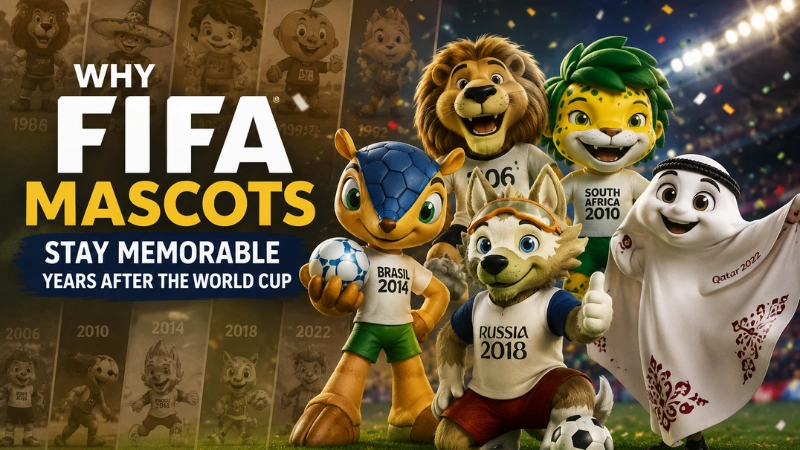
Think back to the first FIFA World Cup you truly remember.
Maybe it was waking up in the middle of the night because your favorite team was playing. Maybe it was arguing with friends over who would win, collecting player stickers, or trying to recreate that one unforgettable goal in your living room.
Every World Cup had something new to discover, a new official ball, a new tournament song, fresh jerseys, and an opening ceremony that made the event feel bigger than life.
And somewhere in the middle of all that excitement was a new face waiting to welcome the world.
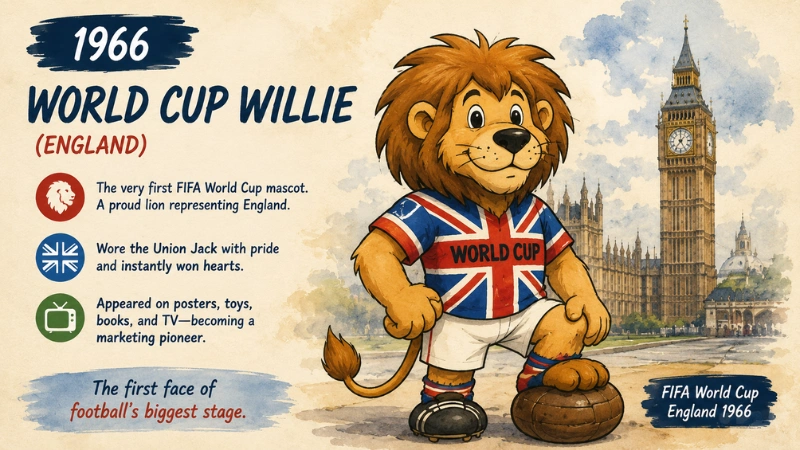
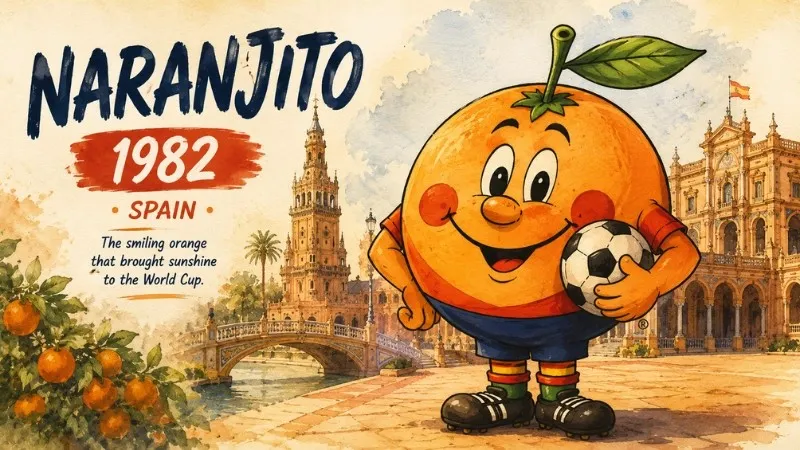
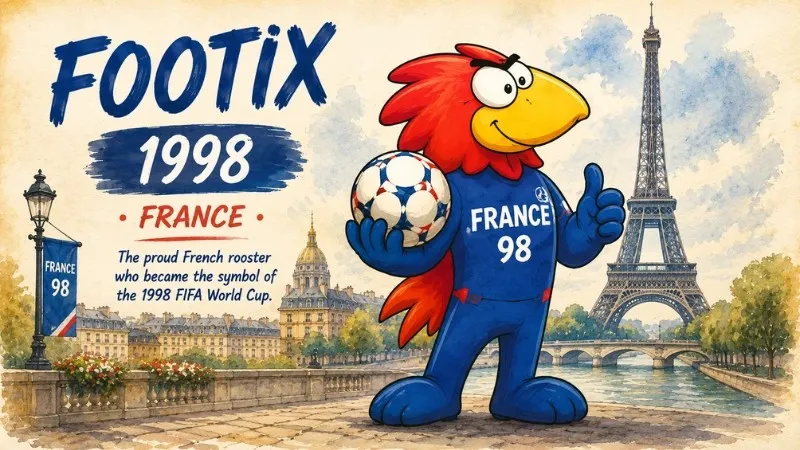
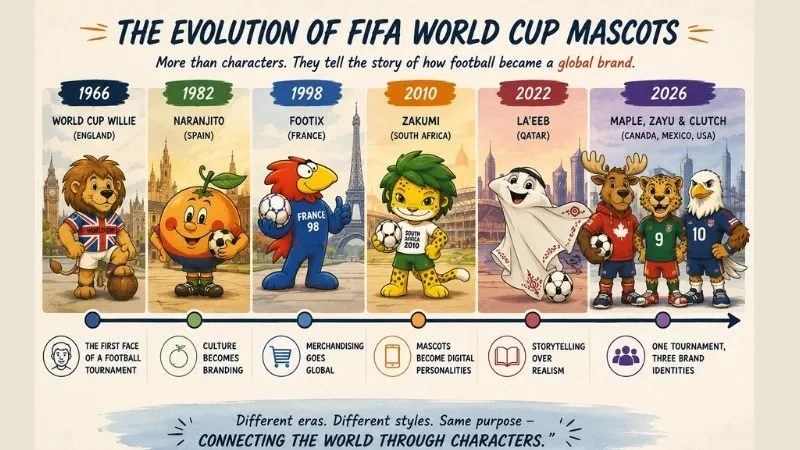
For some, it was World Cup Willie, the cheerful lion who introduced the idea of a World Cup mascot back in 1966. Others grew up with Naranjito, the smiling orange from Spain, or Footix, the confident French rooster.
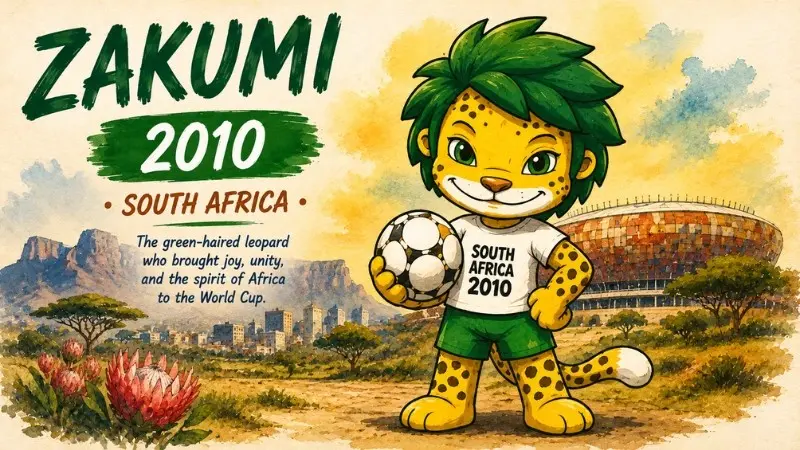
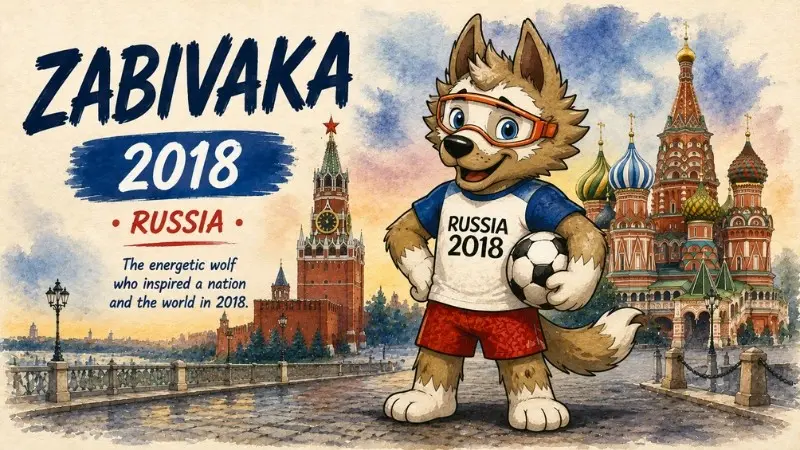
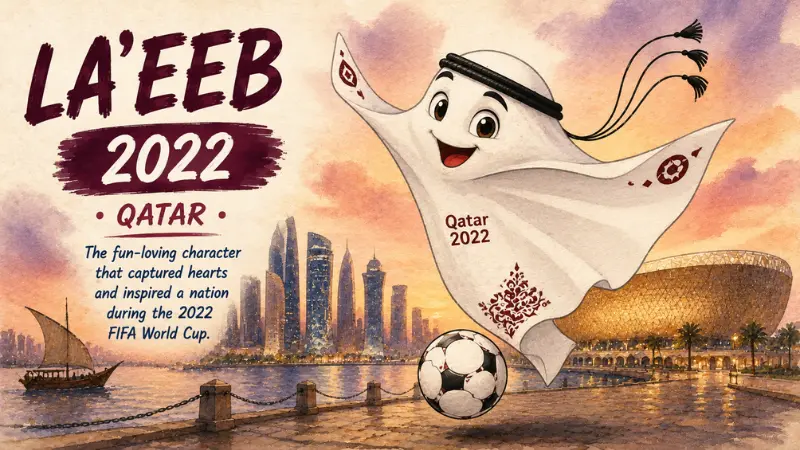
More recent fans probably remember Zakumi, the green-haired leopard from South Africa, Zabivaka, the wolf in sports goggles from Russia, or La’eeb, the floating figure that sparked endless conversations during the Qatar World Cup.
What’s fascinating is that these characters were never the stars of the tournament. They didn’t score goals, lift trophies, or deliver iconic moments on the pitch. Yet many of us can still picture them years, even decades later.
That made me wonder: why?
If I asked you to remember the official slogan from the first World Cup you watched, there’s a good chance you’d struggle. The same goes for the tournament logo. But the mascot? Somehow that memory feels much easier to retrieve.
That isn’t a coincidence.
Our brains are naturally better at remembering characters than symbols. At first glance, mascots seem like they’re made for children. They’re playful, colorful, and designed to make people smile. They wave to fans before the tournament kick-off, appear on merchandise, and often become the face of fan festivals.
But that’s only part of the story.
Behind every FIFA mascot is a carefully planned branding strategy. These characters help sell merchandise, create emotional connections, give sponsors a recognizable face, and represent the culture of the host nation in a way that a logo never could. Some even outlive the tournaments they were created for.
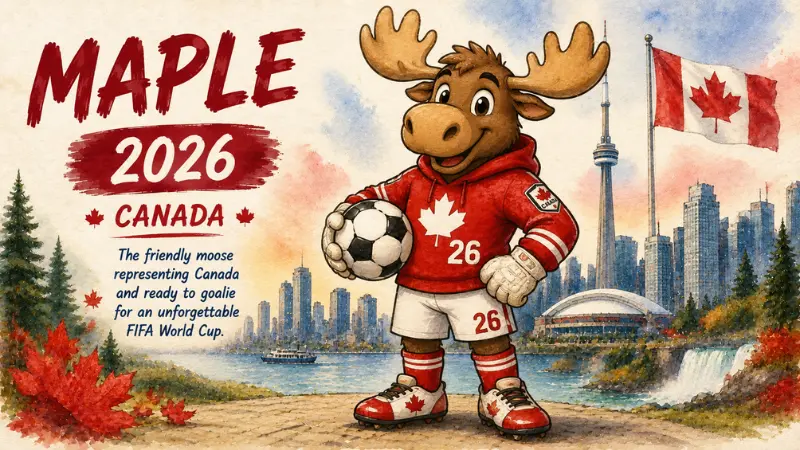
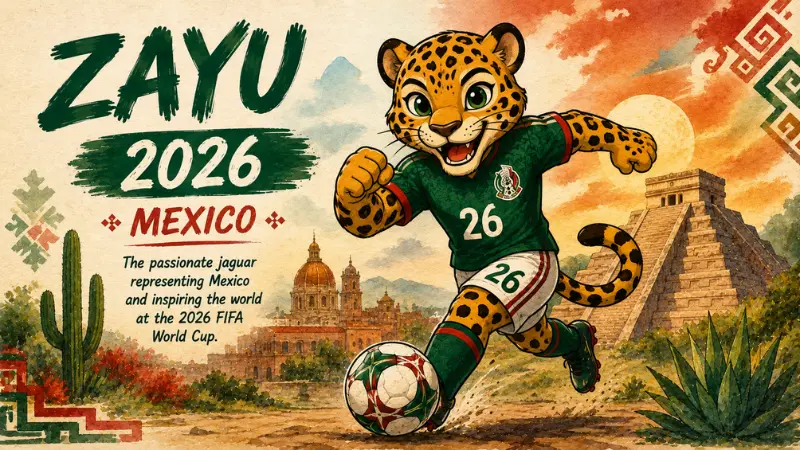
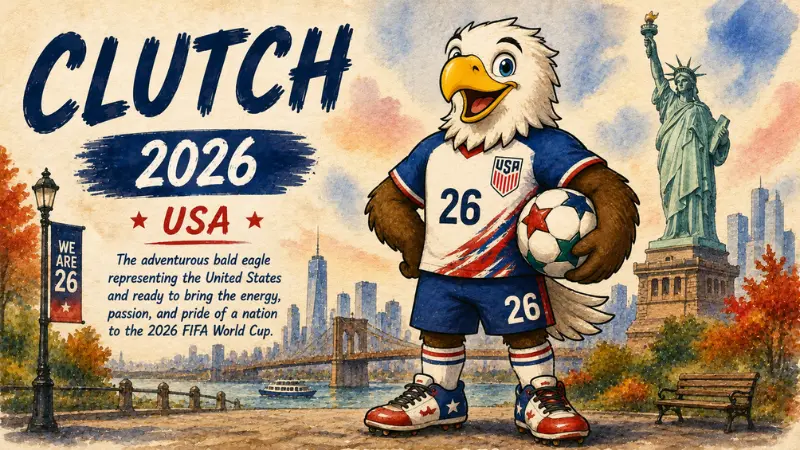
The 2026 FIFA World Cup is perhaps the clearest example yet. Instead of introducing one mascot, FIFA introduced three, first Maple, a moose representing Canada, second Zayu, a jaguar for Mexico, and Clutch, a bald eagle for the United States. On the surface, it seems like a natural choice for a tournament hosted by three countries.
The more I looked into it, the more intentional it felt.
Were FIFA mascots always meant to be fun characters for children, or have they quietly become one of the most effective marketing tools in sports?
To answer that, we need to go back long before football stadiums were packed with fans and long before mascots became collectible plush toys.
We need to go back to where the idea of mascots began.
Marketing has always been about making brands memorable. One way is to create a distinctive logo. Another is to tell great stories. Mascots sit at the intersection of both. They’re visual enough to be instantly recognizable and human enough to create an emotional connection.
Researchers call this anthropomorphism that is our tendency to give human qualities to non-human things. It’s why we name our cars, talk to our pets, or feel bad when a robot in a movie gets hurt. Once something has a face and a personality, we stop treating it like an object and start relating to it like a character.
Imagine explaining a football tournament to a seven-year-old.
You could show them a tournament logo and explain what it represents.
Or you could introduce them to a friendly lion who loves football and is excited to welcome the world.
Which one do you think they’ll remember next week?
The answer seems obvious, but it’s based on decades of psychology research rather than guesswork. Children, in particular, form emotional connections with fictional characters surprisingly quickly. Psychologists describe these one-sided emotional bonds as parasocial relationships. They’re the same reason children become attached to cartoon characters, superheroes, or animated movie characters they’ve never actually met.
It’s easy to assume that mascots have always been part of sports.
They haven’t.
In fact, for much of sporting history, the game itself was considered enough. Fans came to watch athletes, cheer for their teams, and celebrate victories. There wasn’t much thought given to creating a character that represented the event.
That started to change in the 1960s.
Television was bringing sports into living rooms across the world. Major tournaments were no longer local events, they were becoming global spectacles. Organizers suddenly had a new challenge.
How do you make a tournament memorable after the final whistle?
One of the earliest and most influential examples came in 1966, when England hosted the FIFA World Cup. Instead of relying only on traditional symbols, the organizers introduced World Cup Willie, a smiling lion wearing a Union Jack jersey.
World Cup Willie wasn’t just there to entertain crowds. He appeared on souvenirs, posters, children’s books, television broadcasts, and promotional material. For perhaps the first time, a football tournament had a friendly face that fans of all ages could connect with.
And once FIFA was successful with the experiment, others quickly followed. The Olympics expanded their use of mascots, professional leagues invested more heavily in characters, and teams around the world began introducing mascots that danced in stadiums, interacted with fans, and eventually became celebrities in their own right.
Today, it’s difficult to imagine a major sporting event without one.
The Olympic Games have memorable mascots. NBA and MLB teams have iconic characters roaming the sidelines. Even cricket leagues and Formula 1 races have experimented with mascots to engage younger audiences and create more family-friendly experiences.
The role of these characters has evolved too.
In the early days, mascots were mostly there to create excitement around the event. Then came merchandise. Soon they appeared in television commercials, sponsor campaigns, school outreach programs, video games, social media posts, and fan festivals.
Without making a lot of noise, they became intellectual property.
Over the decades, every World Cup mascot became a snapshot of its time. Some reflected national pride. Others celebrated local culture. A few experimented with technology, sustainability, or digital storytelling.
Together they tell the story of how football learned to market itself.
According to the FIFA World Cup, Willie became one of the earliest sports mascots to be widely used for merchandising and promotions, proving that a tournament could build an emotional identity alongside its sporting one.
As the World Cup evolved, so did its mascots. Naranjito celebrated Spain’s identity with a smiling orange, Ciao embraced Italy’s modern design aesthetic, and Footix marked the shift toward globally marketable characters. Later mascots like Zakumi, Zabivaka, and La’eeb reflected their host nations while embracing digital storytelling, fan engagement, and social media.
When seen individually, they’re memorable characters. Seen together, they reveal how FIFA’s marketing strategy evolved.
Over the decades, mascots transformed from national symbols into global brand ambassadors. By the 2020s, they weren’t just promoting tournaments, they were valuable intellectual property, driving merchandise, sponsorships, and fan engagement across multiple platforms.
That’s why FIFA’s decision to introduce three mascots for the 2026 World Cup feels less like a creative choice and more like the next step in a strategy nearly 60 years in the making.
When FIFA unveiled the mascots for the 2026 World Cup, the reaction was predictable.
“Three host countries, three mascots. Makes sense.”
At first, I thought the same.
Canada got Maple, a moose.
Mexico got Zayu, a jaguar.
The United States got Clutch, a bald eagle. It seemed like a simple way to give each host nation its own representative.
But the more I looked at them, the more deliberate the strategy felt.
FIFA could have designed one mascot that blended elements of all three countries. Instead, it created three distinct characters, each with its own personality, backstory, and even a football position. Maple guards the goal, Zayu leads the attack, and Clutch controls the midfield.
That isn’t just a creative choice, it’s storytelling.
Football positions naturally carry personalities. Goalkeepers represent reliability, strikers confidence, and midfielders leadership. FIFA borrowed those traits from the game itself, making each mascot instantly relatable without saying much at all.
What I found even more interesting was the relationship between the mascots. They’re not presented as competitors but as teammates, one protects, one creates, and one finishes. It’s a subtle reflection of the tournament itself, where three nations are working together to host football’s biggest event.
Rather than telling us “Three countries, one tournament,” FIFA shows it. Stories almost always travel further than slogans.
Of course, not everyone loved the idea. Some fans questioned whether three mascots might dilute the tournament’s identity, while others wondered if any of them would become as iconic as World Cup Willie or Zakumi.
That’s the test, time will tell!
Looking back at nearly 60 years of FIFA mascots, one thing becomes clear. The smartest marketing rarely feels like marketing.
Every four years, FIFA introduces a new character who appears everywhere from television broadcasts and merchandise to fan festivals and social media. Millions of children meet that mascot before they know every player in the tournament.
That’s a remarkable branding opportunity.
Unlike advertising campaigns that last a season, mascots are designed to become part of people’s memories. A child who met Zakumi in 2010 is an adult today, and someone who owned Footix merchandise in 1998 may now be sharing the World Cup with their own children.
Campaigns have deadlines. Characters don’t.
That’s why brands like Mickey Mouse, the Michelin Man, and Duolingo’s owl have remained relevant for decades. They give people something to connect with beyond products and logos. FIFA understood this long before brand personalities became a marketing buzzword.
The biggest lesson isn’t that every brand needs a mascot.
Most don’t.
A law firm doesn’t need a dancing eagle, and a cybersecurity company probably doesn’t need a cartoon firewall.
What every brand does need is a personality.
Ask yourself: if your logo disappeared tomorrow, what would people remember about your brand? Would they describe it like a person, or would they struggle to describe it at all?
That’s the question FIFA has been answering since 1966.
So create something people can connect with.
Give it a story.
Let it grow with your audience.
Because trophies gather dust, campaigns fade, and logos evolve.
The characters we grow up with tend to stay with us.

Log in to support this story.
New here? Create an account


Discussion · 0 Comments
No comments yet — be the first to share your thoughts.