
How To Choose The Most Suitable Digital Marketing Agency For Your Business
0
0


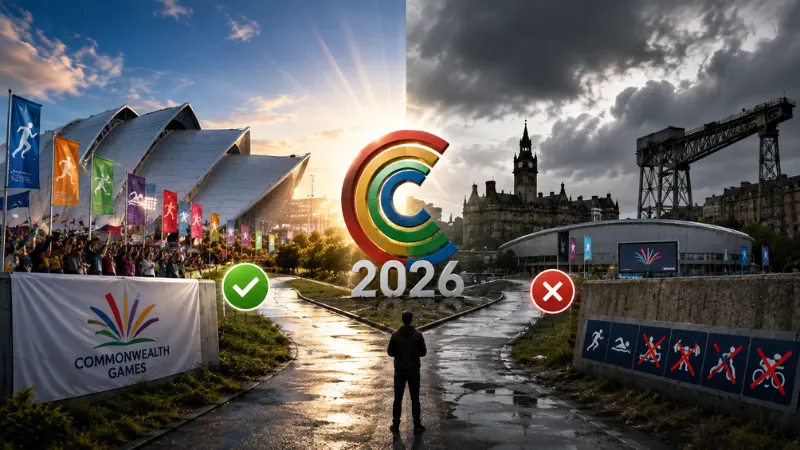
The Commonwealth Games arrived in Glasgow with an unusual challenge.
The city was not trying to deliver the biggest edition in the event’s history. It was trying to prove that the Games still had a future.
After Victoria withdrew as the original host, the 2026 edition faced the real possibility of cancellation. Glasgow stepped in with a radically smaller plan: ten sports, existing venues, approximately 3,000 athletes and a budget far below recent editions.
The Games have now finished, and the early numbers look encouraging. Glasgow welcomed 434,000 ticketed spectators, delivered the event in around 18 months and kept projected private expenditure to £162.6 million. Organisers also reported more than 630,000 engagements across competition venues, live sites and festival activities.
But delivering the Games was only the first test.
The more difficult question is whether Glasgow created a sustainable future for the Commonwealth Games—or simply produced a cheaper, smaller event that will struggle to remain globally relevant.
Glasgow 2026 proved that the Commonwealth Games can be staged more quickly and at a much lower cost. However, it did not fully settle questions about missing sports, broadcast reach, star participation and the event’s long-term importance.
| Measurement | Glasgow 2026 |
|---|---|
| Sports | 10 |
| Para sports integrated into the programme | 6 |
| Medal events | 215 |
| Participating nations and territories | 74 |
| Athletes | Approximately 3,000 |
| Ticketed spectators | 434,000 |
| Total reported engagement | More than 630,000 |
| Volunteers | More than 4,000 |
| Projected privately funded spend | £162.6 million |
| Delivery period | Around 18 months |
The official figures suggest that Glasgow successfully delivered a functioning international multi-sport event under difficult circumstances. They do not, by themselves, prove that every aspect of the model can or should be repeated.
The Games were originally awarded to Victoria, Australia.
Victoria planned a regional event spread across several locations. However, the state withdrew in 2023 after concerns about rising costs and the complexity of the proposed model.
That decision left the Commonwealth Games without a host and created a wider crisis for an event that had already struggled to attract cities willing to take on the financial risk.
Glasgow was in a better position than most potential replacements. It had hosted the Games in 2014 and already possessed many of the necessary venues, transport connections and organisational relationships.
Even so, it had only a fraction of the usual preparation period.
Rather than attempting to reproduce Birmingham 2022 or Glasgow 2014, the city designed an event around what it already had. The result was a compact Games held across an eight-mile footprint using existing sports venues and hotel accommodation instead of a traditional newly built athletes’ village.
That distinction matters.
Glasgow did not prove that any city can stage the Games for £162.6 million. It showed what can be achieved by a city with existing facilities, previous hosting experience and an emergency funding structure.
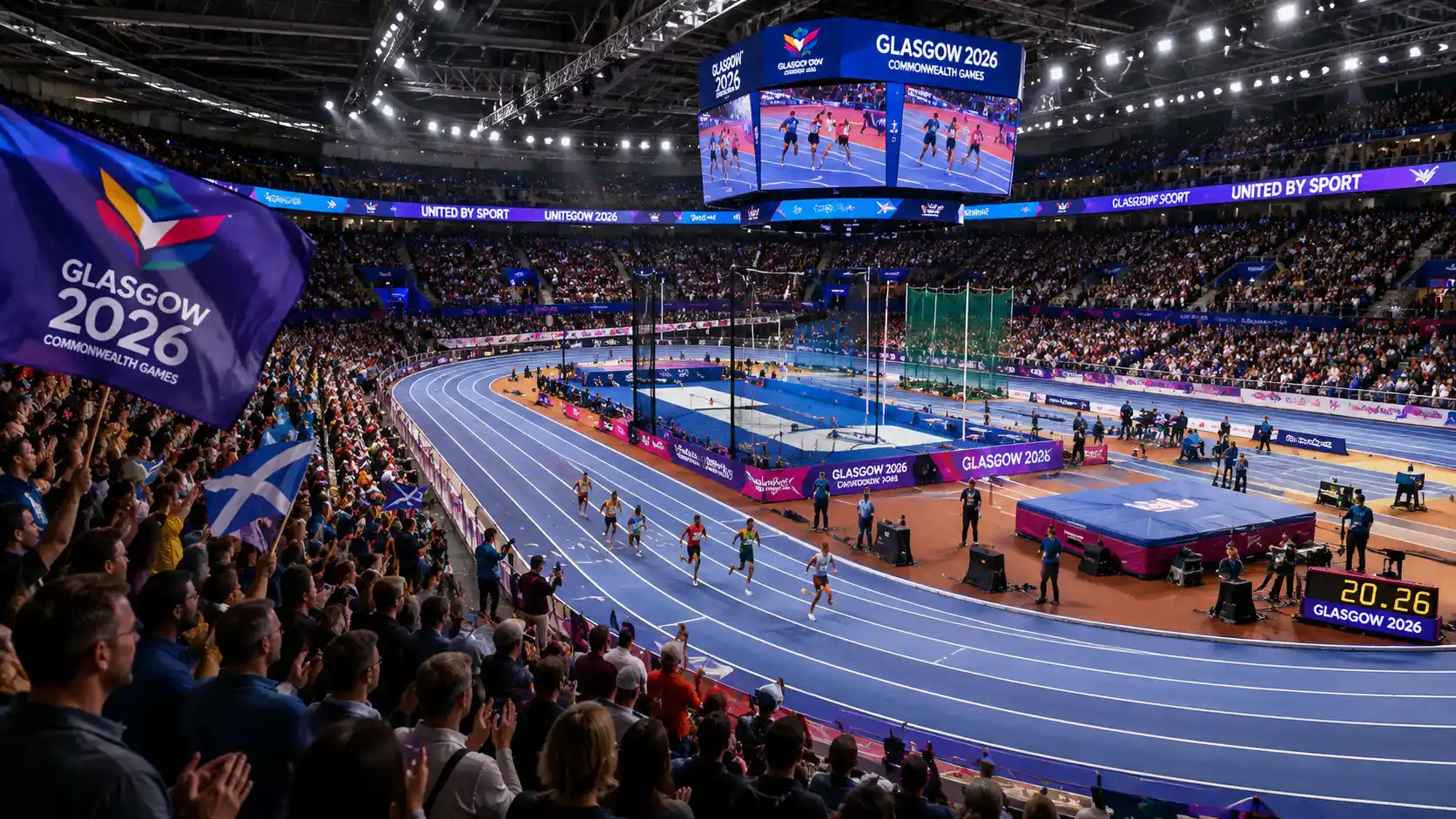
The greatest achievement of Glasgow 2026 was not a medal or record. It was cost control.
The projected privately funded spend is £162.6 million. Glasgow Life compares that with approximately £543 million for Glasgow 2014 and £680 million for Birmingham 2022.
| Commonwealth Games | Reported expenditure |
|---|---|
| Glasgow 2014 | Approximately £543 million |
| Birmingham 2022 | Approximately £680 million |
| Glasgow 2026 | Projected £162.6 million |
These figures should be compared carefully. Different editions may categorise security, infrastructure, public services and other costs differently.
Even with that limitation, the difference is substantial.
Glasgow reduced expenditure through several major decisions.
The Games used established facilities such as Scotstoun Stadium, Tollcross International Swimming Centre, the Glasgow International Arena, the Sir Chris Hoy Velodrome and the Scottish Event Campus.
The city spent £4.7 million on venue upgrades, including improvements at Scotstoun and Tollcross, rather than building a collection of new stadiums.
This reduced construction risk, planning delays and the possibility of expensive venues becoming underused after the event.
Birmingham 2022 staged a much larger programme. Glasgow selected only ten sports, reducing the number of athletes, officials, venues, training facilities and competition sessions required.
The decision made the Games cheaper, but it also led to the absence of cricket, hockey, badminton, wrestling, table tennis and squash.
That trade-off is examined in our related article:
Instead of creating a conventional athletes’ village, competitors were accommodated across 18 hotels in and around Glasgow.
This avoided the construction and conversion costs associated with a temporary or permanent village.
It also changed the athlete experience. A central village can create a sense of community between teams, while hotel accommodation is more dispersed. Whether the savings justify that loss will be one of the issues future hosts need to consider.
Glasgow 2026 was delivered by a core team of around 400 staff, supported by partners and more than 4,000 volunteers.
The volunteers contributed more than 156,000 hours during the Games.
The smaller workforce was possible partly because the event used fewer venues and a more limited sports programme.
The early attendance figures are positive.
Glasgow welcomed 434,000 ticketed spectators. Around 500,000 seats had been made available, meaning roughly 87% of available capacity was used.
Organisers also reported that more than 630,000 people engaged with the Games through competition venues, live sites and the Glasgow 2026 Festival.
Those numbers should not be combined or confused.
The 434,000 figure relates specifically to ticketed venue spectators. The larger 630,000 figure includes people attending live sites and cultural activities around the city.
Glasgow also reported nearly half a billion views across official social-media channels. More than one million people followed the Games’ social accounts during the event.
Taken together, the figures show that the public did not reject the reduced Games.
However, attendance alone cannot establish whether the event retained its international status. A Games can attract healthy local crowds while still losing visibility in other markets.
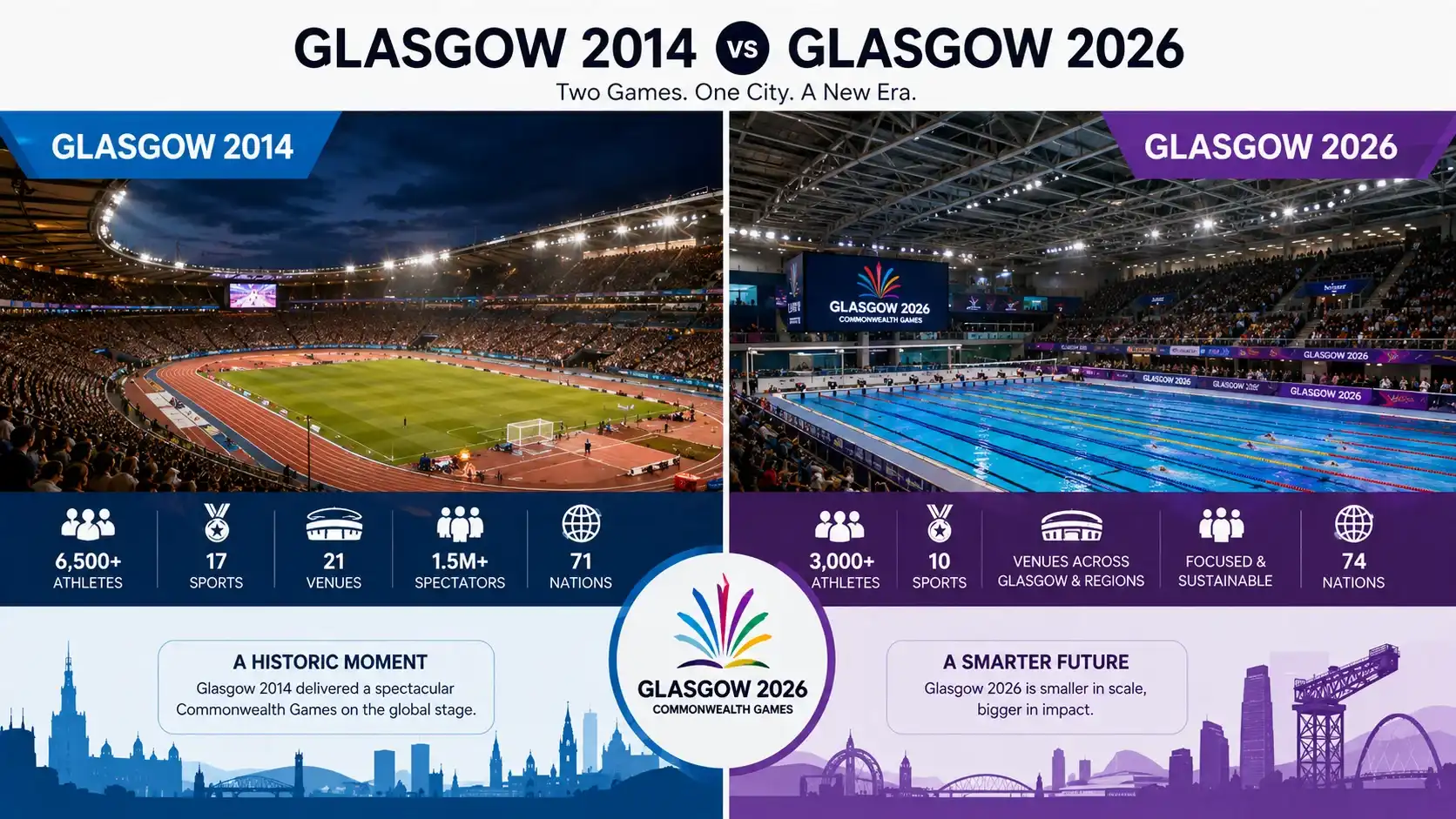
Major international sporting events normally require several years of planning.
Glasgow completed the preparation and delivery process in around 18 months, described by the interim evaluation as the fastest turnaround in major international sport.
The event avoided a cancellation that would have damaged the Commonwealth movement and left athletes without a 2026 competition.
Every competition venue already existed.
This approach lowered construction costs and reduced the risk of producing expensive facilities with uncertain long-term use.
More than 90% of temporary overlay structures were hired and returned for reuse, while all competition venues were powered using renewable electricity from the Scottish grid.
These measures do not make a large international event environmentally neutral, but they represent a more restrained model than building new infrastructure for a short competition.
Glasgow featured 47 Para medal events across six sports—the largest integrated Para programme in Commonwealth Games history.
The first medal event of the Games was also a Para competition.
This mattered because Para events were part of the main sporting programme rather than being treated as a separate competition.
For an event attempting to justify its continuing relevance, integration may be one of the Commonwealth Games’ strongest distinguishing features.
The Games brought together athletes from 74 nations and territories.
For competitors from smaller Commonwealth nations, the event remains one of the few opportunities to compete in a large multi-sport environment with substantial broadcasting and media coverage.
Reuters noted that the reduced Games still served as an important platform for developing athletes, even though several leading international stars did not participate.
Cricket, hockey, badminton, wrestling and table tennis were among the most noticeable omissions.
For audiences in India and several other Commonwealth markets, these are not secondary sports. They are some of the main reasons people follow the Games.
India won 30 of its 61 Birmingham 2022 medals in disciplines missing from Glasgow. The reduced programme changed not only the number of medals available but also the countries most likely to perform well.
A flexible programme may reduce hosting costs, but too much flexibility could weaken the shared identity of the Commonwealth Games. If every host stages a very different selection of sports, historical comparisons and athlete continuity become harder.
The Games featured strong performances and numerous records, but some recognised athletes chose not to compete.
The Guardian’s post-event assessment noted concerns over absent stars and whether the reduced event offered enough elite sporting depth.
This is a major challenge for the Commonwealth Games.
Fans may accept a smaller programme if the available events feature leading athletes. A competition that is both smaller and missing major names risks appearing less important than world championships, Diamond League meetings and other international events.
Glasgow 2026 adopted a different UK broadcasting arrangement, with TNT Sports and Warner Bros. Discovery playing a central role and Channel 5 carrying selected free-to-air coverage.
The event reached audiences across all 74 Commonwealth territories, and Australia reportedly produced particularly strong viewing figures. However, UK visibility was more limited than during editions carried extensively by the BBC.
This is not a minor issue.
Sporting relevance depends on more than attendance inside venues. It depends on people encountering the event at home, online and through mainstream cultural conversation.
A lower-cost Games cannot afford to become a lower-visibility Games.
While many tickets were available at accessible price points, premium finals cost considerably more.
Organisers defended the pricing structure, explaining that it included thousands of lower-priced tickets and that ticket revenue helped fund the event.
The overall attendance suggests that pricing did not prevent widespread participation, but affordability remains important when an event presents itself as inclusive and community-focused.
This may be the most important question.
A smaller event is not automatically a weaker event. Concentrating competitions into fewer venues can create full crowds, a stronger atmosphere and easier travel for spectators.
Glasgow appears to have achieved much of that.
But there is a point at which reducing scale begins to reduce significance.
The Commonwealth Games need to offer something that athletes and audiences cannot easily find elsewhere. That may include:
Glasgow protected several of those qualities. It weakened others.
The Games were financially more manageable, but the absence of major sports and reduced broadcast visibility showed that affordability is only one part of sustainability.
A sporting event is sustainable only if cities can afford to host it and audiences still care enough to watch.
Glasgow offers valuable lessons, but it is not a universal template.
The city had several advantages:
A city without those advantages may not be able to deliver a similar Games at the same cost.
The more transferable principles are:
Commonwealth Sport said seven nations had previously expressed interest in hosting future editions, suggesting that the redesigned model has made the event appear more achievable.
That is encouraging, but expressions of interest are not the same as confirmed hosts and financed delivery plans.
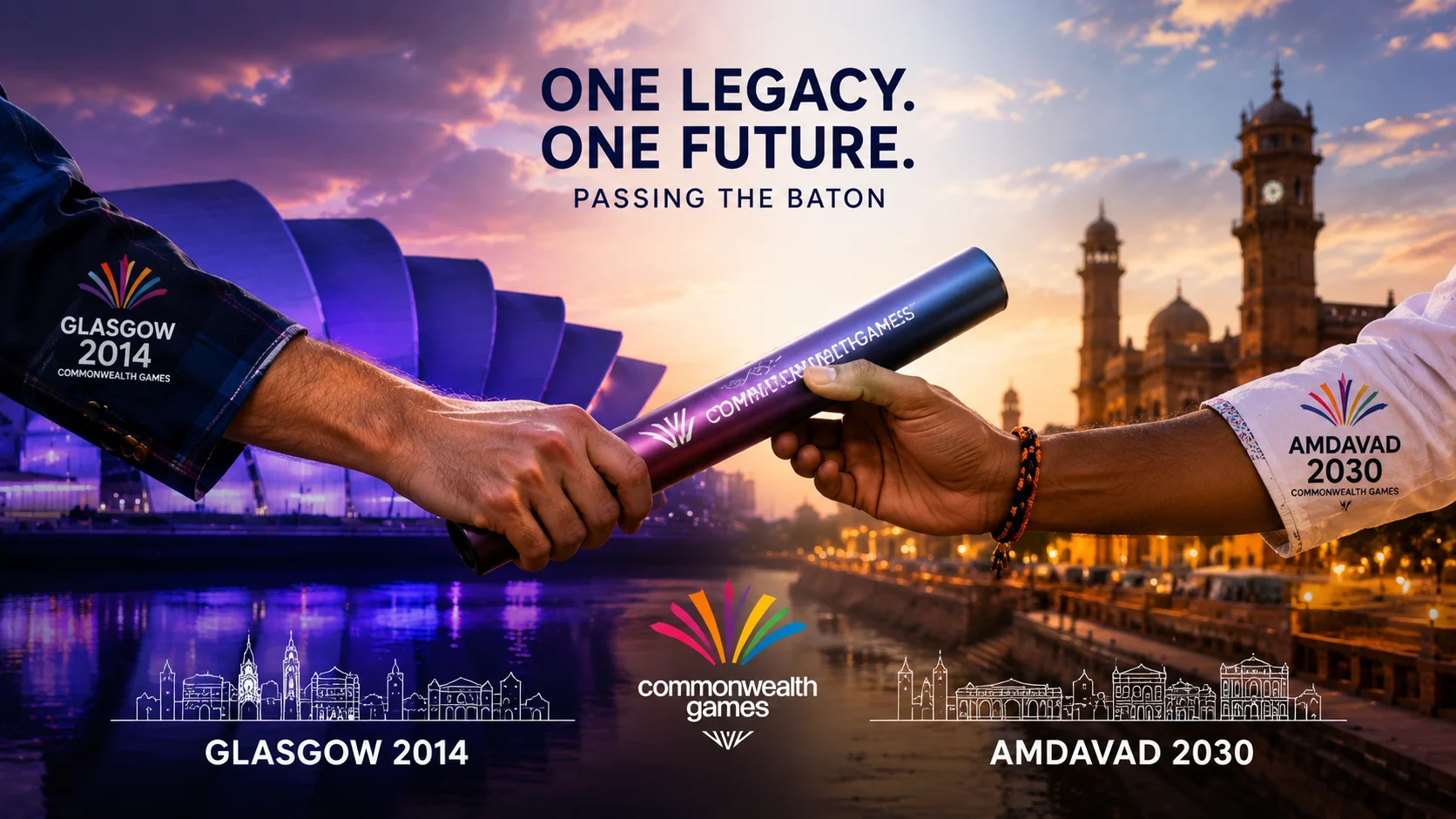
The next Commonwealth Games will be held in Amdavad, India, in 2030.
Amdavad is not expected to copy Glasgow exactly.
The centenary Games will feature between 15 and 17 sports, compared with Glasgow’s ten. Athletics, swimming, table tennis, bowls, weightlifting, artistic gymnastics, netball and boxing are already part of the reviewed programme, while sports including badminton, T20 cricket, hockey, wrestling, shooting and squash remain under consideration.
The official Amdavad 2030 programme will therefore test whether the movement can combine Glasgow’s financial restraint with a broader and more attractive sports offering.
India brings advantages that Glasgow could not provide:
But greater scale also brings greater risk.
Amdavad should learn from Glasgow’s discipline rather than treating the return of more sports as a reason to allow budgets and infrastructure plans to expand without control.
In one important sense, yes.
Glasgow ensured that the 2026 Commonwealth Games happened. It delivered the event quickly, attracted hundreds of thousands of spectators and spent far less than recent hosts.
The city also demonstrated that a major multi-sport competition does not automatically require new stadiums, a purpose-built village or a budget approaching £1 billion.
That is a significant achievement.
But Glasgow did not solve every problem facing the Commonwealth Games.
The event still needs:
The initial independent evaluation describes Glasgow as a “proof of concept,” but it remains an interim assessment. A fuller report covering economic impact, visitor surveys, athlete experiences and long-term outcomes is due later in 2026.
The fairest conclusion is that Glasgow saved the Games as an event.
It has not yet guaranteed their future as a major global sporting property.
The real verdict will depend on whether Amdavad 2030 can preserve Glasgow’s financial discipline while restoring the sports, star power and audience reach that a centenary Commonwealth Games will need.
Early evidence suggests that the Games were operationally and financially successful. Glasgow welcomed 434,000 ticketed spectators, used existing venues and delivered the event with projected private spending of £162.6 million. However, the complete independent evaluation is due later in 2026.
The current projected privately funded spend is £162.6 million. This is considerably lower than the reported £543 million for Glasgow 2014 and £680 million for Birmingham 2022.
The organisers reported 434,000 ticketed spectators. More than 630,000 people engaged across competition venues, live sites and festival activities.
Glasgow accepted the event after Victoria withdrew and had a shortened preparation period. Organisers reduced the sports programme, used existing venues and limited athlete numbers to control cost and operational risk.
Cricket, hockey, badminton, wrestling, table tennis, squash and several other sports were absent from the ten-sport programme.
No. Athletes stayed in 18 existing hotels around Glasgow, helping the organisers avoid the cost of building a conventional village.
Amdavad, India, will host the centenary Commonwealth Games in 2030. The edition is expected to feature between 15 and 17 sports.
Glasgow demonstrated a more affordable delivery model and prevented the 2026 edition from being cancelled. Whether it secured the event’s long-term future will depend on future hosts, broadcast reach, athlete participation and the success of Amdavad 2030.

Log in to support this story.
New here? Create an account

Discussion · 0 Comments
No comments yet — be the first to share your thoughts.